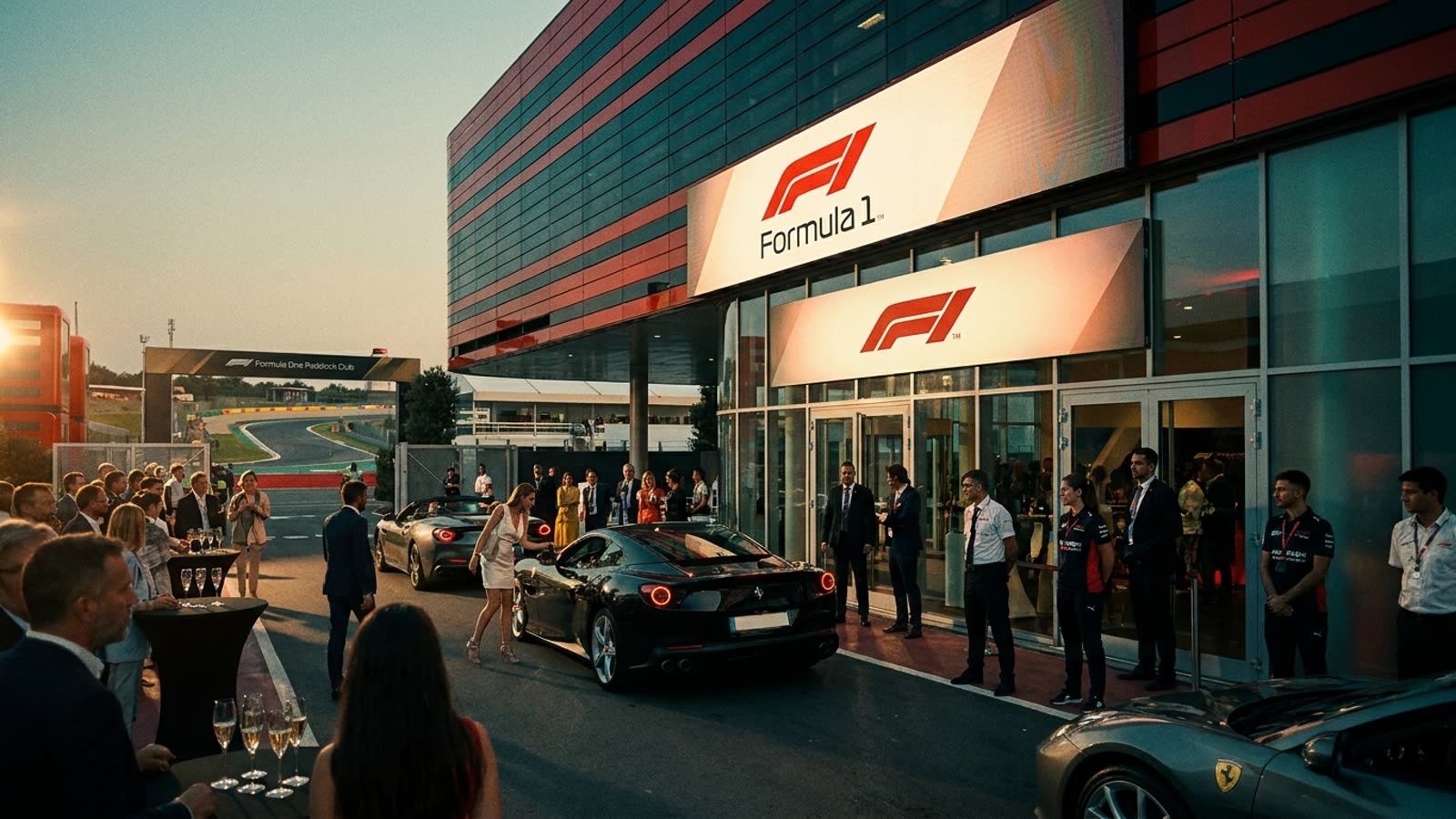
Formula One's transformation from a niche motorsport into a global luxury brand owes as much to what happens above the garages as what happens on track. The Paddock Club, F1's ultra-premium hospitality program, has quietly become one of the sport's most lucrative revenue streams, with weekend packages routinely exceeding the price of a new car and waiting lists that stretch years into the future.
The business of exclusivity
At Monaco, a three-day Paddock Club pass starts around $8,000 per person. Add yacht transfers, exclusive driver meet-and-greets, and premium accommodation packages, and the figure can easily reach $50,000. Yet demand consistently outstrips supply. The economics are staggering: with roughly 5,000 Paddock Club guests per race weekend across the calendar, F1's hospitality arm generates more annual revenue than many mid-tier team budgets.
The model has evolved far beyond traditional corporate entertainment. Today's Paddock Club operates as a carefully orchestrated luxury experience, complete with Michelin-starred chefs, dedicated concierge teams, and access levels that would make a Hollywood agent envious. Teams have noticed: several now generate more profit from their hospitality allocations than from smaller technical partnerships.
Rewriting the sports hospitality playbook
Formula One's approach has fundamentally altered how global sports think about premium experiences. Where once VIP meant better seats and free drinks, F1 has created an entire ecosystem of graduated exclusivity. The Paddock Club sits atop a pyramid that includes team hospitality suites, grandstand clubs, and track experiences, each with its own price point and carefully calibrated level of access.
The genius lies in the scarcity. Unlike stadium boxes that might sit empty on a Tuesday night, F1 hospitality happens just 23 weekends per year, in glamorous locations, with a product that photographs beautifully on social media. The sport has turned FOMO into a business model, with corporate entertainment budgets and ultra-high-net-worth individuals competing for the same inventory.
Our take
Formula One's hospitality empire represents the logical endpoint of sports' luxury turn: an experience so rarefied that the actual competition becomes almost secondary to the networking and lifestyle signaling happening in the suites above. While purists may grumble, the model has proven remarkably resilient and increasingly copied. As traditional revenue streams face pressure, expect more sports to follow F1's lead in monetizing not just the spectacle, but the privilege of proximity to it.