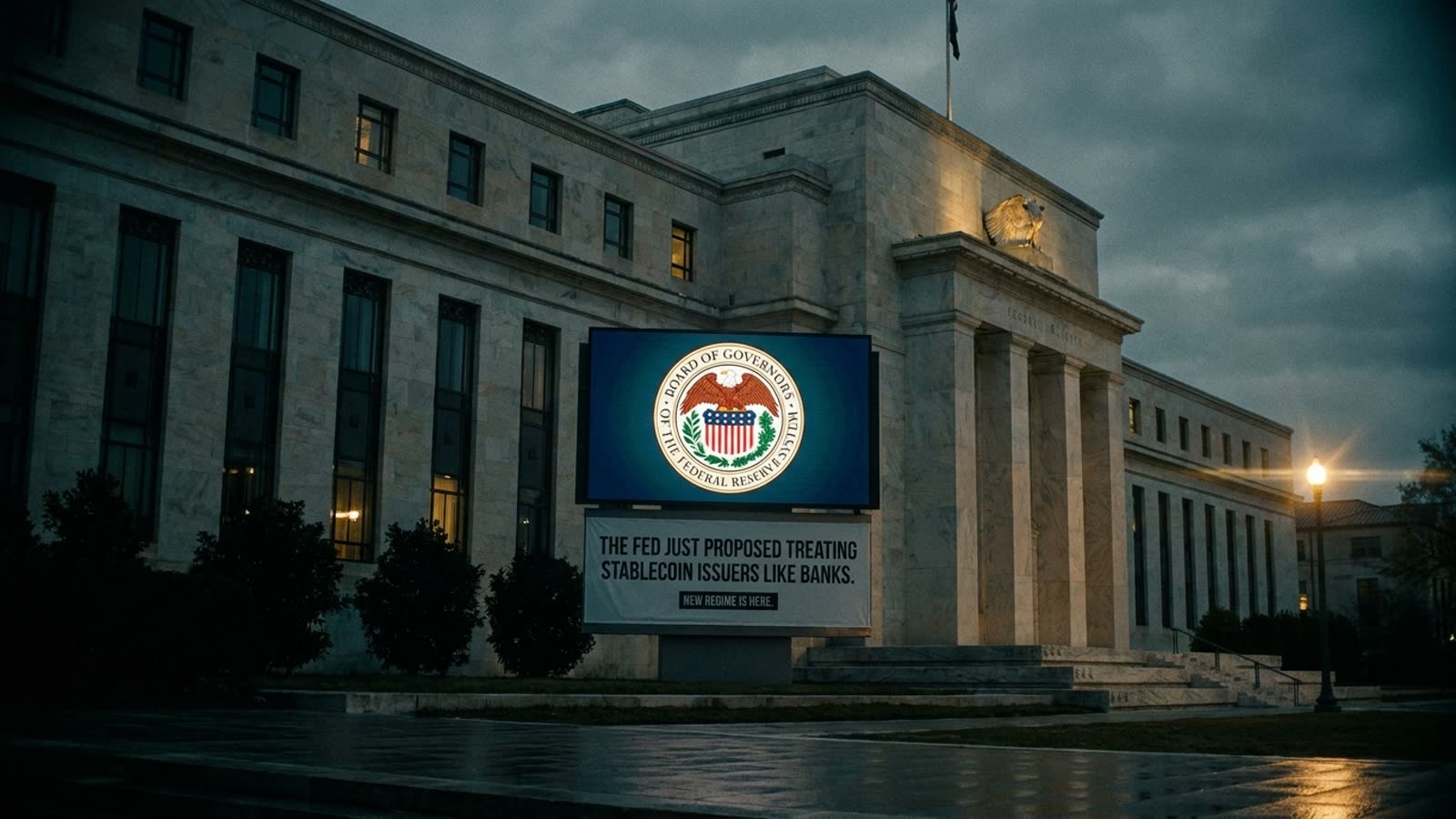
The Federal Reserve's proposed customer identification requirements for stablecoin issuers represent the clearest signal yet that Washington views dollar-pegged tokens not as a crypto curiosity but as a shadow banking system that must be brought to heel.
The draft rules, released this week, would require stablecoin issuers to implement Know Your Customer protocols comparable to those governing banks and money transmitters. That means collecting and verifying user identities, monitoring transactions for suspicious activity, and filing Suspicious Activity Reports with the Treasury's Financial Crimes Enforcement Network. For an industry that has thrived partly on the friction-free movement of value across borders, the compliance burden would be transformative.
The compliance cost problem
Traditional banks spend between two and five percent of operating costs on compliance, with the largest institutions maintaining thousands of employees dedicated solely to anti-money-laundering programs. Stablecoin issuers have operated with a fraction of that overhead. Circle, issuer of USDC, has built a compliance apparatus, but it remains modest compared to JPMorgan's or Citibank's sprawling AML departments. Tether, the largest stablecoin by market capitalization, has been even leaner—and more opaque about its internal controls.
The Fed's proposal would effectively require these companies to choose: become quasi-banks with the cost structures to match, or exit the U.S. market. Neither option is painless. Building genuine compliance infrastructure takes years and hundreds of millions of dollars. Abandoning the world's largest economy means ceding ground to competitors willing to make the investment.
Why now
The timing is instructive. Chair Kevin Warsh's Fed has signaled a preference for clear rules over enforcement-by-litigation, the approach that characterized the previous administration's crypto policy. But clarity cuts both ways. Where ambiguity allowed stablecoin issuers to argue they weren't quite banks and weren't quite money transmitters, explicit rules remove the gray zone entirely.
The proposal also reflects growing concern in Washington about stablecoins' role in sanctions evasion and illicit finance. With more than one hundred fifty billion dollars in combined market cap, stablecoins have become significant enough to attract the same scrutiny applied to correspondent banking networks. The Fed appears to have concluded that voluntary compliance programs are insufficient for a sector of this scale.
The offshore question
The most interesting variable is what happens to issuers who simply refuse to comply. Tether has historically maintained ambiguous relationships with U.S. regulators, serving U.S. customers through intermediaries while keeping its corporate structure offshore. If the Fed's rules apply only to entities with clear U.S. nexus, the largest stablecoin issuer might continue operating in a regulatory twilight zone.
But the proposal includes provisions for treating tokens widely used by U.S. persons as subject to the rules regardless of where the issuer is domiciled. Enforcement would be complicated, but the intent is clear: the Fed wants to close the offshore loophole that has allowed dollar-denominated stablecoins to proliferate without dollar-denominated oversight.
Our take
This was always the endgame. Stablecoins succeeded precisely because they offered the convenience of dollars without the compliance burden of banking. That arbitrage was never sustainable once the sector grew large enough to matter. The Fed's proposal isn't hostile to stablecoins—it's an acknowledgment that they've won, and that winning means playing by the same rules as everyone else who moves dollars at scale. The question isn't whether these rules will reshape the industry; it's whether the industry will be recognizable when they're done.