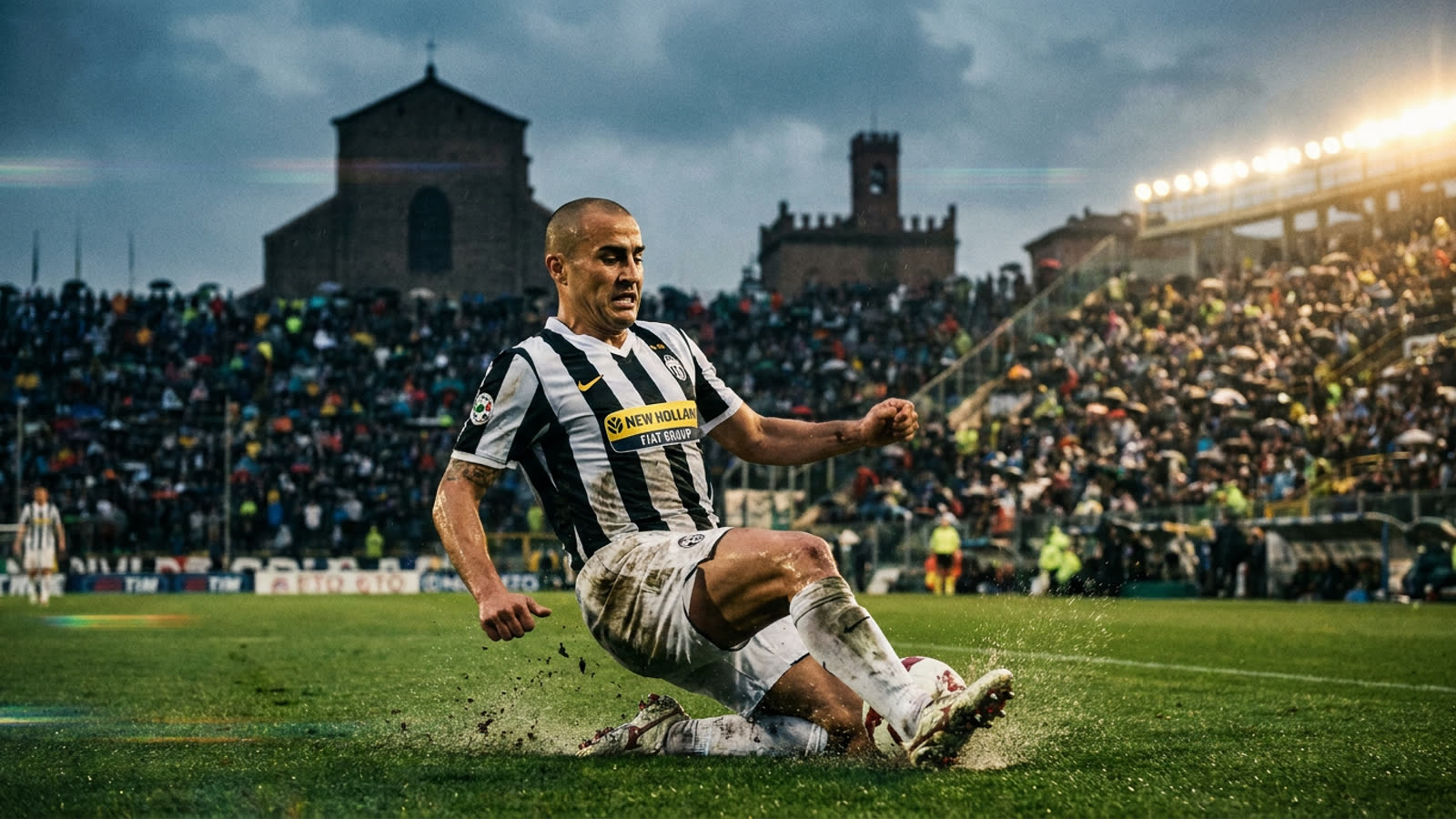
The Ballon d'Or has been awarded since 1956, and in that entire history, only one pure central defender has ever won it. Fabio Cannavaro's triumph in 2006 was not an aberration caused by a weak field or sentimental voting — it was the inevitable recognition of a defender who had simply been the best player at the World Cup, full stop. That the honor has not returned to a defender since tells us less about the quality of defending than about the metrics by which football chooses to measure greatness.
Cannavaro's World Cup campaign in Germany was a masterclass in the art of elimination. Italy conceded just two goals in seven matches, and one of those was an own goal by teammate Cristian Zaccardo. The other came from a Zinedine Zidane penalty in the final. From open play, opponents managed to beat Cannavaro's defensive unit exactly zero times across an entire tournament. The Italian captain made this look not merely competent but elegant — a series of perfectly timed interventions, reading of play that bordered on clairvoyance, and a physical presence that belied his relatively modest stature for a central defender.
The problem with measuring defense
Football's statistical revolution has been remarkably unkind to defenders. The sport now tracks expected goals, progressive carries, shot-creating actions, and dozens of other metrics that quantify attacking contribution with increasing precision. Defensive statistics remain comparatively crude — tackles won, interceptions, aerial duels. None of these capture what Cannavaro actually did, which was to position himself so intelligently that tackles became unnecessary, to organize a back line so effectively that opponents simply ran out of ideas.
The great defenders do not accumulate statistics; they prevent them. A perfectly played match for a central defender might involve almost nothing measurable happening at all. This creates an obvious problem for award voters who must justify their selections to audiences increasingly conditioned to expect numerical evidence of excellence.
The company he keeps
Consider the defenders who have come close since 2006. Sergio Ramos finished in the top ten multiple times but was always valued partly for his goals. Virgil van Dijk came second in 2019 after anchoring Liverpool's Champions League triumph, losing to Lionel Messi by the narrowest margin in years. The reaction to van Dijk's near-miss was revealing — many observers treated his candidacy as quaint, a nostalgic gesture toward an outdated conception of football value.
The Ballon d'Or's evolution into a de facto award for the best attacking player has been gradual but unmistakable. Goalkeepers won three times in the award's first three decades; none has won since Lev Yashin in 1963. The message is clear: football's highest honor is reserved for those who create and score goals, not those who prevent them.
Our take
Cannavaro's Ballon d'Or should be remembered not as a charming exception but as a challenge the sport failed to meet. The defender who organizes a unit, who reads danger before it materializes, who makes the brilliant striker look ordinary — this player is not doing something less valuable than the forward who finishes chances. He is doing something harder to see, harder to measure, and apparently harder to reward. Football decided long ago that it preferred the visible to the essential. Cannavaro's lonely trophy is the proof.