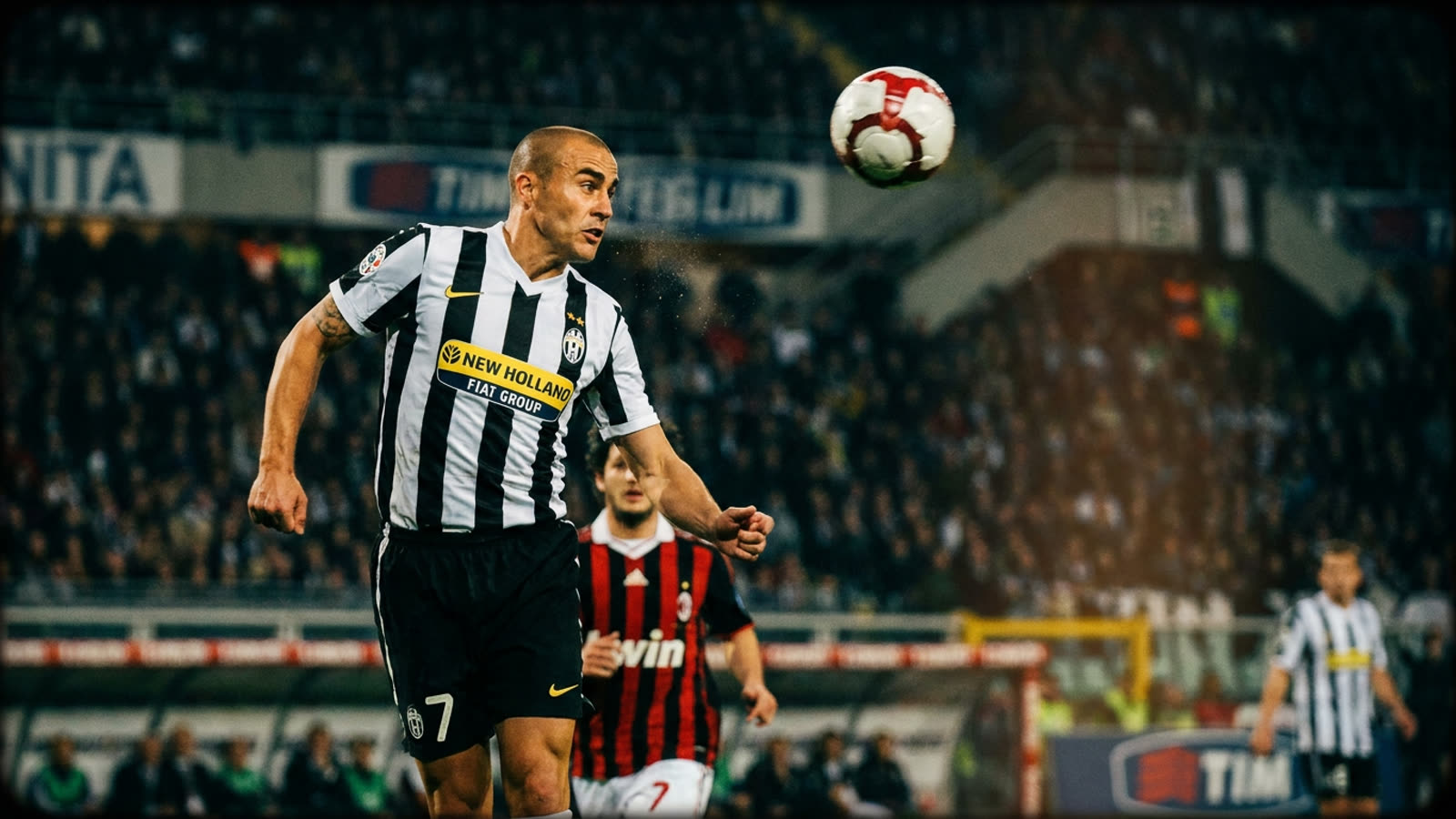
The Ballon d'Or has been awarded to a defender exactly once since 2006, and that was Cannavaro himself, capturing the prize in the same year he lifted the World Cup. Two decades on, no centre-back has come close. The award has become a coronation for forwards and attacking midfielders, a celebration of the spectacular over the essential. Cannavaro's victory feels less like a precedent and more like a closed door.
This is not a complaint about individual voters or specific snubs. It is an observation about what football has decided to reward, and what it has quietly agreed to ignore.
The art of denial
Cannavaro stood five feet nine inches tall in a position where height is considered non-negotiable. He compensated with timing so precise it appeared choreographed, reading the geometry of attacks before they materialized. His technique was not about brute force but anticipation — the sliding challenge arriving at the exact moment the ball left the attacker's foot, the interception that turned defense into counterattack.
The 2006 World Cup final against France remains his defining performance. With Zinedine Zidane orchestrating one last masterpiece before his infamous exit, Cannavaro matched him intervention for intervention. Italy's victory came on penalties, but it was built on Cannavaro's refusal to allow France any clean look at goal. He made the difficult appear routine, which is perhaps why defenders struggle for recognition: excellence in their craft looks like nothing happening.
The metrics problem
Modern football analytics have transformed how we evaluate players, but they have also codified a bias toward offensive contribution. Expected goals, progressive carries, shot-creating actions — the vocabulary of contemporary analysis is weighted toward the attacking third. Defensive metrics exist, but they lack the narrative power of a goal or assist. A perfectly timed tackle does not trend on social media the way a long-range strike does.
This creates a feedback loop. Young players and their agents understand that visibility matters for contracts and endorsements. The incentive structure nudges talent toward positions where individual brilliance is more easily captured and commodified. Centre-backs become afterthoughts in the attention economy, valued by coaches but overlooked by the broader culture.
What Cannavaro represented
His Ballon d'Or was not merely a recognition of a brilliant tournament. It was an acknowledgment that football is a collective endeavor, that preventing goals is as valuable as scoring them, that leadership and organization deserve celebration alongside flair. Cannavaro captained Italy through that World Cup with a calm authority that settled nerves in moments of crisis. He was the spine around which the team organized itself.
The players who have come closest to replicating his achievement — Sergio Ramos, Virgil van Dijk, Thiago Silva — have all been exceptional. Van Dijk finished second in 2019 after anchoring Liverpool's Champions League triumph. The gap between him and winner Lionel Messi was narrow, but the symbolism of second place felt appropriate. Close, but not quite. The door Cannavaro walked through has not reopened.
Our take
Football's reluctance to honor defenders reflects a broader cultural preference for creation over prevention, for the visible over the essential. Cannavaro's 2006 Ballon d'Or was not an anomaly to be corrected but a standard we have abandoned. The sport is poorer for it. Somewhere, a young centre-back with impeccable timing and preternatural reading of the game is learning that his excellence will be appreciated but never quite celebrated. Cannavaro's trophy sits in history as both an honor and an indictment.