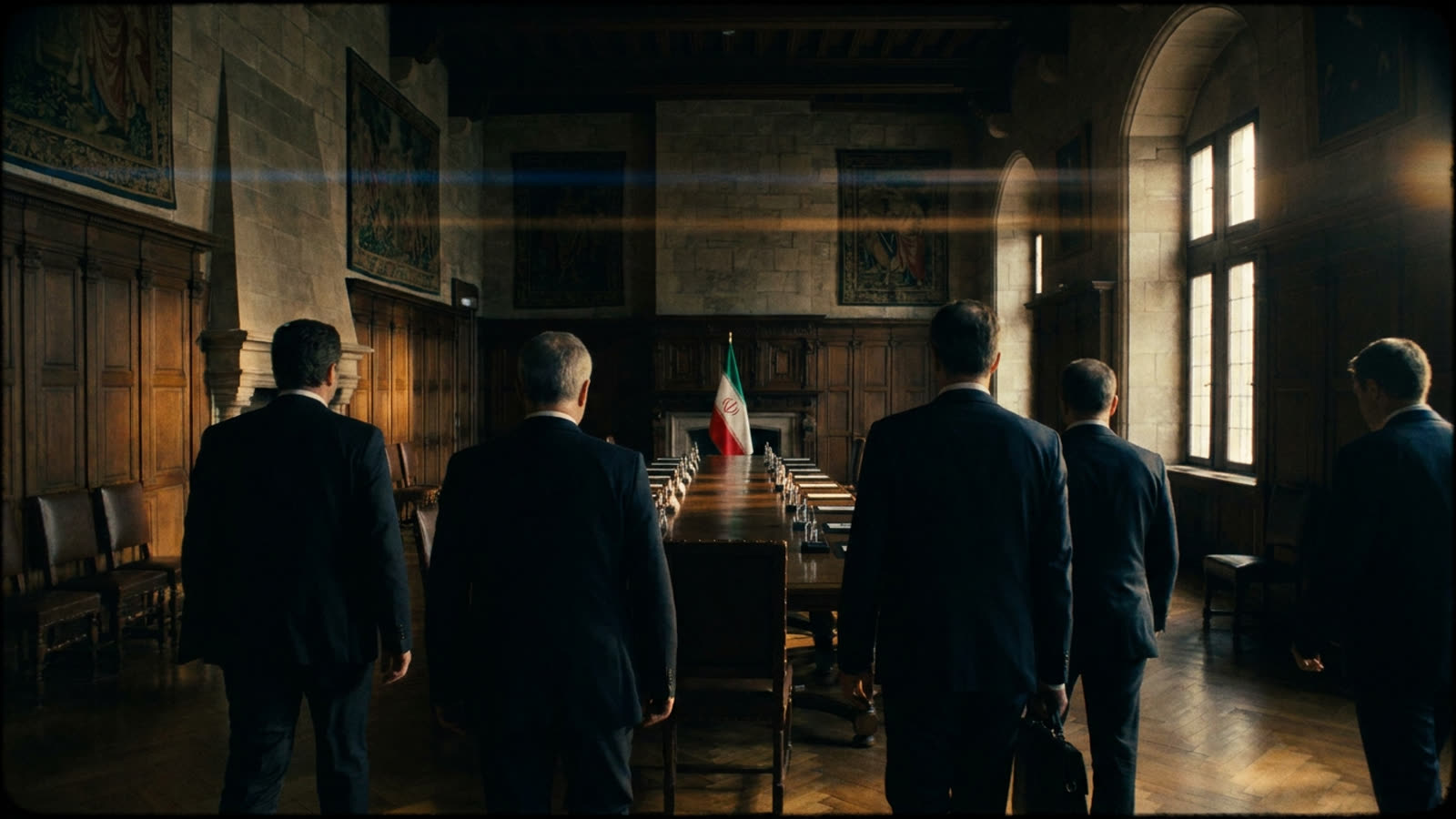
The joint statement from London, Paris, Berlin, and Rome arrived with the bureaucratic flatness that European capitals reserve for decisions they would rather not explain. Britain, France, Germany, and Italy will lift their Iran sanctions, aligning with the framework Washington negotiated and announced last week. The language emphasized "coordinated de-escalation" and "responsible engagement." The subtext was simpler: when America moves, Europe follows.
This is not, strictly speaking, capitulation. The four governments secured modest concessions—enhanced IAEA inspection protocols, a slower sanctions-relief timeline than Tehran wanted, language on regional missile constraints that may or may not bind. But the architecture of the deal was American, the timeline was American, and the decision to pursue diplomacy over maximum pressure was made in Washington before any European foreign minister received a briefing paper.
The mechanics of alignment
European sanctions on Iran have always operated in the shadow of American ones. The dollar's dominance in global trade means that any European bank or energy company doing business with Tehran risks losing access to the U.S. financial system—a death sentence for institutions with transatlantic exposure. When Washington reimposed sanctions in 2018, European leaders created INSTEX, a barter mechanism designed to circumvent American restrictions. It processed fewer than a dozen transactions.
The lesson was absorbed. When the Trump administration signaled in recent months that it was prepared to negotiate directly with Tehran, European capitals understood that their leverage existed only within the bounds of American tolerance. The joint announcement is less a policy choice than an acknowledgment of structural reality.
What Europe gets
The benefits are not trivial. European energy companies, particularly Italian and German firms, have long eyed Iranian natural gas as a hedge against Russian supply disruptions. French automakers maintained a presence in Iran until 2018 and have lobbied aggressively for re-entry. British financial institutions see Tehran as an emerging market with 90 million consumers and a young, educated population.
More abstractly, the deal offers European governments a narrative of diplomatic relevance. They can claim participation in a historic agreement rather than mere observation. For leaders facing domestic skepticism about their influence on the world stage, this matters.
What Europe concedes
The price is the quiet burial of European strategic autonomy as anything more than a slogan. For a decade, Brussels has spoken of developing independent foreign-policy capacity, of becoming a geopolitical actor rather than a geopolitical subject. The Iran alignment demonstrates the limits of that ambition.
It also creates exposure. If the deal collapses—if Tehran cheats, if a future American administration reverses course, if regional dynamics shift—European companies will again face the choice between Iranian markets and American ones. They will choose America, as they did before. The asymmetry is permanent.
Our take
There is no shame in acknowledging power realities, and European leaders are right that coordinated de-escalation serves their interests better than performative resistance. But the rhetoric of partnership obscures a deeper truth: Europe's Iran policy is, and has been, a derivative of American decisions. The joint statement reads like sovereignty. It functions like alignment. The distinction matters less than Brussels would like to admit.