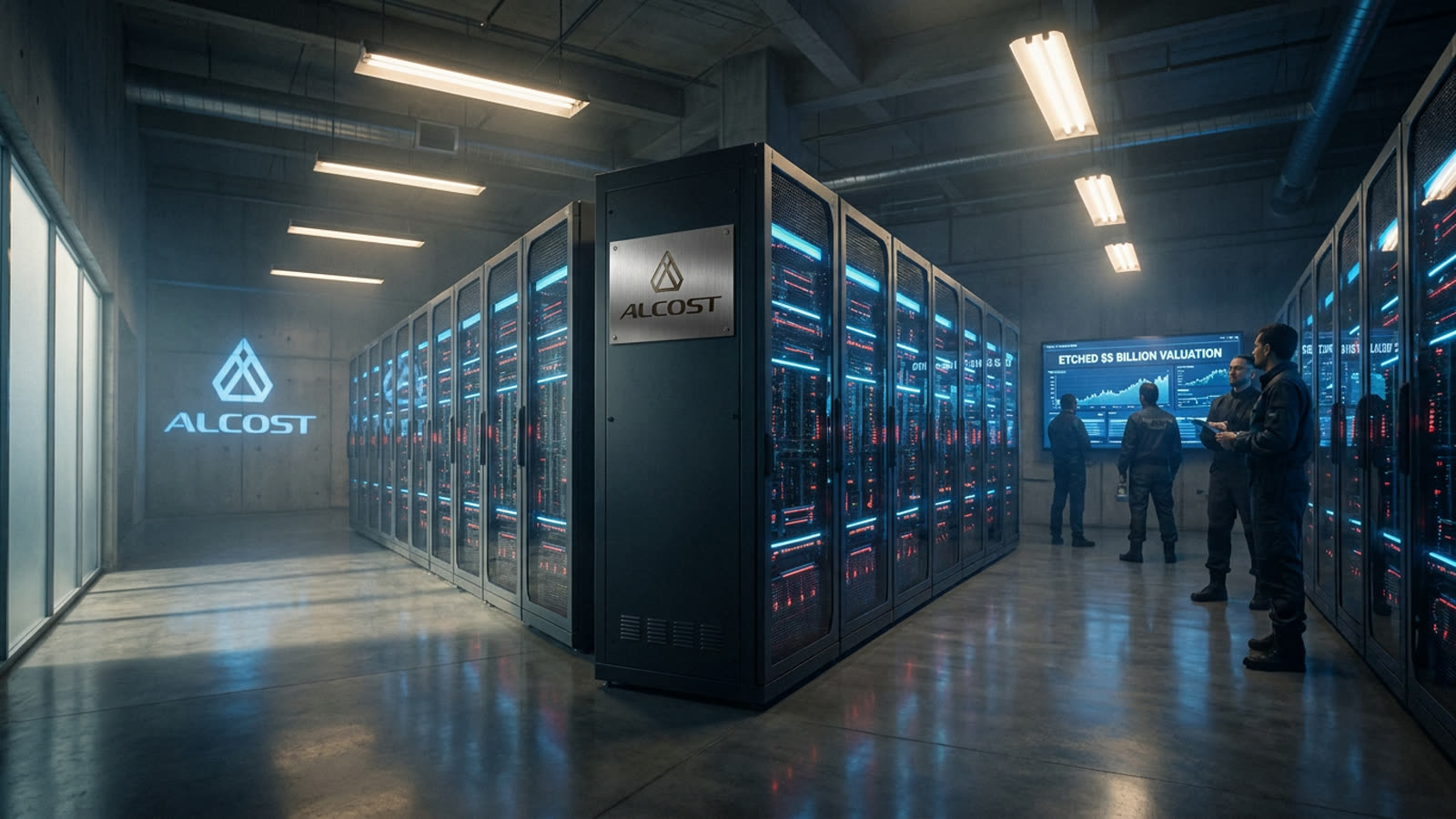
For three years, the AI hardware market has operated under a simple assumption: Nvidia wins, everyone else fights for scraps. Etched's latest numbers suggest that assumption deserves revision.
The startup, which designs chips purpose-built for transformer inference rather than general-purpose GPU compute, has reached $1 billion in annualized sales and a $5 billion valuation. Those figures would be impressive for any semiconductor company. For one betting against the most dominant chipmaker in a generation, they border on remarkable.
The specialization thesis
Etched's core argument has always been elegantly simple: why use a Swiss Army knife when you need a scalpel? Nvidia's GPUs excel at flexibility—they can train models, run inference, render graphics, mine cryptocurrency. But that versatility comes with overhead. Etched's Sohu chips do exactly one thing: run transformer-based models. By stripping away everything else, the company claims ten to twenty times better performance per watt on inference workloads.
The bet seemed quixotic when Etched emerged from stealth. Transformers were dominant but not yet universal. The architecture could have been supplanted by something else—state space models, mixture of experts variants, some approach not yet invented. Building hardware around a single paradigm meant betting the company on that paradigm's permanence.
Two years later, transformers remain the foundation of every frontier model. The bet looks prescient.
Why now matters
The timing of Etched's growth spurt is not accidental. As AI companies shift from training-obsessed to deployment-focused, inference costs have become existential concerns. Running Claude or GPT-4 at scale costs more than training the models did. Every percentage point of efficiency improvement translates directly to margin.
This creates natural demand for specialized silicon. Nvidia's H100s and B200s remain the training workhorses, but inference increasingly looks like a different market—one where efficiency trumps flexibility, where predictable workloads reward purpose-built hardware.
Etched is not alone in recognizing this. Groq, Cerebras, and a dozen others have made similar bets. But none has matched Etched's commercial traction. A billion dollars in revenue suggests customers beyond the usual suspects of well-funded startups running benchmarks.
The Nvidia question
None of this means Nvidia faces imminent disruption. Jensen Huang's company still controls the training market absolutely, and its inference offerings remain formidable. The company's software ecosystem—CUDA, cuDNN, the accumulated weight of a decade of tooling—creates switching costs that no startup can easily overcome.
But monopolies rarely collapse overnight. They erode at the edges first, in specialized niches where incumbents' advantages matter less. Etched has found one such niche. The question is whether inference remains a niche or becomes the majority of AI compute spending.
Most projections suggest the latter. If running models costs more than building them, the economics favor specialists.
Our take
Etched's valuation may prove generous or conservative depending on how the inference market evolves. What it cannot be called is irrational. The company has built real revenue against the most fearsome competitor in technology, in a market growing faster than almost any in history. For the first time since the AI boom began, Nvidia has a challenger worth taking seriously.