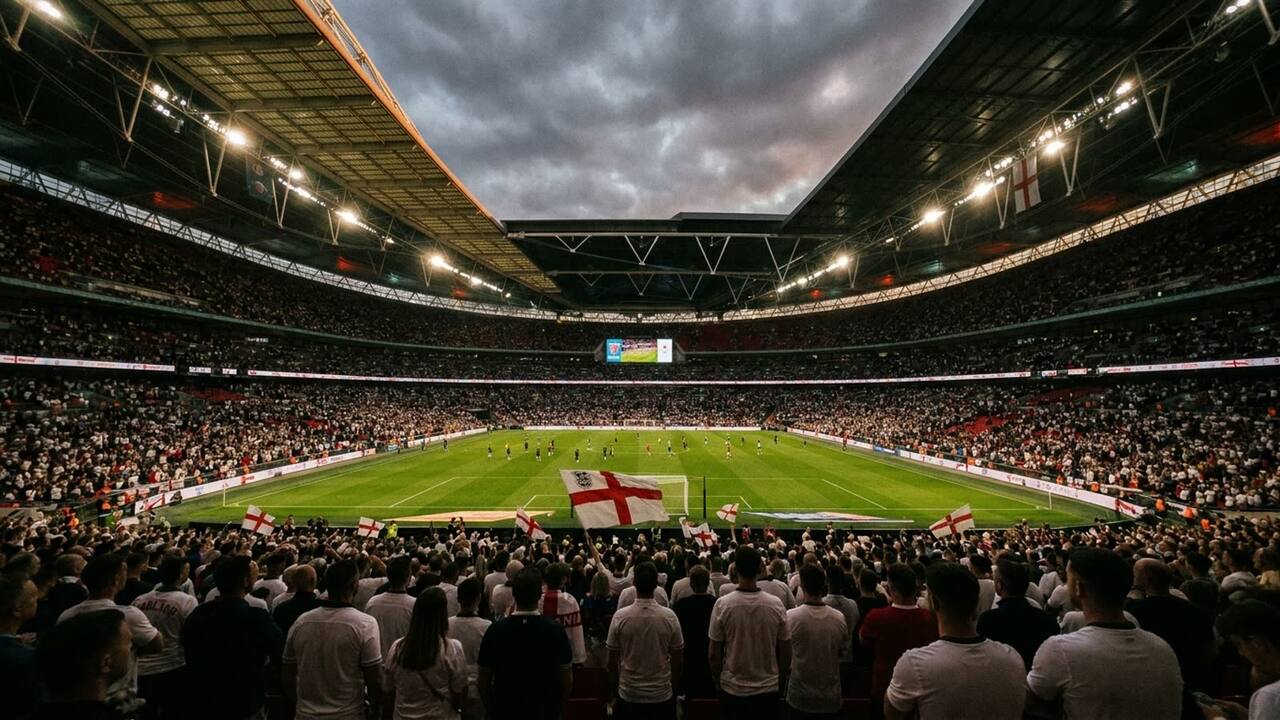
England enter their final Group L match against Panama needing only a victory to secure top spot and, more importantly, a theoretically gentler path through the knockout rounds. It is the sort of scenario that once would have sent English football into paroxysms of premature celebration. Now it barely registers as news.
The transformation is less about talent—England have always produced gifted players—than about institutional temperament. The Football Association spent years studying why a nation of fifty million could not convert Premier League wealth into international success. The answer, painfully, was culture: a media ecosystem that inflated every group-stage win into a coronation, followed by inevitable collapse when knockout pressure arrived.
The Southgate inheritance
Gareth Southgate's tenure, which ended after the 2024 Euros, left behind more than a semi-final appearance and a final. He bequeathed a vocabulary. Phrases like "tournament football is different" and "control what we can control" became mantras, repeated so often they lost their cliché status and became operational doctrine. His successors inherited a squad that understood the difference between qualification arithmetic and actual achievement.
Panama, appearing in their third World Cup, present a modest obstacle. They have secured a single point and already face elimination. England's depth—Jude Bellingham orchestrating from midfield, Bukayo Saka stretching defenses, a back line that concedes grudgingly—should prove decisive. The question is not whether England will win, but whether they will do so with the controlled intensity that preserves legs for later rounds.
The bracket mathematics
Topping Group L matters because the World Cup's expanded format creates brutal asymmetries. Finish second and you risk drawing a group winner from a murderers' row of contenders in the round of 32. Finish first and the path, while never easy, at least avoids the worst-case scenarios until the quarterfinals. England's coaching staff have made this calculation explicit in press conferences, treating bracket position as a strategic asset rather than a matter of pride.
This is new. Previous England squads played every match as if it were a final, burning energy and accumulating yellow cards with abandon. The current generation paces itself. Critics call it cautious; the staff call it professional.
Our take
England have become, improbably, boring in the best possible way. They no longer need to prove anything in group stages, and they no longer pretend otherwise. Panama will likely lose, England will likely top the group, and the real tournament will begin in the knockout rounds. The Three Lions have finally learned that getting there is not the story—it is merely the prerequisite.