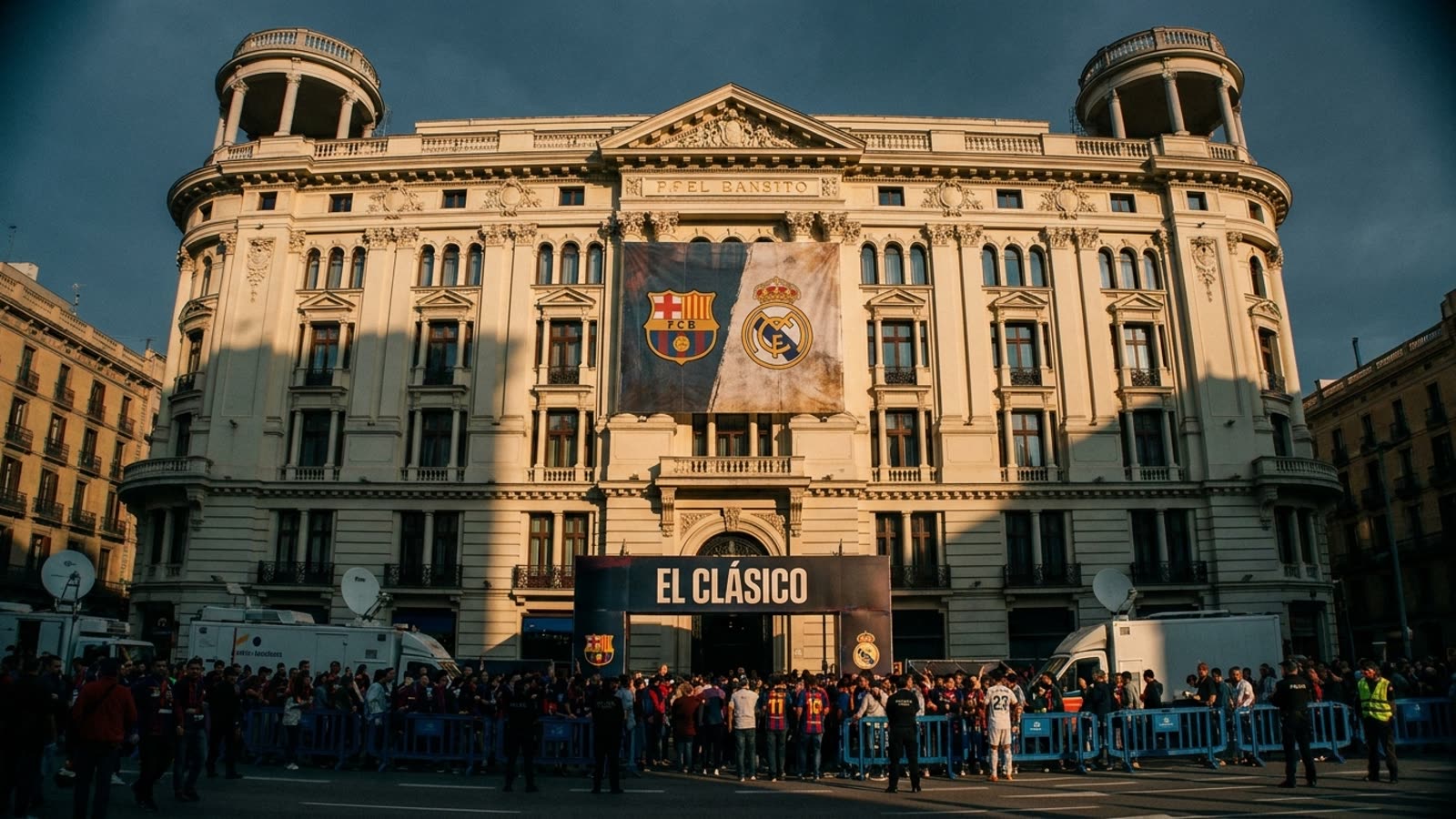
The fixture needs no introduction, but this particular edition demands context. When Barcelona host Real Madrid on Saturday evening at the Camp Nou, the two clubs will be separated by a single point in La Liga's standings — the narrowest gap heading into El Clásico since the 2015-16 season, when Lionel Messi and Cristiano Ronaldo were still trading hat-tricks like insults. That era is gone, but the stakes have somehow returned to match it.
Barcelona enter as nominal favorites, sitting atop the table with a defensive record that has quietly become the best in Europe's top five leagues. Real Madrid, meanwhile, have scored more goals than anyone else in Spain but conceded with an alarming frequency that manager Carlo Ancelotti has publicly attributed to "concentration lapses" — a diplomatic way of saying his midfield has been caught napping on the counter at least once per match.
The tactical fault lines
The matchup presents a fascinating asymmetry. Barcelona's system under their manager has become almost suffocatingly possession-dominant; they average 68% possession in La Liga, the highest figure in the competition. Real Madrid have responded to their own defensive frailties by leaning even harder into their transition game, essentially conceding territory to spring Vinícius Júnior and the supporting cast into space.
This should, in theory, suit Madrid. Barcelona's high defensive line has been exposed precisely once this season — a 2-1 loss to Athletic Bilbao in which they were caught on the break three times in fifteen minutes. But Camp Nou is a different animal. The last time Madrid won there in La Liga was 2019, and Barcelona's home form this campaign has been immaculate: seven wins from seven, with only four goals conceded.
What silverware actually hangs in the balance
A Barcelona win would open a four-point cushion and, perhaps more importantly, deliver a psychological blow that tends to linger. Madrid's recent Champions League triumph has papered over a domestic campaign that has been uncharacteristically erratic — they have already dropped points to Osasuna and Rayo Vallecano, fixtures that title-winning Madrid sides of the past would have treated as administrative formalities.
Conversely, a Madrid victory would not only level the table but hand them the head-to-head tiebreaker advantage, a detail that looms large in a league where goal difference is secondary. The permutations are simple enough: whoever wins on Saturday will be in the driver's seat through the winter fixture congestion.
The absences and the X-factors
Barcelona will be without their starting right-back, a significant loss given how much their build-up play flows through that flank. Madrid, meanwhile, have a fully fit squad for the first time in weeks, with their midfield general returning from a minor muscle complaint that kept him out of the midweek Copa del Rey fixture.
The X-factor, as it has been for three seasons now, is Vinícius Júnior. The Brazilian has scored in four of his last five Clásico appearances and has developed an almost theatrical relationship with the Camp Nou crowd — they whistle him relentlessly, and he responds by scoring and celebrating with exaggerated calm. Whether that dynamic motivates or distracts him remains one of football's more entertaining psychological experiments.
Our take
El Clásico is often overhyped when the stakes are low and underappreciated when they are genuinely high. This is the latter. Both clubs have spent the post-Messi, post-Ronaldo years searching for a new identity, and both have arguably found one — Barcelona through suffocating control, Madrid through chaotic brilliance. Saturday's match is not just about three points; it is about which philosophy will define Spanish football's next chapter. The smart money says Barcelona's structure holds at home, but betting against Vinícius in a big game has been a losing proposition for years now.