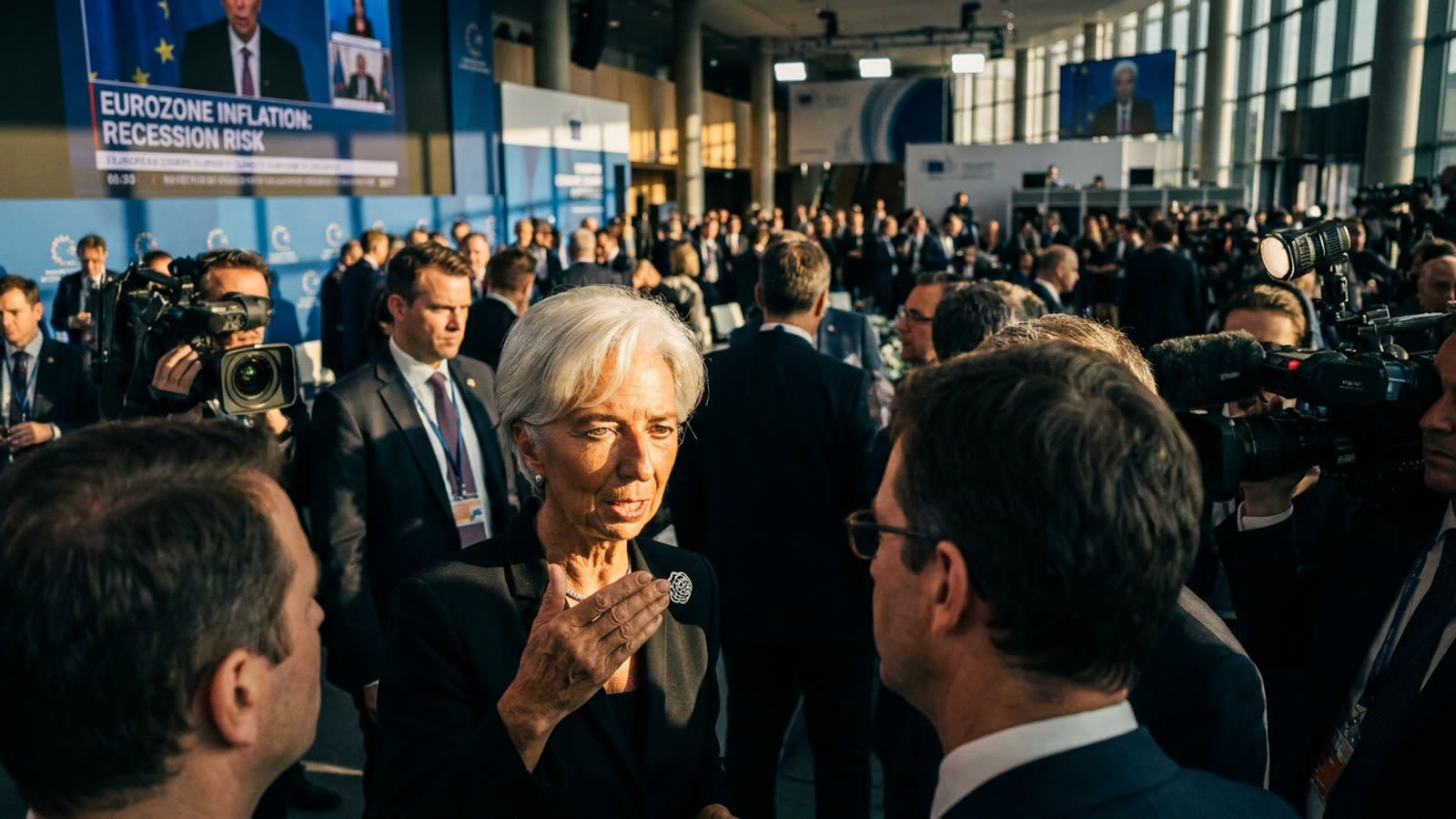
Central bankers love to talk about data dependency. Christine Lagarde just demonstrated what that phrase actually means: watching energy prices spike 40% in a month, watching wholesale inflation print the hottest numbers since the eurozone's founding, and then hiking rates anyway because the alternative—letting inflation expectations become unanchored—is worse.
The European Central Bank's decision to raise rates amid the Iran crisis marks a philosophical break from the post-2008 playbook. For fifteen years, Frankfurt's default setting was accommodation: negative rates, bond purchases, forward guidance designed to convince markets that tightening was always tomorrow's problem. That era ended today. The ECB is now willing to inflict economic pain in real time, even as war-driven supply shocks do half the damage for them.
The arithmetic of a squeeze
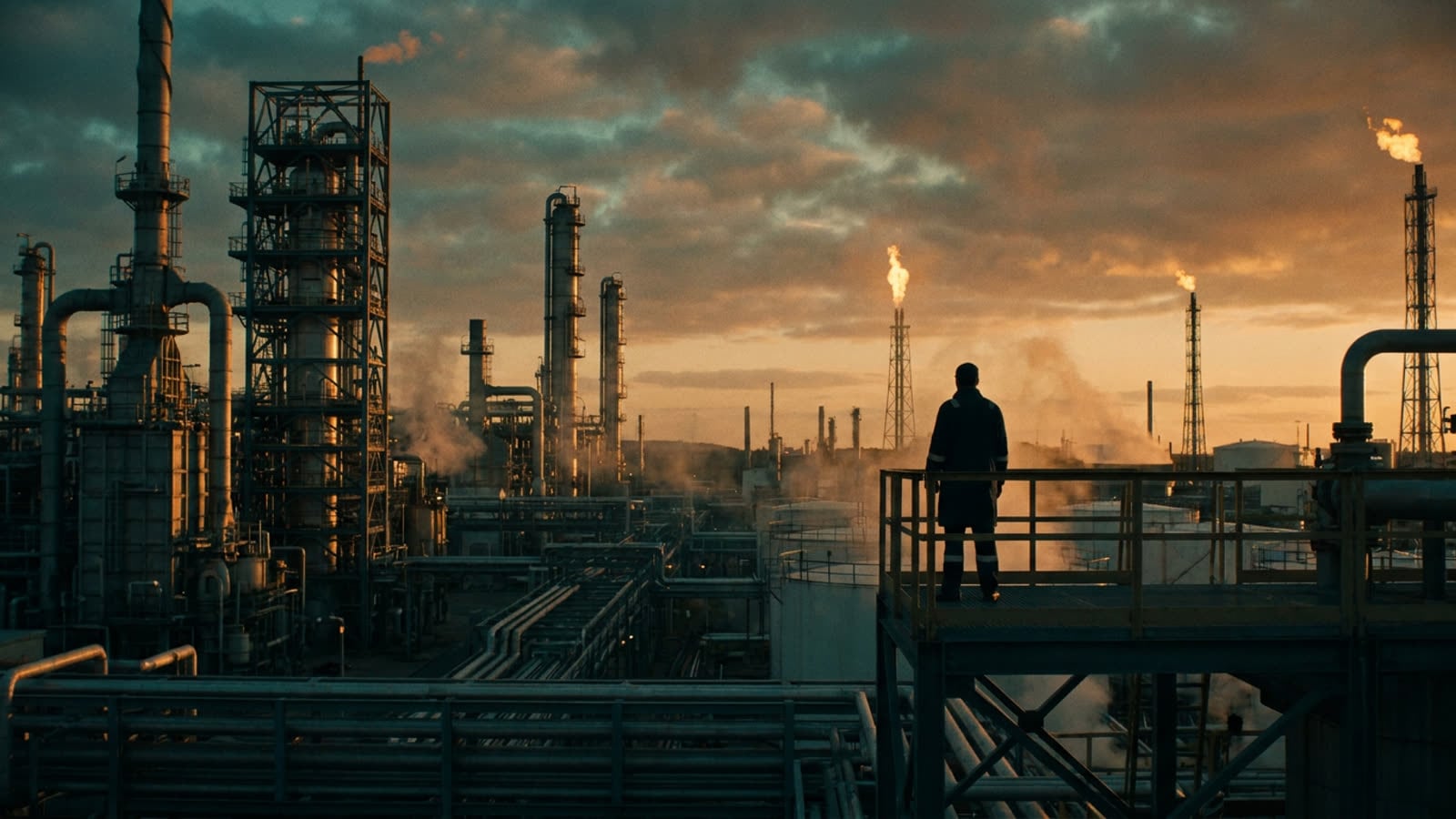
Europe's position is genuinely unenviable. The continent imports roughly 90% of its natural gas and a substantial share of its oil—supply chains that now run through a shooting war. When Tehran and Washington exchanged strikes this week, Brent crude jumped past $130. European wholesale gas prices followed. These aren't demand-driven price increases that rate hikes can cool; they're supply shocks that function like a tax on every household and factory.
Raising rates into this environment does nothing to drill more oil or reopen shipping lanes. What it does is crush demand elsewhere in the economy—mortgages, corporate borrowing, consumer credit—so that overall spending falls enough to offset the energy-driven price surge. The ECB is essentially telling Europeans: you will consume less of everything else so that headline inflation doesn't spiral.
The U.S. Federal Reserve, notably, has not matched the move. Jerome Powell faces the same inflation data but different politics: an administration that has openly embraced rising prices as evidence of wartime economic strength. The transatlantic divergence is now stark. The euro weakened immediately after the announcement, which will—ironically—make European energy imports even more expensive in local currency terms.
Lagarde's credibility play
The ECB's logic rests on a single, fragile assumption: that inflation expectations remain anchored only if the central bank demonstrates willingness to act. In this framework, doing nothing would be more dangerous than hiking, because workers and businesses would start pricing in permanently higher inflation, triggering the wage-price spirals that haunted the 1970s.
Lagarde made this argument explicitly in her press conference, invoking the ghost of Bundesbank orthodoxy. Germany's historical trauma around inflation—rooted in Weimar-era hyperinflation—has always shaped ECB culture, but it has rarely been deployed so directly as justification for policy that will hurt German industry. The automakers and chemical giants that depend on cheap energy are now facing both higher input costs and higher borrowing costs simultaneously.
The bet is that a short, sharp recession now prevents a longer, messier one later. It's the kind of argument that looks brilliant in retrospect if it works and catastrophic if it doesn't.
Our take
Lagarde is probably right on the economics and almost certainly wrong on the politics. European voters did not elect anyone to impose a recession, and the populist parties waiting in the wings—from France's National Rally to Italy's post-Meloni right—will happily blame Brussels technocrats for every factory closure and mortgage default. The ECB has statutory independence, but independence means nothing if the next generation of leaders decides to rewrite the statute. Frankfurt just made itself the face of European austerity at the worst possible moment. The inflation math may check out. The political math is another story.