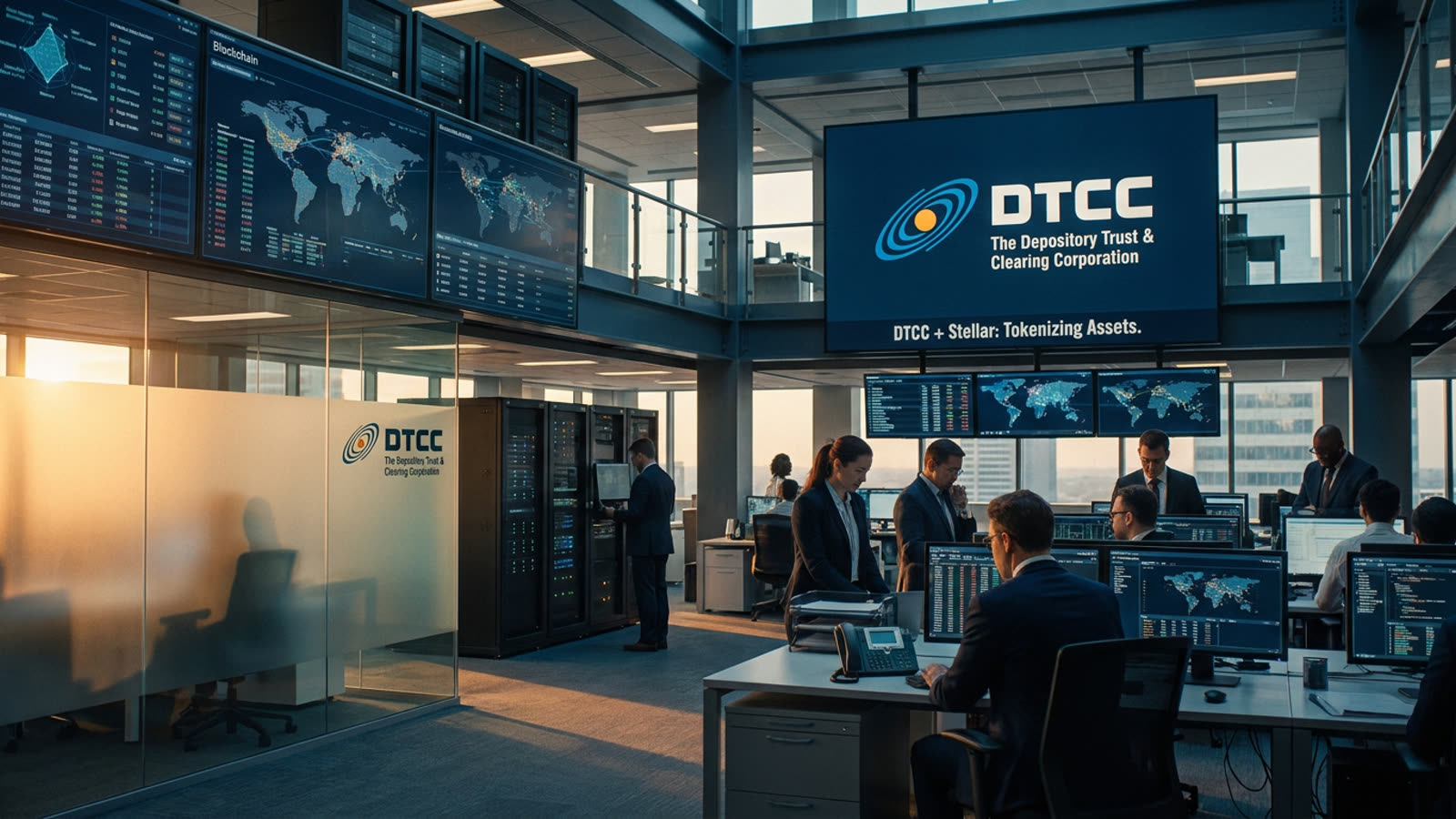
The Depository Trust & Clearing Corporation, which processes nearly all U.S. securities trades, plans to bring tokenized assets to the Stellar blockchain network. This marks the latest and perhaps most significant step in Wall Street's gradual embrace of blockchain technology for traditional financial operations.
The infrastructure play
DTCC's choice of Stellar over more prominent networks like Ethereum reveals how traditional finance views blockchain adoption. Stellar, designed specifically for asset tokenization and cross-border payments, offers lower transaction costs and faster settlement times than Ethereum's congested network. The move follows similar initiatives by JPMorgan on its Onyx platform and BlackRock's tokenized money market fund experiments.
What makes DTCC's involvement particularly noteworthy is its role as the central nervous system of U.S. capital markets. The organization settles more than $2 quadrillion in securities annually. When DTCC moves, the entire financial system pays attention.
Beyond the crypto casino
This development stands in stark contrast to retail crypto's focus on memecoins and speculative trading. While prediction markets and DeFi protocols chase yield-hungry speculators, institutions are quietly building parallel rails for traditional assets. Tokenized treasuries, corporate bonds, and equity shares represent a far larger addressable market than native crypto assets ever could.
The timing also matters. As regulatory clarity improves and institutional custody solutions mature, Wall Street firms are moving from proof-of-concept to production deployments. DTCC's initiative suggests tokenization has graduated from innovation theater to operational reality.
Our take
DTCC choosing Stellar over Ethereum sends a clear message: institutions prioritize reliability and cost efficiency over network effects and developer ecosystems. This pragmatic approach to blockchain adoption may lack the revolutionary fervor of early crypto advocates, but it's far more likely to reshape global finance. The real disruption won't come from new assets but from making old assets move faster and cheaper.