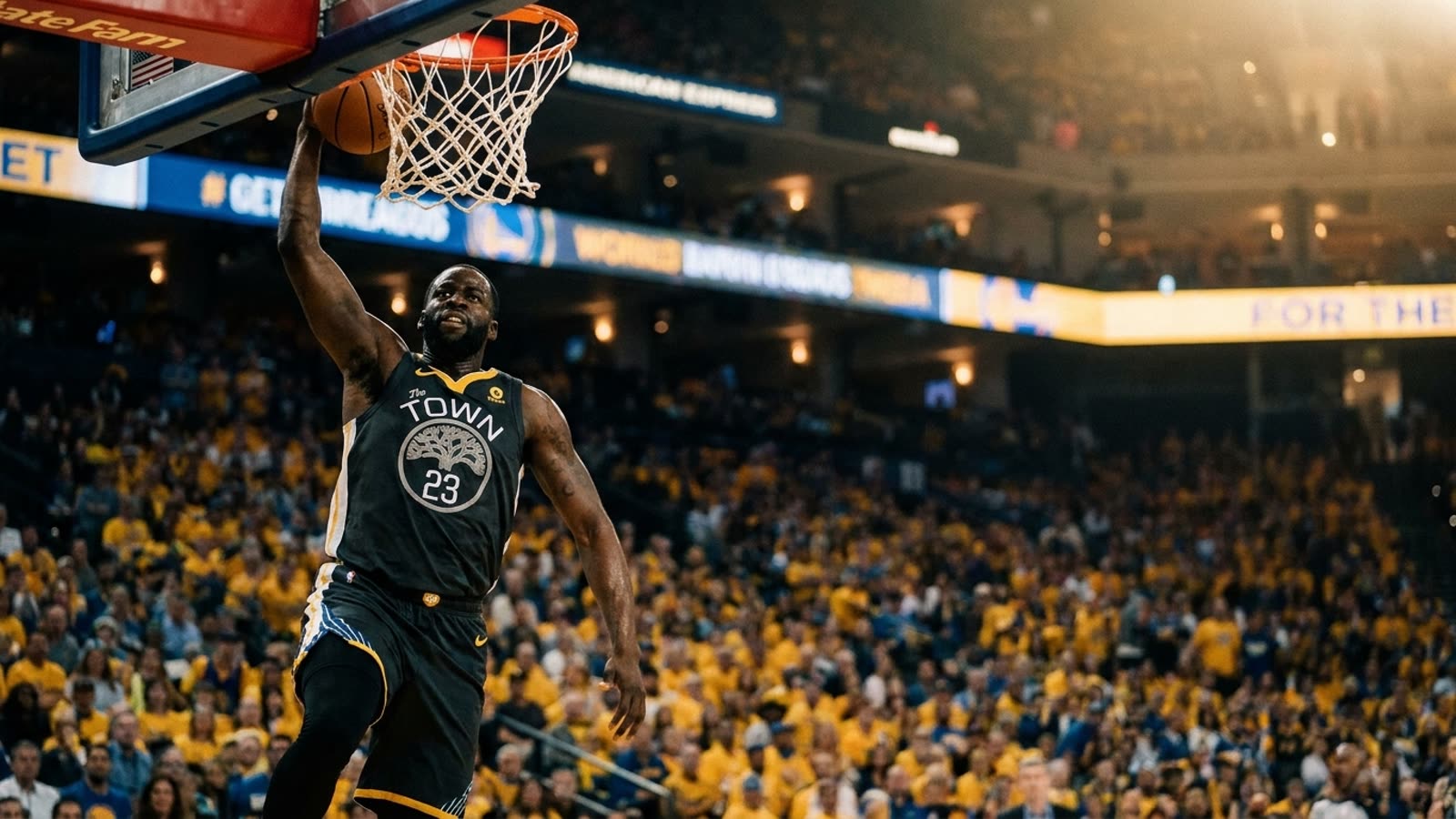
There is a version of Draymond Green that NBA coaches dream about: the defensive savant who orchestrates possessions, the emotional engine who elevates teammates, the player who makes winning plays that never show up in box scores. Then there is the version that referees see: a man who has been ejected from more games than any active player, whose relationship with technical fouls is less correlation than causation.
On Tuesday night against the Phoenix Suns, Green offered both versions in a single sequence. After a physical exchange with Dillon Brooks—a player whose own reputation for antagonism is well-documented—Green collected two technical fouls in rapid succession, earning his first ejection of the 2026-27 season and the 31st of his career. He left the court. The Warriors proceeded to play their best basketball in weeks.
The Brooks factor
The confrontation itself was predictable in the way that certain NBA collisions are inevitable. Brooks, who has built a career on getting under opponents' skin, and Green, who has built a career on refusing to let anyone get under his, were always going to clash. What made Tuesday notable was the aftermath: rather than deflating without their emotional center, Golden State responded with defensive intensity that had been missing for much of the early season.
Stephen Curry, who has spent a decade navigating the Draymond experience, was characteristically diplomatic while acknowledging the obvious. The ejection, Curry said, "lit a fire" in the team. This is the paradox the Warriors have accepted: Green's volatility is inseparable from his value, and occasionally losing him to his own emotions is the price of having him at all.
The 31-ejection man
Green's ejection total is not merely a curiosity; it is a defining feature of his career. No other player in the modern era has combined his level of defensive impact with his level of official antagonism. The question Golden State has answered repeatedly—and answered again Tuesday—is whether the trade-off is worth it. When the Warriors win games he gets thrown out of, the answer seems obvious.
The broader pattern is familiar: Green operates at an emotional register that occasionally tips into self-destruction, but that same intensity is precisely what makes him effective. Teams have tried to acquire Draymond Green's defensive IQ without his temperament; none have succeeded, because the two may be inseparable.
Our take
The NBA's most interesting players are rarely its most stable ones. Green at 36 remains exactly who he has always been: brilliant, infuriating, and utterly essential to whatever team employs him. The Warriors did not win Tuesday despite losing Draymond—they won because losing Draymond reminded them what playing with his intensity actually looks like. That this keeps happening, and that Golden State keeps absorbing it, tells you everything about the value of players who cannot be coached into compliance.