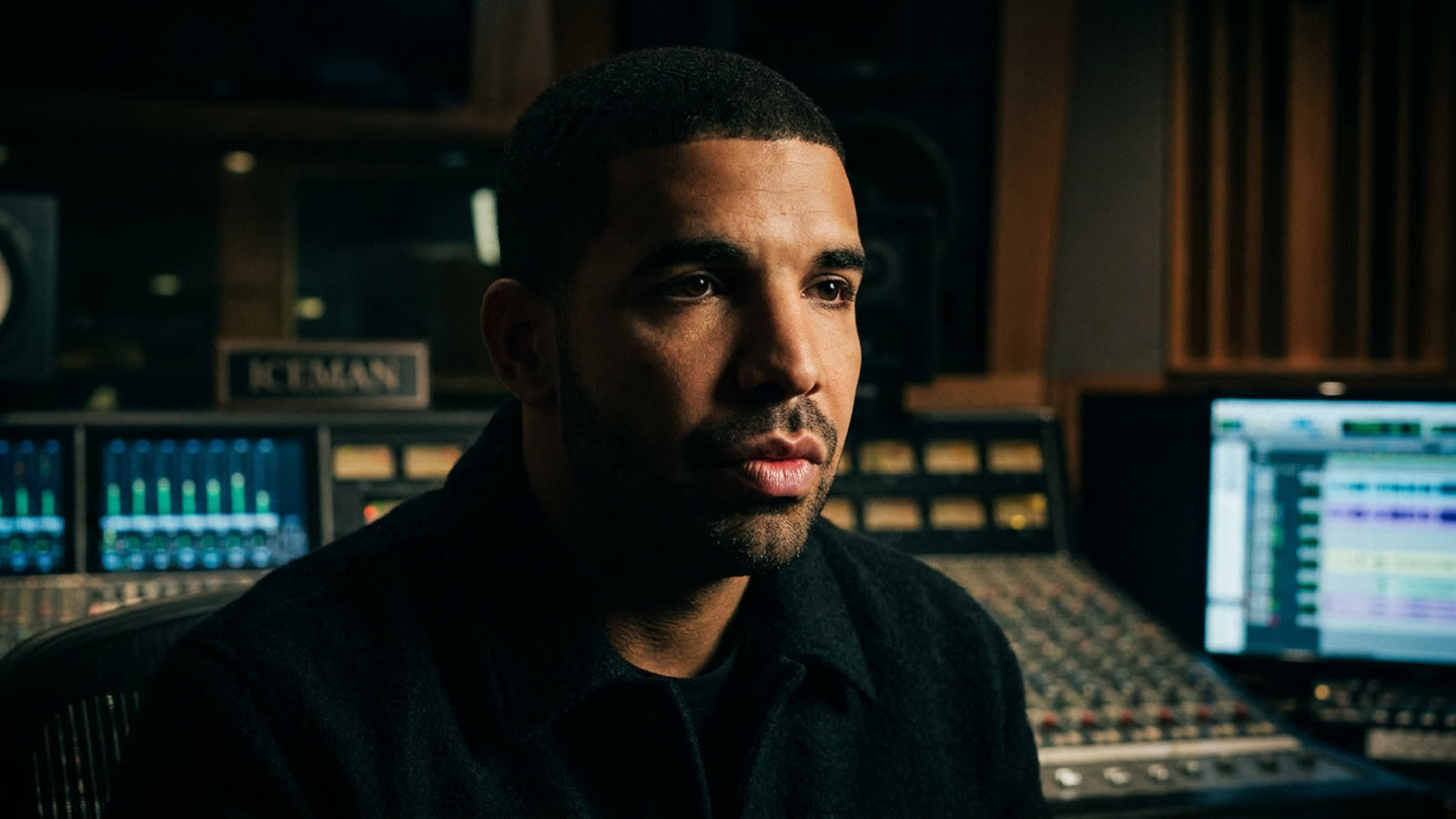
Aubrey Graham has never been comfortable with silence. In the twelve months since Kendrick Lamar's "Not Like Us" turned Drake into hip-hop's most scrutinized figure, the Toronto rapper has responded with lawsuits, social media skirmishes, and a conspicuous absence of new music. That drought ended Friday at midnight, when Drake released not one album but three: the long-rumored Iceman, the Arabic-influenced Habibti, and the R&B-leaning Maid of Honour.
The sheer tonnage—reportedly north of sixty tracks across the three projects—is unprecedented even by Drake's prolific standards. It is also, unmistakably, a statement: if the culture wants to move on without him, he will simply occupy more of it.
The strategic logic of excess
In an industry that has spent a decade chasing Drake's streaming model, the triple-drop inverts the prevailing wisdom. Most artists manufacture scarcity, teasing singles for months, rationing content to maximize algorithmic attention. Drake is doing the opposite, flooding Spotify and Apple Music with enough material to dominate charts through volume alone. The bet is that even if no single track becomes a generational hit, the cumulative streams will reassert his commercial supremacy.
There is precedent here, albeit modest. In 2022, Drake released Honestly, Nevermind and Her Loss within months of each other, both debuting at number one. But three albums in a single upload is a gamble of a different magnitude—one that risks diluting each project's identity while daring listeners to find their own entry point.
What the music actually sounds like
Early listens suggest deliberate sonic differentiation. Iceman is the hardest of the three, leaning into trap production and the kind of confrontational bars that defined If You're Reading This It's Too Late. Habibti explores Middle Eastern instrumentation and Afrobeats rhythms, a continuation of Drake's global-pop experiments. Maid of Honour is the softest, trafficking in the melancholic R&B that made Take Care a touchstone.
Whether any of these records coheres as a statement remains to be seen. Drake has long been accused of chasing trends rather than setting them; releasing three albums at once could be read as an admission that he no longer knows which version of himself the public wants.
Our take
This is a fascinating act of creative desperation dressed up as abundance. Drake is not operating from a position of strength; he is trying to brute-force his way back into relevance after a year that genuinely wounded his mythology. Whether it works will depend on whether listeners still have the appetite to meet him halfway—or whether the sheer scale of the offering feels less like generosity and more like noise.