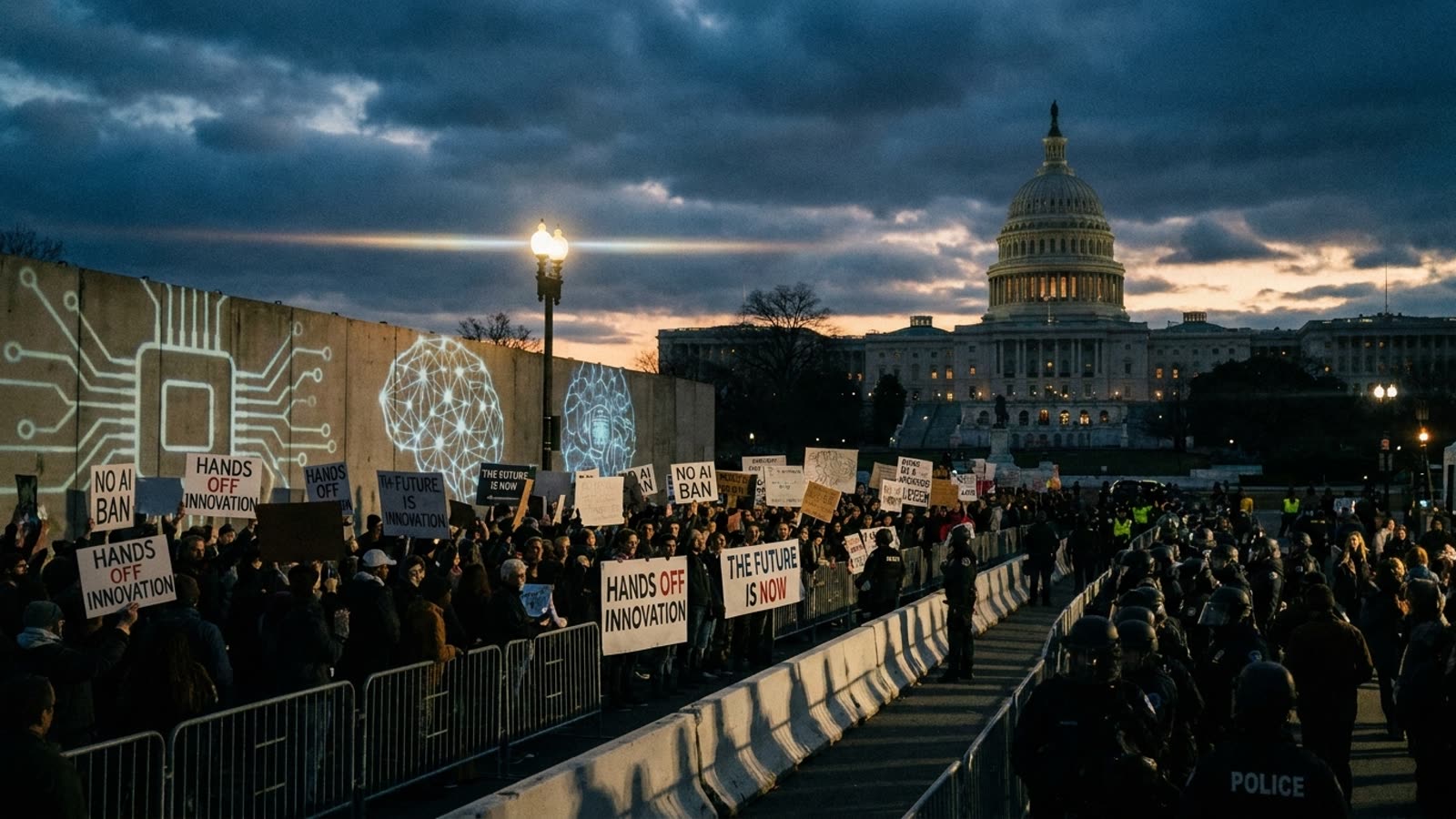
The Democratic Party has found its midterm message, and it sounds less like hope and change than cease and desist. With November polls suggesting the party could recapture at least one chamber of Congress, senior lawmakers are coalescing around an ambitious AI regulatory agenda that would impose licensing requirements, algorithmic transparency mandates, and strict liability for harms caused by generative systems. The strategy represents a calculated wager: that public anxiety about job displacement, deepfakes, and runaway automation has reached sufficient intensity to make tech skepticism a winning electoral proposition.
The political logic is not unreasonable. Surveys consistently show that Americans across partisan lines harbor deep misgivings about artificial intelligence, with majorities expressing concern about employment effects and misinformation. What Democrats are betting is that these diffuse anxieties can be converted into votes—that the abstract fear of AI can be made concrete enough to motivate turnout in competitive districts.
The legislative wishlist
Draft proposals circulating among Democratic staffers include a federal licensing regime for foundation models above certain capability thresholds, mandatory disclosure of training data provenance, and a private right of action for individuals harmed by AI-generated content. More aggressive versions would impose strict liability on AI developers for downstream harms, effectively treating large language models like pharmaceutical products requiring pre-market approval.
The ambition is notable. Previous tech regulation efforts—from Section 230 reform to antitrust action against platform giants—have stalled amid industry lobbying and jurisdictional complexity. AI, Democrats argue, presents a cleaner target: a nascent industry still concentrated among a handful of well-capitalised players, with harms visible enough to generate public sympathy but not yet entrenched enough to make regulation seem futile.
Silicon Valley's counter-offensive
Tech executives are responding with a familiar playbook: warnings about innovation flight, competitiveness with China, and the dangers of premature regulation. OpenAI, Google, and Anthropic have all increased Washington lobbying expenditures substantially over the past year, while industry-funded think tanks have produced a steady stream of research emphasising AI's economic benefits.
More interesting is the emerging split within the industry itself. Some AI safety researchers—including figures with credibility among Democratic lawmakers—have cautiously endorsed certain regulatory proposals, arguing that licensing and transparency requirements could actually benefit responsible developers by raising barriers to entry for less scrupulous competitors. This creates an unusual dynamic where the most prominent AI companies find themselves caught between opposing regulation publicly and quietly supporting frameworks that might entrench their market positions.
The implementation problem
Even if Democrats secure the votes, execution remains formidable. The federal government lacks institutional capacity for AI oversight—no agency possesses the technical expertise to evaluate foundation models or enforce algorithmic transparency requirements. Building that capacity would require years and billions of dollars, assuming sustained political will that historically evaporates once electoral cycles conclude.
There is also the question of scope. AI development is genuinely global; aggressive US regulation could simply push research offshore while doing little to protect American consumers from foreign-developed systems. The European Union's AI Act, now entering its enforcement phase, offers a cautionary example of how regulatory ambition can collide with practical limitations.
Our take
Democrats are probably right that AI anxiety is real and electorally relevant. They may be wrong that it translates into support for specific regulatory interventions that voters cannot easily evaluate. The more interesting question is what happens after November. If Democrats win and actually attempt implementation, they will discover what every tech regulator eventually learns: that the gap between legislative language and technological reality is vast, and that industries being regulated have far more patience than the politicians regulating them.