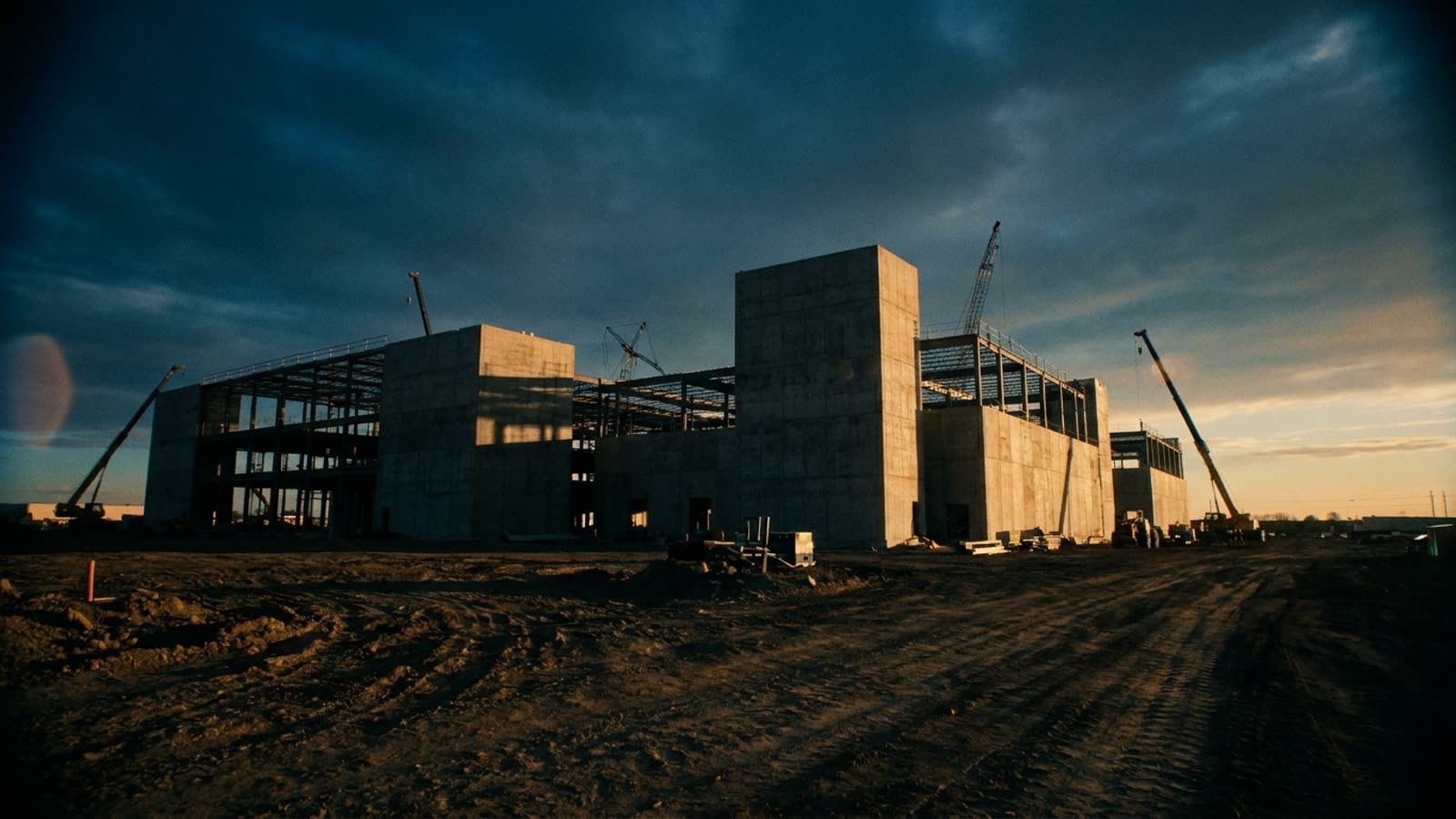
The Democratic sweep that reshaped Congress on Tuesday night also quietly reshaped the future geography of American computing. Nearly half of the data centres currently in planning or permitting stages now face uncertain futures, as newly empowered state and local governments reconsider the tax breaks, water rights, and grid priority that made those projects viable in the first place.
The arithmetic is stark. According to industry estimates, some 45 per cent of announced US data centre capacity sits in jurisdictions where incoming Democratic governors, legislatures, or utility commissions have signalled scepticism about the sector's insatiable appetite for electricity and freshwater. Virginia's Loudoun County — home to more data centre square footage than anywhere else on Earth — will soon answer to a state government that campaigned explicitly on renegotiating the sweetheart deals that lured hyperscalers to the region.
The overbuilding problem nobody wanted to name
For the past eighteen months, every earnings call from every major cloud provider has featured the same refrain: AI requires infrastructure, infrastructure requires capital, and capital is available. Microsoft, Google, Amazon, and a constellation of smaller players announced expansion plans that, taken together, implied electricity demand equivalent to adding another mid-sized country to the American grid. Utilities struggled to keep pace. Residents in data centre corridors complained of noise, strain on local services, and the eerie hum of cooling systems running through the night.
The market, as markets do, was solving for the wrong variable. It optimised for speed — who could break ground fastest, who could secure the most GPUs — rather than for sustainability or, frankly, for whether the demand projections underpinning these investments would actually materialise. The AI boom is real, but the revenue it generates remains concentrated among a handful of firms, while the infrastructure costs are being spread across dozens of speculative builds.
What the new political landscape changes
Democratic gains do not mean data centres become illegal. They mean the implicit subsidy regime that turbocharged the sector — cheap land deals, tax abatements, relaxed environmental review, priority grid access — faces genuine scrutiny for the first time. In Arizona, the incoming governor has promised a moratorium on new water allocations for industrial users until residential supply concerns are addressed. In Georgia, a newly Democratic state house will revisit the renewable energy credits that allowed data centres to claim green credentials while drawing from a coal-heavy grid.
Some projects will proceed regardless; the largest hyperscalers have balance sheets that can absorb higher costs and longer timelines. But the marginal builds — the speculative facilities being developed by smaller operators hoping to lease capacity to AI startups — face a reckoning. Financing terms will tighten. Permitting delays will compound. The land rush mentality that characterised 2025 and early 2026 is over.
Our take
This is healthy. The data centre sector was exhibiting the classic symptoms of a bubble: too much capital chasing too few proven use cases, justified by extrapolations that assumed AI adoption would proceed in a straight line forever. A political correction that forces developers to internalise some of the externalities they have been offloading onto communities — higher electricity prices, strained water supplies, overburdened grids — will separate the serious operators from the speculators. Investors who were nervous about overexposure to the sector should view Tuesday's results not as a setback but as a pressure valve. The boom continues; it simply becomes more rational.