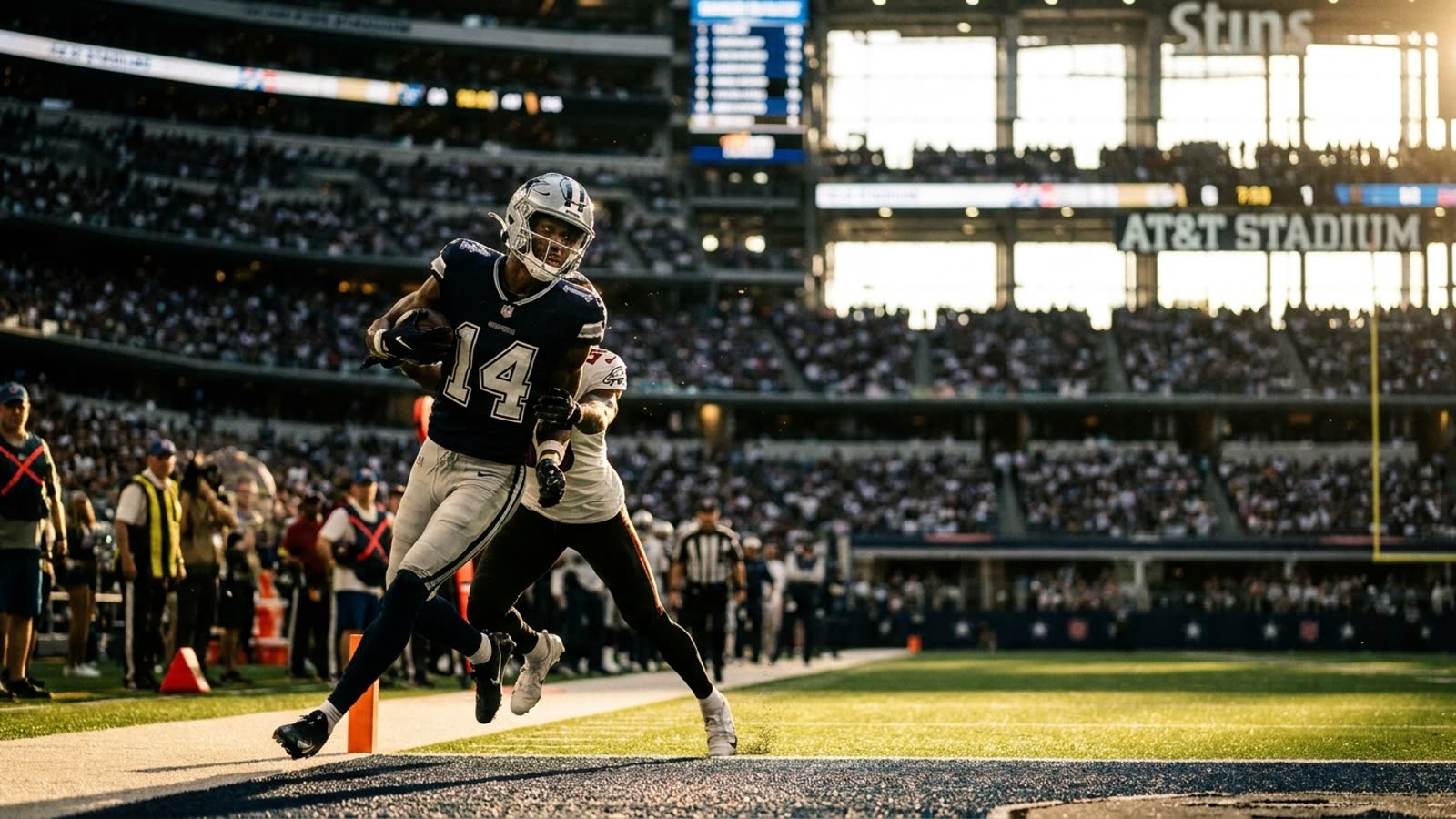
The Dallas Cowboys have spent the offseason trying to solve a receiver problem that has plagued them since the franchise let its last generation of talent walk. Now they're expecting George Pickens to show up at June minicamp, and the organization is treating his presence like a foregone conclusion rather than the open question it probably should be.
Pickens, acquired from Pittsburgh in a trade that sent the Steelers a second-round pick and change, represents the most talented and most volatile receiver to wear a Cowboys uniform since Dez Bryant's prime. The comparison is not incidental. Both players possess rare physical gifts—Pickens stands 6'3" with a catch radius that makes contested balls look routine—and both have demonstrated a capacity for self-sabotage that makes coaching staffs age in dog years.
The Pittsburgh exit
The Steelers did not trade Pickens because they had too many good receivers. They traded him because the organization decided that his talent no longer justified the disruption. Reports of sideline confrontations, cryptic social media posts aimed at teammates, and a general unwillingness to subordinate his ego to the team's needs had accumulated into a consensus that Pittsburgh was better off without him. The Steelers, a franchise that has historically tolerated difficult personalities when the production warranted it, concluded that Pickens had crossed a line.
Dallas, operating under no such institutional caution, saw opportunity where Pittsburgh saw exhaustion. Jerry Jones has never met a reclamation project he didn't find irresistible, and Pickens fits the archetype perfectly: undeniable talent, available at a discount, with just enough baggage to scare off more conservative franchises.
The Cowboys' calculation
The logic, such as it is, runs something like this: Pickens's issues in Pittsburgh stemmed from a dysfunctional quarterback situation and an offense that never figured out how to maximize his abilities. In Dallas, paired with Dak Prescott and offensive coordinator Brian Schottenheimer's scheme, he'll be happier, more productive, and therefore less inclined toward the behavior that made him a problem in the first place.
This theory requires believing that Pickens's difficulties were primarily situational rather than dispositional. It's a bet the Cowboys are making with their eyes open, though whether they're seeing clearly is another matter. The franchise has a long history of convincing itself that it can fix players other teams have given up on, and the results have been mixed at best.
Our take
George Pickens at his best is a top-ten receiver in the NFL, capable of the kind of highlight-reel catches that make offenses genuinely dangerous. George Pickens at his worst is a distraction that consumes coaching attention and locker room oxygen at the expense of everything else. Dallas is betting it gets the former and can manage the latter. Given the Cowboys' recent history of roster construction—long on hope, short on discipline—skepticism is warranted. But if it works, Jerry Jones will look like a genius again, which is exactly the outcome he's always chasing.