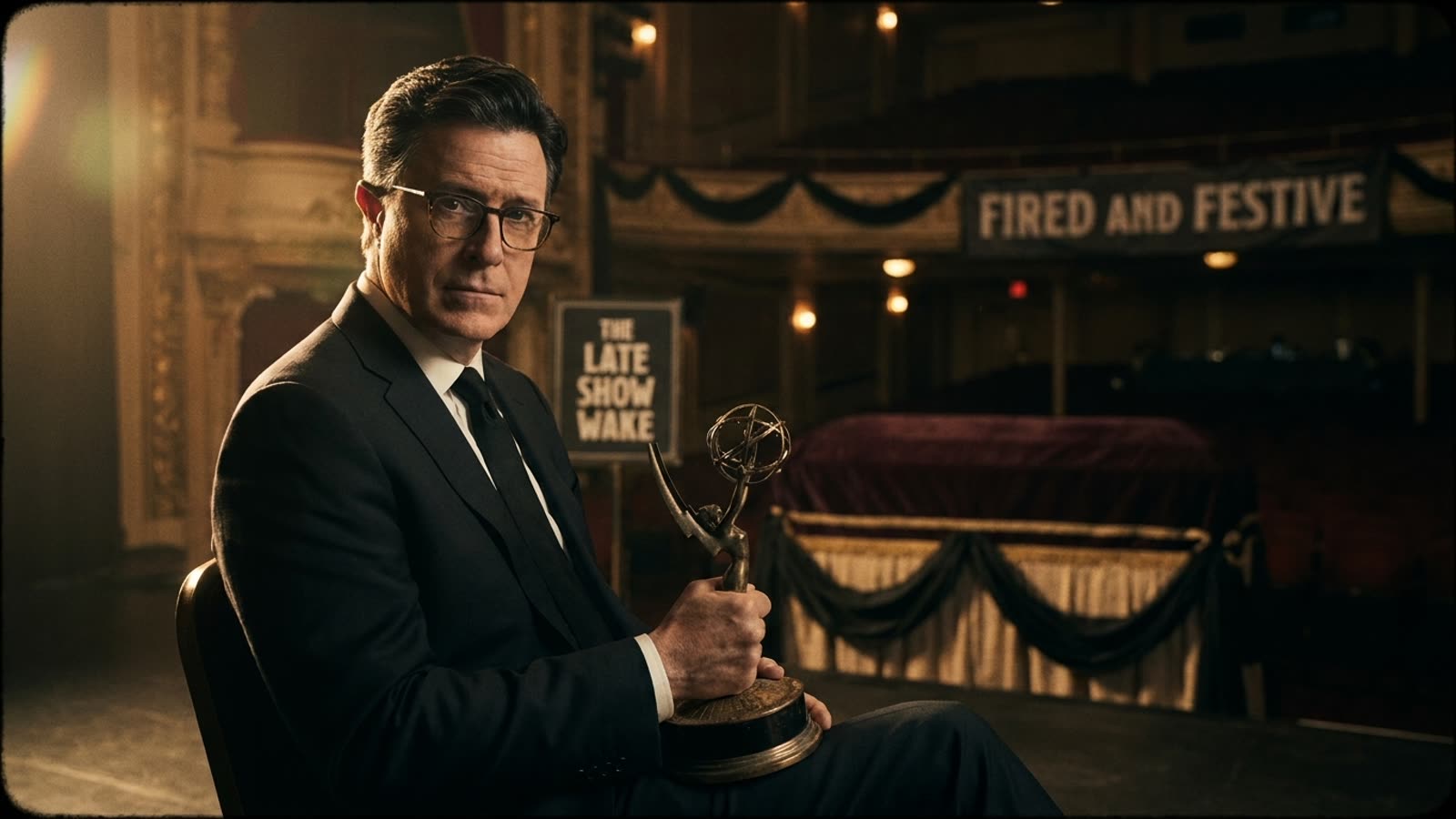
When Stephen Colbert tapes his final episode of The Late Show on Thursday at the Ed Sullivan Theater, he will not be going gently into that good night. He will be going to an after-party with a dress code that reads like a LinkedIn bio written during a nervous breakdown: "Fired and Festive."
The instruction, leaked to Variety, is quintessential Colbert—self-deprecating, politically charged, and just sardonic enough to make you wonder if he's processing genuine grief or performing it. Probably both. The party will be held at a nearby event space, the kind of venue that hosts bar mitzvahs and corporate retreats, which feels appropriately anticlimactic for a man who spent nearly a decade trying to make sense of American democracy from behind a desk.
The end of an era that never quite settled
Colbert inherited the Late Show from David Letterman in 2015, and the transition was rockier than CBS would have liked. His first year was a ratings disappointment, his comedy too cerebral, his persona too detached from the everyman schtick that late-night had long demanded. Then Donald Trump descended a golden escalator, and Colbert found his purpose. His monologues became appointment viewing for liberals who needed someone to articulate their outrage in complete sentences. The ratings followed.
But that era is ending, and not just for Colbert. Jimmy Fallon's Tonight Show has been hemorrhaging viewers. Jimmy Kimmel has openly mused about retirement. The entire late-night format—built for a world where people watched television at scheduled times and needed a trusted voice to process the day's news—feels increasingly like a relic. Streaming killed the linear star, and the parasocial relationships that once made hosts feel like friends now belong to podcasters and TikTok creators who don't need a network's permission to speak.
What 'Fired and Festive' actually means
The dress code is doing a lot of work. "Fired" acknowledges the obvious: Colbert is leaving, and while CBS has framed this as a mutual decision, the timing—amid broader cost-cutting at Paramount Global—suggests the economics were less than voluntary. "Festive" insists that this is a celebration, not a wake, even as everyone in attendance will be acutely aware that they're toasting the decline of an institution.
It's the kind of cognitive dissonance that Colbert has always been good at mining. His Comedy Central character, the blowhard conservative pundit, was built on the gap between what people say and what they mean. His Late Show persona was softer, more sincere, but the instinct remained: find the absurdity in the moment and make it legible.
Our take
Colbert's departure feels less like a retirement and more like an evacuation. He spent nine years trying to be the adult in the room while the room caught fire, and now he's leaving before the ceiling collapses. The "Fired and Festive" dress code is a joke, but it's also an honest assessment of where late-night television stands in 2026: out of time, out of relevance, and throwing itself a party anyway because what else is there to do. The real question isn't who replaces Colbert. It's whether anyone will notice when the lights finally go out.