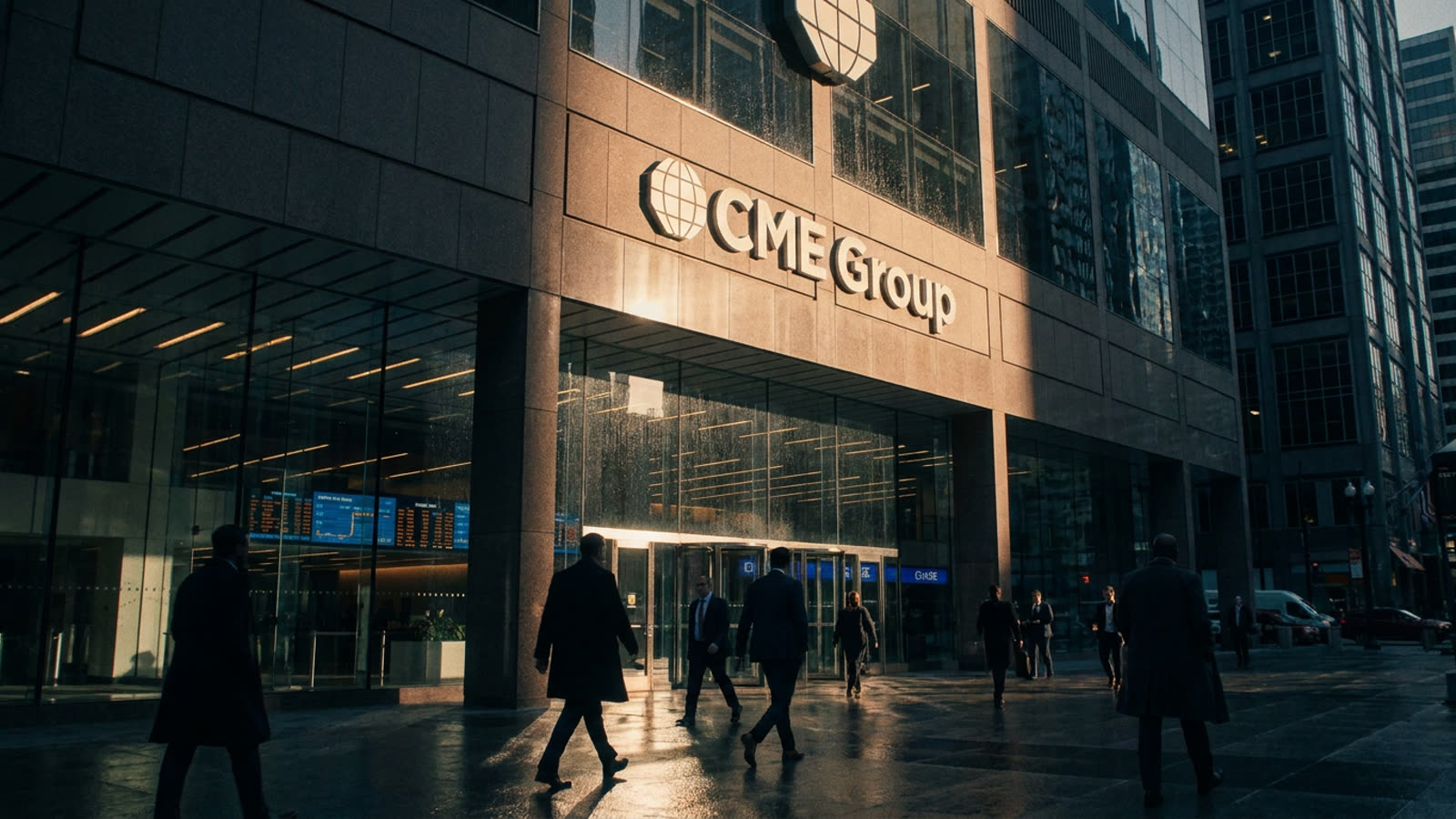
The Chicago Mercantile Exchange and Intercontinental Exchange, two institutions that have spent decades perfecting the art of extracting fees from derivatives traders, are now warning federal regulators that Hyperliquid—a decentralized perpetual futures platform—poses grave risks of market manipulation and sanctions evasion. The complaint, reportedly delivered to the CFTC and Capitol Hill officials, arrives precisely as Hyperliquid's trading volumes have begun eating into the incumbents' lunch.
This is regulatory capture dressed up as consumer protection, and Washington should see it for what it is.
The complaint and its timing
Hyperliquid has emerged as the dominant venue for on-chain perpetual futures, processing billions in daily volume with a fee structure that makes CME's pricing look positively medieval. The platform operates without intermediaries, using an order book model that settles on its own Layer 1 blockchain. For traditional exchanges, this represents an existential category of competition: not a rival exchange, but a rival architecture.
The incumbents' specific allegations—manipulation risk and sanctions evasion—are not fabricated from nothing. Any sufficiently liquid market can be manipulated, and pseudonymous systems do complicate compliance. But these concerns apply equally to offshore centralized exchanges that CME and ICE have coexisted with for years without filing formal complaints. The sudden urgency is revealing.
What the CFTC actually faces
The Commodity Futures Trading Commission is already stretched thin, navigating the aftermath of multiple enforcement actions while Congress debates the CLARITY Act's jurisdictional boundaries. Adding a novel investigation into a decentralized protocol—one with no corporate headquarters, no CEO to subpoena, and governance distributed across token holders—would consume resources the agency does not have.
More fundamentally, the CFTC would need to articulate a coherent theory of how U.S. law applies to smart contracts deployed on a global blockchain. The agency has historically preferred settlements with identifiable defendants. Hyperliquid offers no such convenience.
The deeper game
CME and ICE are not stupid. They understand that a CFTC investigation, even one that ultimately goes nowhere, creates regulatory uncertainty that institutional capital abhors. The mere existence of an open inquiry would give compliance departments at hedge funds and proprietary trading firms reason to pause before allocating to Hyperliquid. This is the point.
It is also worth noting that both exchanges have invested heavily in their own crypto derivatives offerings. CME's Bitcoin and Ether futures have become significant revenue lines. A flourishing decentralized alternative undermines the premise that regulated venues are necessary for institutional participation.
Our take
There is something darkly comic about two of the world's largest derivatives exchanges—entities that have paid hundreds of millions in fines over the decades for various infractions—positioning themselves as guardians of market integrity against a protocol that has yet to face a single enforcement action. Hyperliquid may well have vulnerabilities that deserve scrutiny. But that scrutiny should come from regulators acting on genuine risk assessments, not from incumbents wielding the regulatory apparatus as a competitive weapon. The CFTC would do well to recognize the difference.