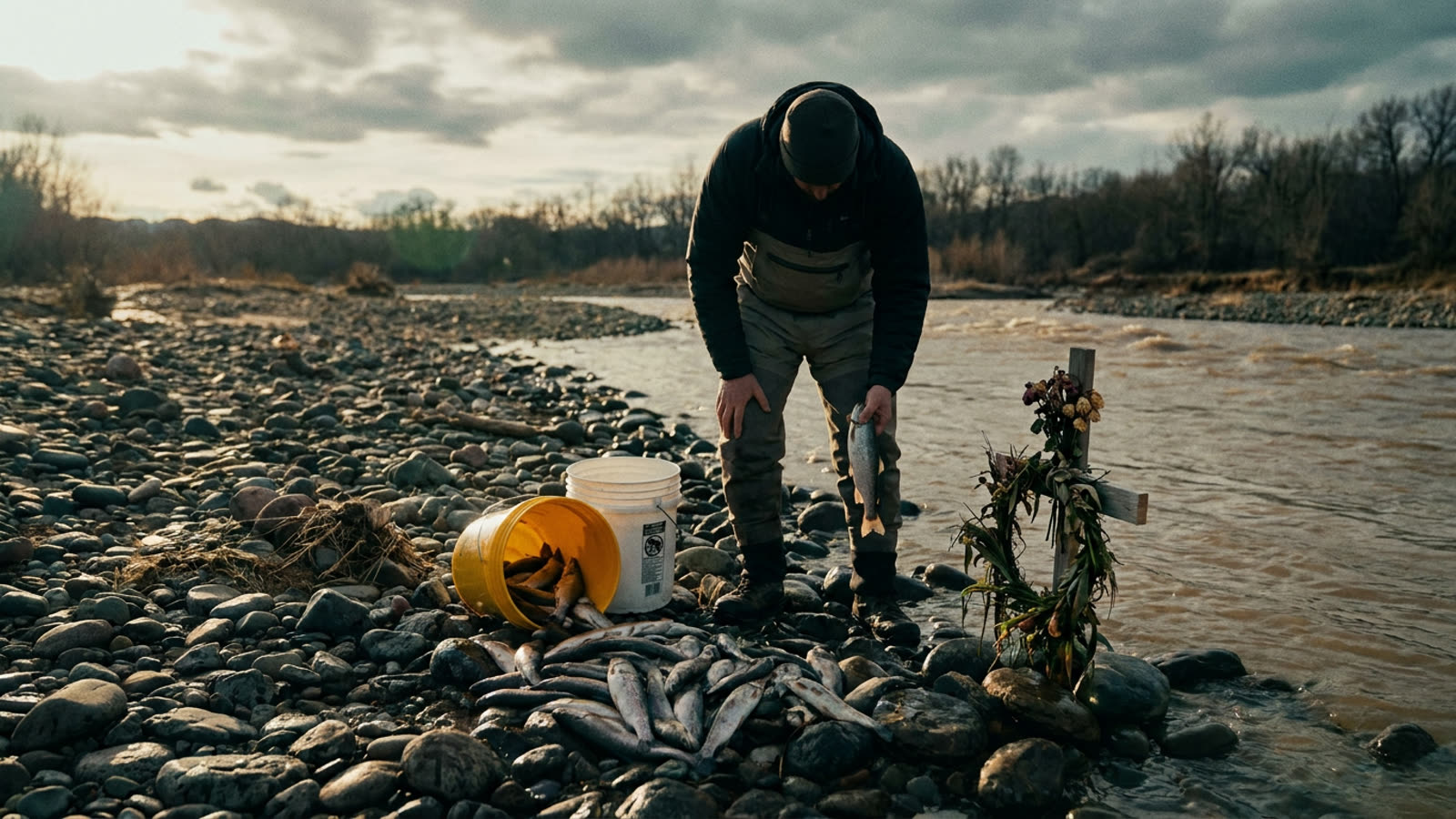
The Chattahoochee River—drinking water source for five million people, recreational backbone of metro Atlanta, and one of the most economically productive urban waterways in the American South—is now lined with dead fish. Thousands of them, belly-up, following a Memorial Day weekend downpour that dumped several inches of rain in mere hours. The kill wasn't caused by a chemical spill or industrial negligence. It was caused by weather.
This is what climate volatility looks like when it stops being an abstraction and starts rotting on riverbanks.
The mechanism is brutally simple
Extreme rainfall events flush organic matter, sediment, and pollutants into waterways faster than ecosystems can absorb them. The resulting oxygen depletion—hypoxia, in technical terms—suffocates fish populations that have no escape route. The Chattahoochee, already stressed by decades of urban runoff and agricultural pressure upstream, had no buffer against a storm of this intensity.
What makes this event economically significant isn't the fish themselves, though the Chattahoochee supports a recreational fishing industry worth tens of millions annually to Georgia's economy. It's the signal: urban infrastructure designed for twentieth-century weather patterns is failing under twenty-first-century conditions. Stormwater systems, retention ponds, and drainage networks across Atlanta were built assuming rainfall distributions that no longer apply.
The insurance math is getting worse
Property and casualty insurers have spent the past five years quietly repricing risk in the American Southeast. Florida's homeowner insurance crisis has dominated headlines, but Georgia faces its own reckoning. When a single storm can wipe out aquatic life in a major metropolitan river, the downstream effects—on property values along the waterway, on municipal water treatment costs, on recreational businesses—become harder to model and more expensive to underwrite.
Atlanta's economic identity has long rested on being the "city in a forest," a green metropolis where nature and commerce coexist. That brand has real dollar value in corporate relocation decisions, tourism, and quality-of-life metrics that attract talent. A river choked with dead fish complicates the narrative.
Our take
Climate economics has operated in the realm of projections and scenarios for so long that the field sometimes forgets what physical reality looks like. It looks like this: thousands of dead fish on a holiday weekend, families who drove out for a Memorial Day picnic confronted with ecological collapse instead. The Chattahoochee will recover, probably. The storms will keep coming, certainly. The question for Atlanta—and every American city built on the assumption of stable weather—is whether infrastructure investment can outpace the pace of change. So far, the answer is no.