The man who spends north of two million dollars annually trying not to die has found a way to democratize his obsession — or at least monetize it more efficiently. Bryan Johnson, the 49-year-old tech entrepreneur who has become Silicon Valley's most visible longevity evangelist, has partnered with Tovala, the smart-oven meal delivery company, to bring his Blueprint-certified diet to the masses.
The arrangement marks a significant pivot for Johnson, whose anti-aging regimen has until now been presented as a bespoke, quasi-scientific endeavor involving dozens of supplements, rigorous biomarker tracking, and the kind of personal infrastructure most people associate with professional athletes or heads of state. Now, for the price of a Tovala subscription and the company's countertop smart oven, anyone can eat like a man who measures his nighttime erections and publishes the data online.
The Blueprint Goes Beige
Johnson's diet is famously austere: plant-heavy, calorie-restricted, and optimized for what he claims are measurable biological outcomes. The Tovala partnership promises to translate this into pre-portioned meals that cook themselves via barcode scan. It is, in effect, the final step in removing human judgment from the act of eating — a logical endpoint for a movement that treats food less as pleasure than as pharmaceutical input.
The timing is strategic. Longevity culture has migrated from fringe biohacker forums to mainstream wellness discourse, propelled by the popularity of GLP-1 drugs like Ozempic and a broader cultural anxiety about aging in an era of extended lifespans and contracted retirement savings. Johnson, with his shaved head, monastic affect, and willingness to share intimate biological data, has positioned himself as the movement's most recognizable face — part guru, part cautionary tale, entirely compelling content.
The Business of Not Dying
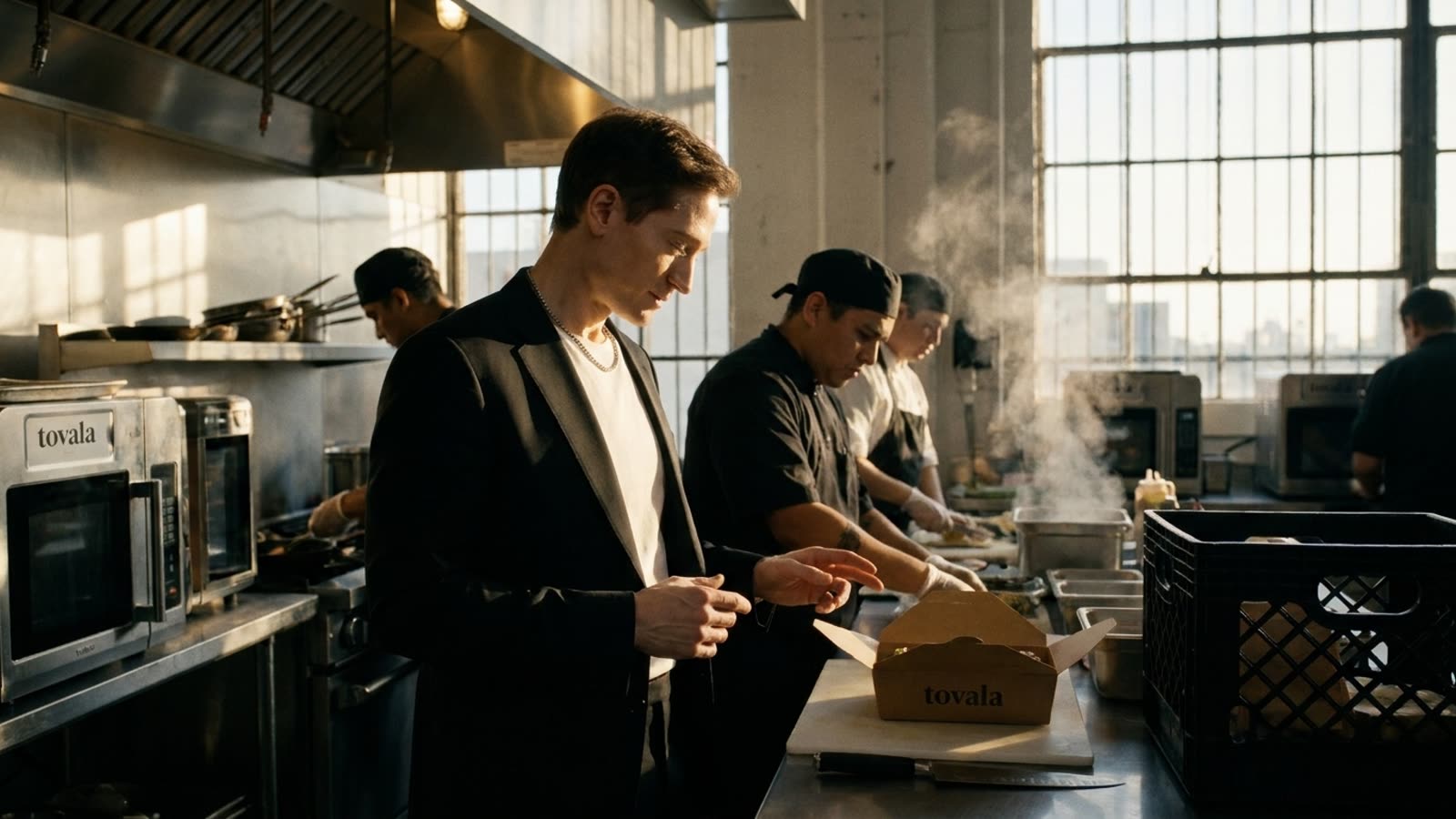
Tovala, for its part, gains access to Johnson's considerable following and the credibility (such as it is) of his brand. The company has carved out a niche in the crowded meal-kit space by betting on hardware integration — its proprietary oven reads barcodes and adjusts cooking settings automatically, reducing the friction that has plagued competitors like Blue Apron. A partnership with Johnson extends that value proposition into the wellness-obsessed demographic willing to pay premium prices for perceived optimization.
Whether the meals will actually deliver the biological outcomes Johnson claims for his own regimen remains, of course, unknowable. His personal protocol involves far more than diet — the supplements, the sleep optimization, the plasma transfusions from his teenage son that briefly made him a tabloid fixture. A Tovala subscription cannot replicate that infrastructure, nor the wealth required to sustain it.
Our take
There is something both admirable and faintly absurd about Johnson's project: the radical transparency, the willingness to be mocked, the genuine curiosity about human limits. The Tovala partnership strips away the mystique and reveals longevity culture for what it increasingly is — a consumer category like any other, complete with subscription tiers and barcode-scannable convenience. Johnson has always insisted he wants to help people live longer. Now we will find out if that mission survives contact with the meal-kit business model.