For two years, the Western response to Russia's shadow fleet has been largely bureaucratic: designations, insurance bans, port restrictions. On Saturday, Britain tried something different. It sent warships.
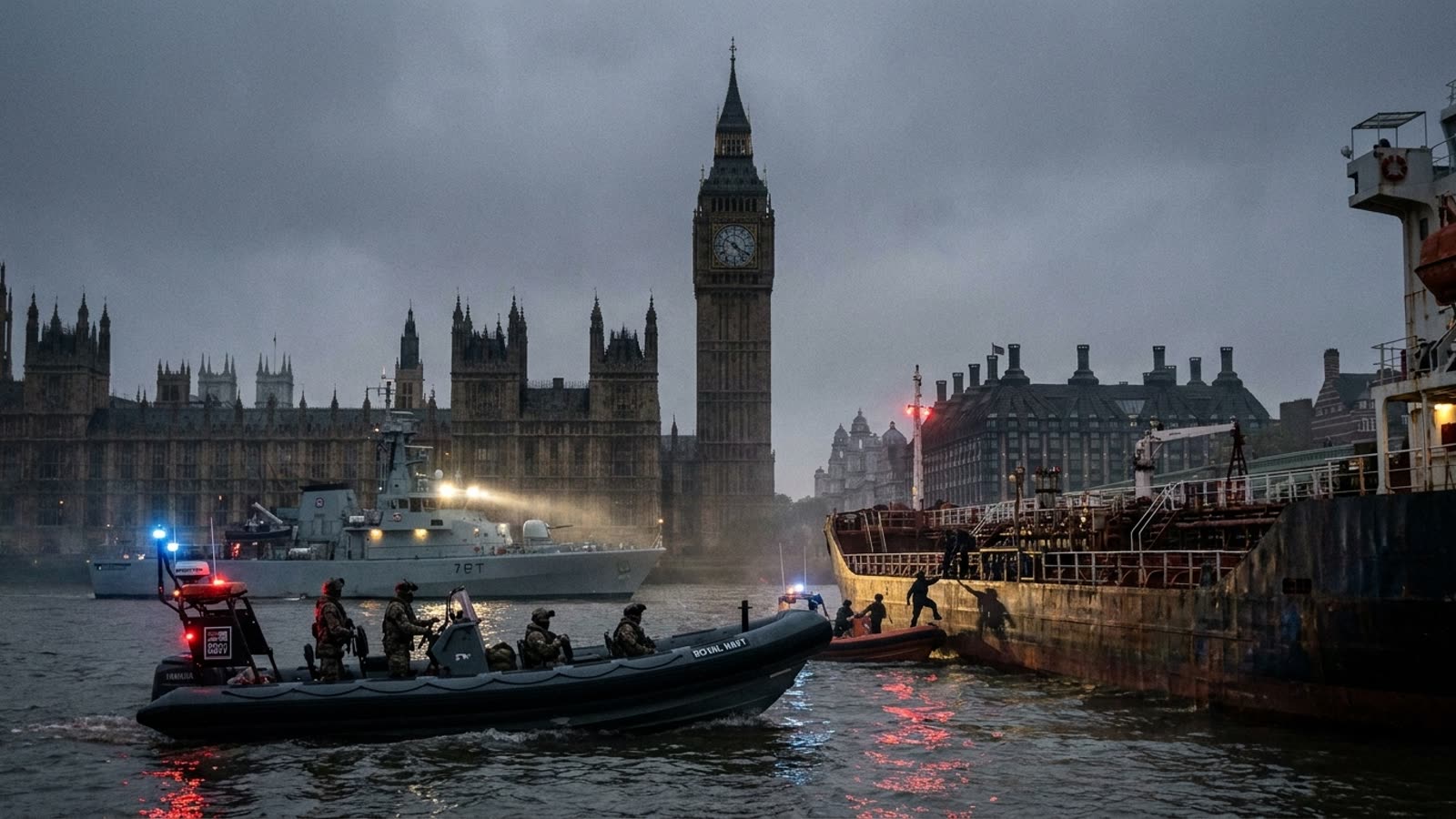
Royal Navy forces intercepted and boarded a Russian-linked oil tanker in the English Channel, seizing the vessel on grounds it was transporting sanctioned crude in violation of international restrictions. The operation—confirmed by the Ministry of Defence but light on operational details—represents the first known military interdiction of a shadow fleet vessel by a NATO member since the Ukraine war began.
The shadow fleet, a flotilla of aging tankers operating under obscure flags and opaque ownership structures, has become Russia's primary mechanism for evading the $60-per-barrel price cap imposed by the G7 in late 2022. Estimates suggest several hundred vessels now move Russian oil outside Western insurance and shipping networks, generating tens of billions in annual revenue for Moscow while skirting the sanctions regime designed to constrain its war economy.
Why now, and why Britain
The timing is instructive. Britain's new Labour government has sought to project renewed seriousness on Ukraine support after years of Conservative drift. The Channel, meanwhile, offers legal and logistical advantages: British territorial waters, proximity to naval assets, and unambiguous jurisdiction.
The operation also reflects growing frustration among Western capitals that the price cap has become a polite fiction. Russian crude continues to trade above the cap with minimal enforcement, and the shadow fleet has expanded rather than contracted. A physical seizure sends a message that paper sanctions alone have failed.
Moscow's response was predictable: the Foreign Ministry called the action "piracy" and threatened unspecified retaliation. But Russia's options are constrained. The shadow fleet's entire value proposition depends on operating in legal gray zones; direct confrontation with NATO navies was never part of the business model.
The economic arithmetic
The broader question is whether interdiction can scale. The shadow fleet comprises hundreds of vessels; the Royal Navy has dozens. Sustained enforcement would require either a multinational coalition or a fundamental shift in how Western powers approach sanctions compliance.
Yet even sporadic seizures impose costs. Insurance premiums for shadow fleet voyages will rise. Port states may reconsider their tolerance for vessels that could attract military attention. And the tankers themselves—often decrepit, single-hulled ships that Western insurers refused to cover even before sanctions—become stranded assets once impounded.
For energy markets, the immediate impact is negligible. Russian oil will continue to flow through alternative routes. But the seizure introduces a new variable into the risk calculus of sanctions evasion, one that spreadsheets and compliance memos could not.
Our take
The shadow fleet was always a test of Western resolve, and for two years the answer was: not very. Britain's boarding party changes the conversation, even if it doesn't change the underlying economics overnight. Sanctions work when they carry consequences. A frigate in the Channel is a consequence.