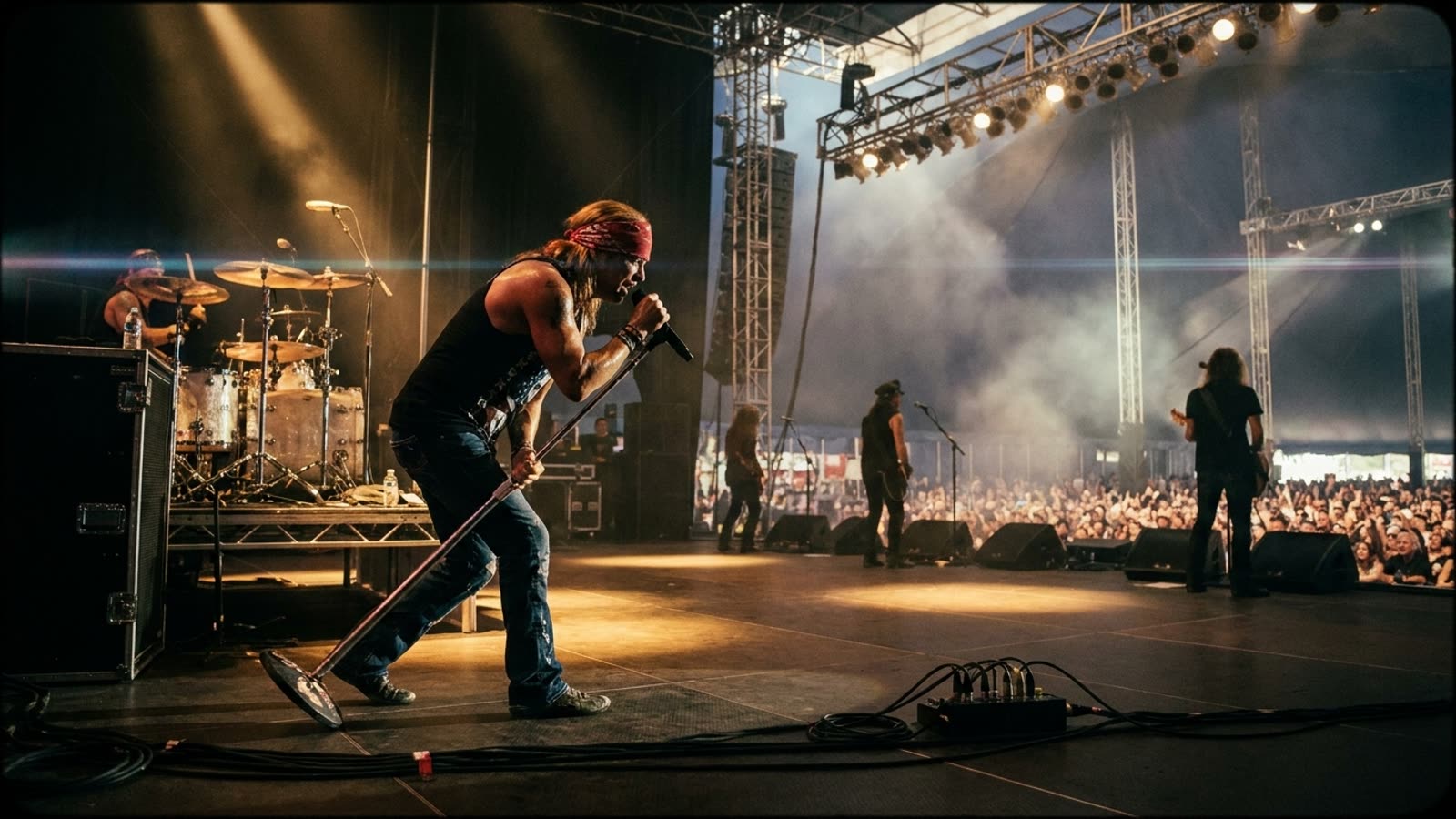
Bret Michaels, the bandana-clad Poison frontman who has spent four decades threading the needle between arena rock and reality television, has withdrawn from the Trump-backed Freedom 250 concert. The decision marks a rare moment of political discretion from an entertainer who has generally avoided taking sides—and suggests that even the most apolitical celebrities are finding neutrality increasingly untenable.
The Freedom 250, positioned as a celebration of American patriotism with unmistakable MAGA undertones, was meant to feature Michaels as a headlining act. His participation would have been a coup for organizers seeking mainstream rock credibility beyond the usual roster of country acts and Kid Rock. Instead, they're left scrambling.
The calculus of celebrity alignment
Michaels has built a post-Poison career on being aggressively inoffensive. His diabetes advocacy, Apprentice appearances, and nostalgic touring have positioned him as the rare '80s rocker who appeals to both coasts and the heartland. Playing a Trump-branded event would have complicated that carefully maintained brand architecture.
The entertainment industry's relationship with political events has grown increasingly fraught. Inaugural performances have become career-defining decisions rather than routine bookings. Corporate sponsors scrutinize artist affiliations with forensic intensity. For Michaels, whose income streams include licensing deals and brand partnerships, the risk calculation likely extended beyond ticket sales.
The MAGA entertainment gap
The Trump orbit has struggled consistently to attract mainstream entertainment talent. Kid Rock and Lee Greenwood can only carry so many events. The administration's cultural apparatus clearly hoped Michaels—with his crossover appeal and non-threatening nostalgia—could bridge the gap between political rally and genuine concert experience.
That Michaels said yes initially, then reversed course, suggests either late-breaking pressure from his business team or a genuine change of heart once the event's positioning became clearer. Neither explanation flatters the organizers.
Our take
Bret Michaels withdrawing from a Trump concert is not, in itself, a seismic cultural event. But it illustrates something important about where we are: even the most determinedly apolitical entertainers are being forced to pick lanes. The middle ground Michaels has occupied for decades—beloved by bikers and Bravo viewers alike—is shrinking. Every rose has its thorn, and apparently every concert booking now has its political audit.