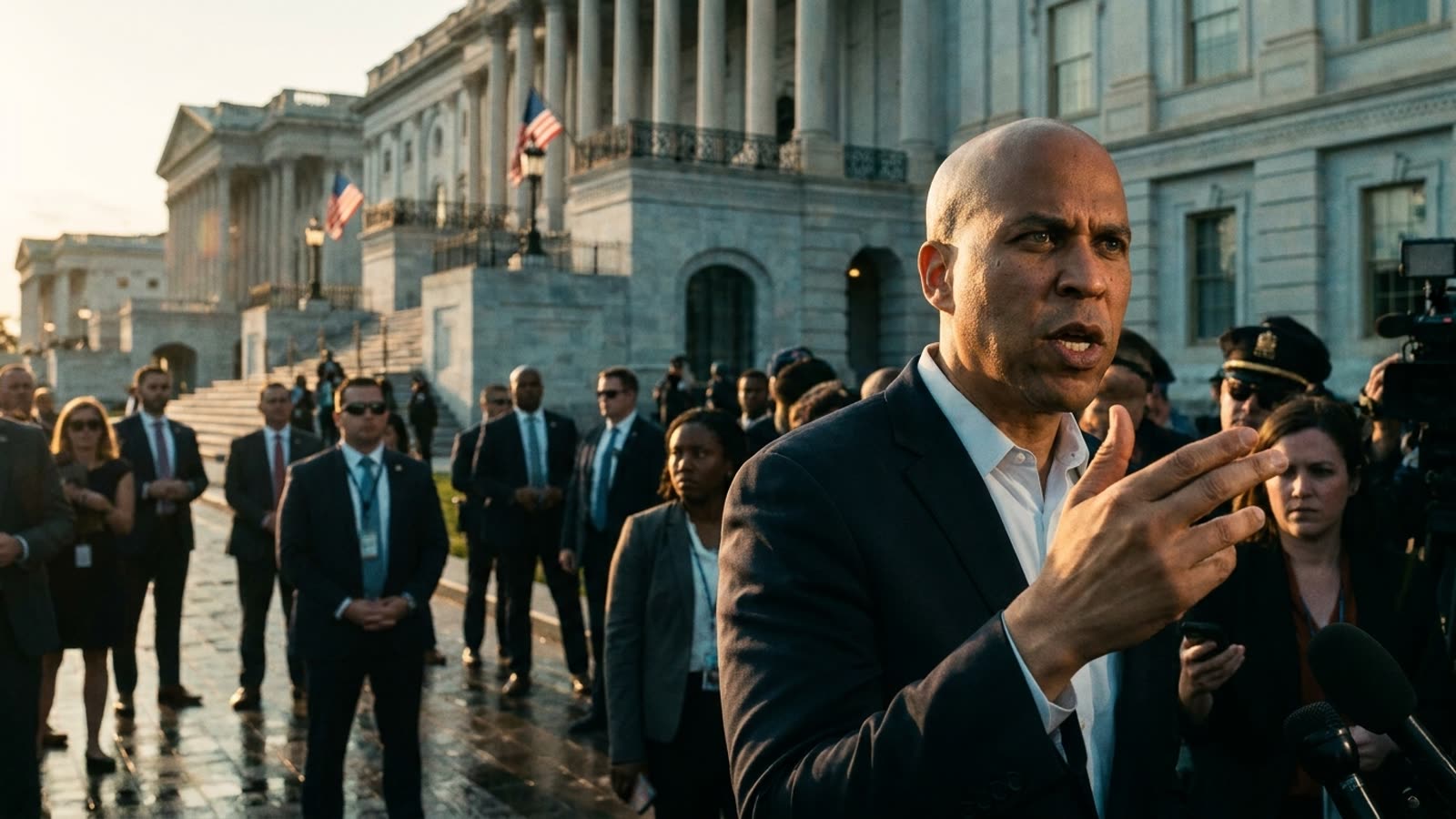
Senator Cory Booker of New Jersey broke with his party's careful hedging this week, declaring on national television that "Donald Trump is being played as a fool" in the emerging Iran nuclear agreement. The statement was notable less for its substance—many foreign policy analysts share the skepticism—than for the fact that a prominent Democrat said it out loud.
Three months into the administration's Iran campaign, a deal that would see Tehran surrender enriched uranium in exchange for sanctions relief and security guarantees is reportedly taking shape. The White House has framed this as vindication of its maximum-pressure approach. Booker sees capitulation dressed in victory's clothing.
The Democratic silence
Booker's willingness to use the word "fool" stands in stark contrast to the muted response from Democratic leadership. Senate Minority Leader Chuck Schumer has offered procedural objections about congressional notification. House Democrats have raised questions about verification mechanisms. None have accused the president of being outmaneuvered.
The caution is strategic. With Trump's approval ratings buoyed by the prospect of ending a conflict he started, Democrats face the familiar trap: opposing a peace deal risks looking bellicose, while endorsing it hands the president a legacy-defining win. Most have chosen a third path—bureaucratic quibbling that satisfies no one and moves no votes.
Booker, who has been notably more vocal since abandoning any pretense of another presidential run, appears unburdened by such calculations.
The substance beneath the sound bite
Stripped of its political theater, Booker's critique echoes concerns raised by intelligence officials and Republican hawks alike. The emerging framework reportedly lacks the inspection regime that made the 2015 JCPOA controversial but verifiable. Iran's ballistic missile program remains outside the agreement's scope. Most critically, the deal would legitimize uranium enrichment capabilities that took decades of international pressure to constrain.
"We're trading a war we didn't need to fight for a deal worse than the one we already had," Booker said, referring to the Obama-era agreement Trump abandoned in 2018. The senator's framing—that Trump created a crisis to solve it badly—is shared by many analysts but rarely articulated by elected Democrats.
Why hawks aren't cheering
The Republican foreign policy establishment finds itself in an awkward position. Senators who spent years demanding a tougher Iran stance now watch a deal take shape that offers Tehran more than previous Democratic administrations ever contemplated. Their criticism has been notably muted, confined to anonymous quotes and think-tank papers rather than floor speeches.
This creates an opening Booker is attempting to exploit: positioning Democrats as the party of serious national security while Republicans follow a president they privately doubt.
Our take
Booker is right on the merits and probably wrong on the politics. Calling a president a fool plays well on cable news and poorly in swing states where voters are exhausted by conflict and inclined to credit whoever ends it. But someone in the Democratic Party needed to state plainly what the foreign policy community has been whispering: this deal, if it materializes, will be remembered as the moment American leverage over Iran's nuclear program evaporated. Booker has given his party permission to say so. Whether they take it is another matter.