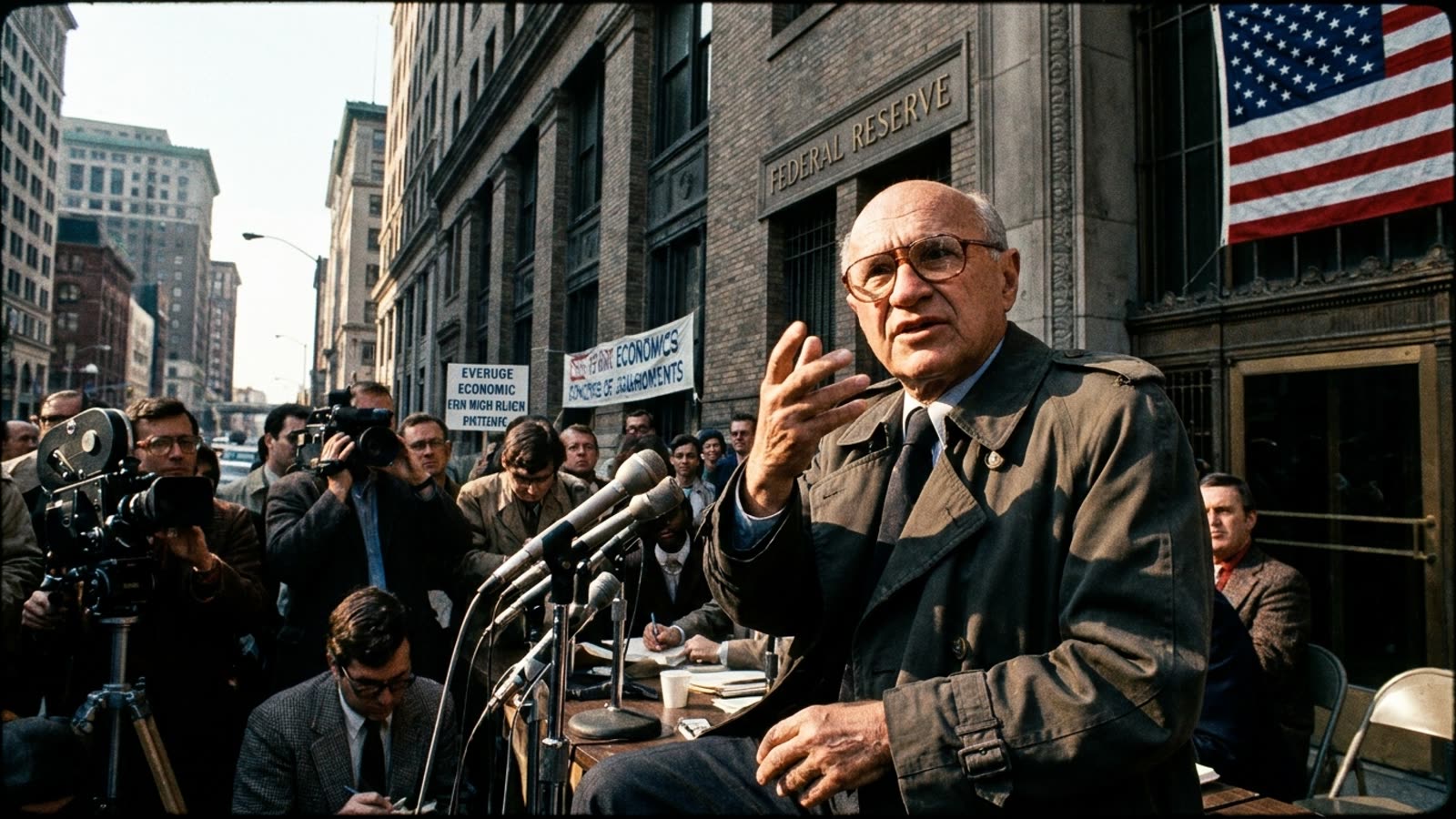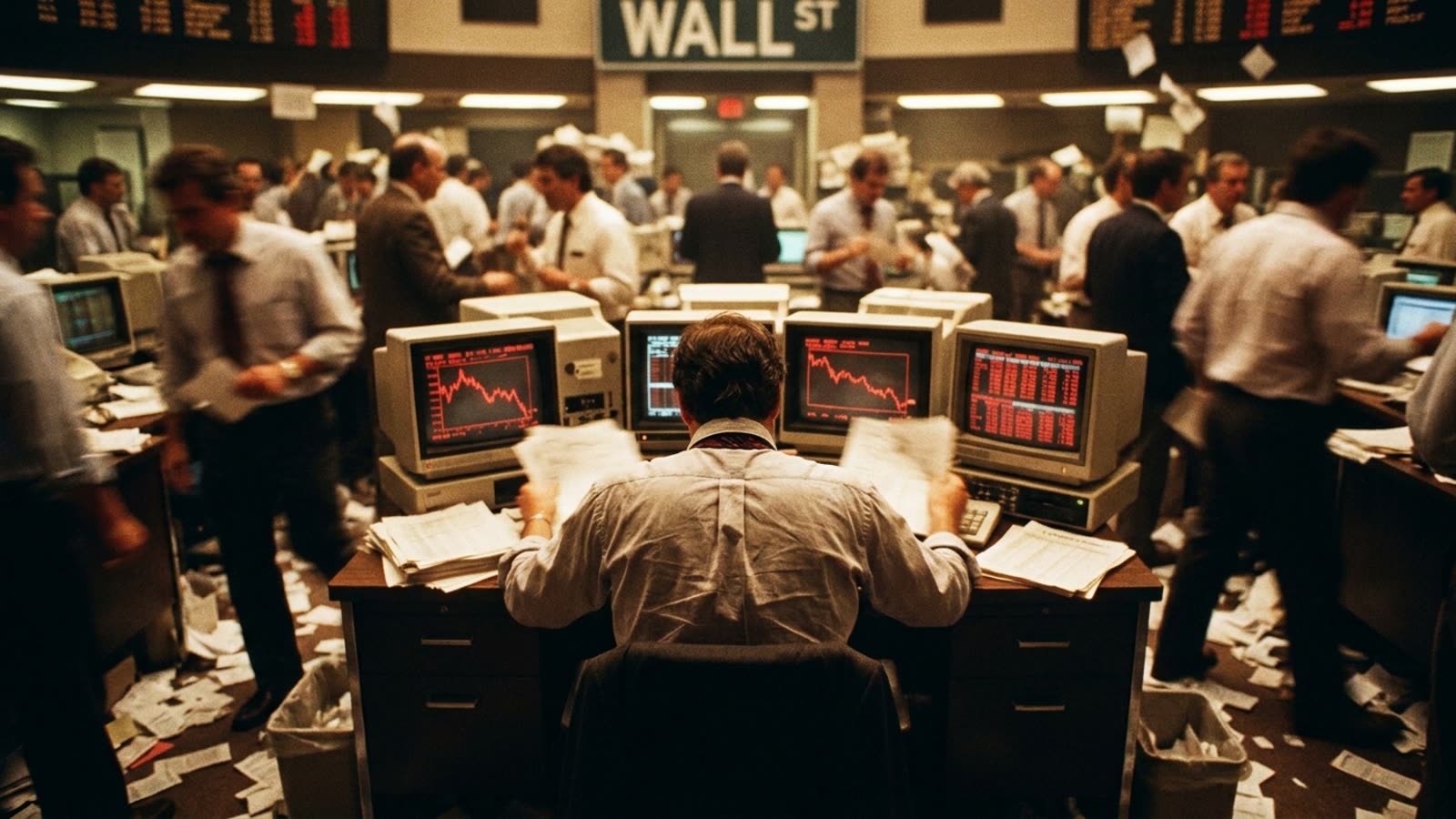
A single day in October 1987 remains the cleanest example of how market structure can turn a selloff into a self-fulfilling spiral. The Dow fell 22.6% on Oct. 19, a decline too large to blame on earnings, geopolitics, or even valuation. The trigger was mechanical: a popular hedging strategy that sold more as prices fell, in a market suddenly too thin to absorb the flow. The lesson endures because the instinct persists. When everyone buys the same protection, liquidity becomes the risk.
The algorithm that sold the world
Portfolio insurance was the era’s smart hedge. Instead of buying put options, institutions used “dynamic hedging” to emulate a floor under portfolios—selling stock index futures as the market dropped to keep risk within a band. In theory, small trades maintained safety. In practice, many managers were following the same rule at the same time. Selling begat selling as futures led cash equities down, index arbitrage tried to close the gap, and human market makers—staring at one-way order flow—stepped back. The feedback loop was classic reflexivity: price declines created hedging demand that created deeper price declines. Global markets, tied by arbitrage and sentiment, synchronized lower the next sessions.
What changed after 1987
Regulators and exchanges treated the crash as a design problem. Market-wide circuit breakers were introduced to pause trading during extreme declines, letting liquidity reset and risk managers breathe. Futures limits were tightened, and coordination across cash and derivatives venues improved to prevent dislocations from ricocheting unchecked. Clearinghouses raised expectations for margin and stress testing so that forced deleveraging would be more gradual, not cliff-like. Over time, refinements such as limit up/limit down bands and clearer playbooks for trading halts reduced the odds that a fast market would become a broken one. The point was not to stop losses, but to slow the accident.
What didn’t
Crowded hedges and liquidity illusions never left. Options markets now intermediate much of the risk that portfolio insurance once aimed to manage, and dealer hedging can still echo the 1987 dynamic: when volatility jumps, mechanical selling can meet shallow depth. Exchange-traded products promise intraday liquidity, but their underlying assets do not always oblige at stress points, creating gaps and discounts. The linkage between cash, futures, and derivatives is tighter and more transparent, yet fragility often hides at the boundary conditions—where models assume continuous markets and human behavior breaks continuity. The risk has migrated from a single strategy to the interplay of many.
Our take
Black Monday’s real message is architectural, not moral. Markets crash when design meets herding at speed. Halts and better margins fixed part of the machine; they did not repeal reflexivity. In the next panic, the culprit will have a new name, but the signature will be familiar: rules that work in drizzle unravel in a downpour. The only durable edge is humility about liquidity and brakes sturdy enough to buy time when everyone heads for the same exit.