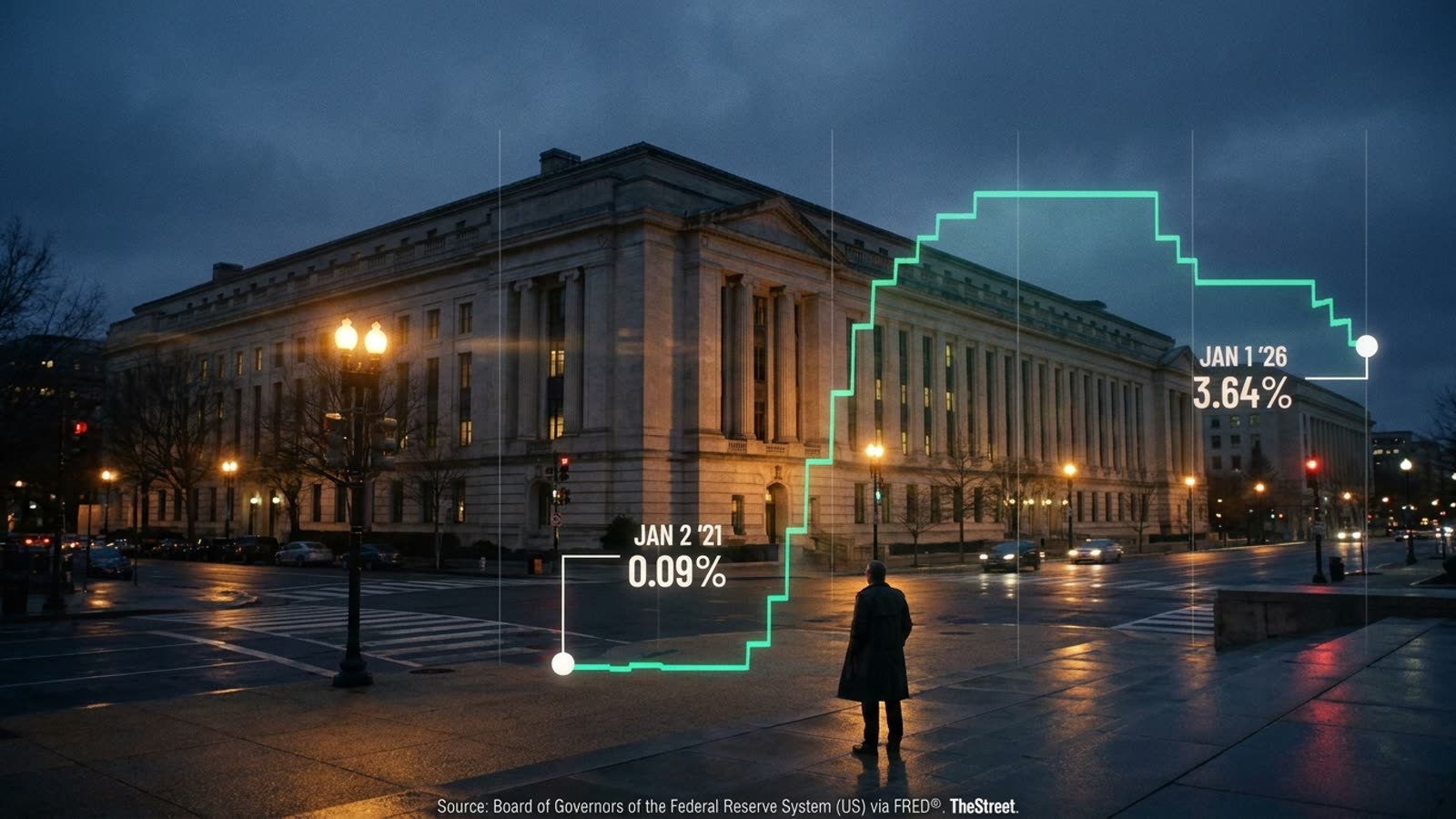
The narrative that carried Bitcoin from $40,000 to $70,000 — that crypto was a leveraged bet on Federal Reserve easing — is now working violently in reverse.
Spot Bitcoin ETFs, the products that were supposed to institutionalize cryptocurrency and smooth its notorious volatility, have instead become amplifiers of macro sentiment. Last week's outflows, measured in the billions, represent the largest exodus since the funds launched in early 2024. The proximate cause is familiar: Treasury yields climbed as fresh inflation data suggested the Fed's rate-cutting cycle remains distant, possibly nonexistent for 2026.
The macro-crypto feedback loop
Bitcoin's correlation with rate expectations has become uncomfortably tight. When traders price in cuts, crypto rallies on the assumption that lower yields make speculative assets more attractive. When those expectations deflate, the trade unwinds with mechanical precision. The ETF structure — designed to bring stability through regulated vehicles and institutional custody — has instead created a frictionless channel for hot money to enter and exit based on Jerome Powell's tone.
The irony is acute. Bitcoin was conceived as an escape from central bank manipulation. Now its largest investment vehicles trade like leveraged duration bets, rising and falling with the two-year Treasury yield.
Treasuries as the new competition
With short-term government bonds offering yields above five percent, the opportunity cost of holding non-yielding assets has become punishing. Bitcoin generates no income, pays no dividends, and offers no coupon. Its bull case rests entirely on price appreciation — a harder sell when risk-free alternatives compound reliably. Institutional allocators who dipped into crypto ETFs during the post-approval euphoria are now doing the math and finding Treasuries more compelling.
The outflows also reflect positioning ahead of this week's data deluge: PCE inflation, jobless claims, and housing figures will either validate the higher-for-longer thesis or offer crypto bulls a reprieve.
Our take
The Bitcoin ETF experiment has succeeded in one sense: it proved that Wall Street could package crypto for mass consumption. But it also revealed an uncomfortable truth. Institutionalizing Bitcoin did not insulate it from macro forces — it welded the asset more tightly to them. The dream of digital gold, uncorrelated and sovereign, has given way to a reality where Bitcoin trades like a high-beta tech stock with extra volatility. Until the Fed actually cuts, or until crypto finds a new narrative, the outflows will likely continue.