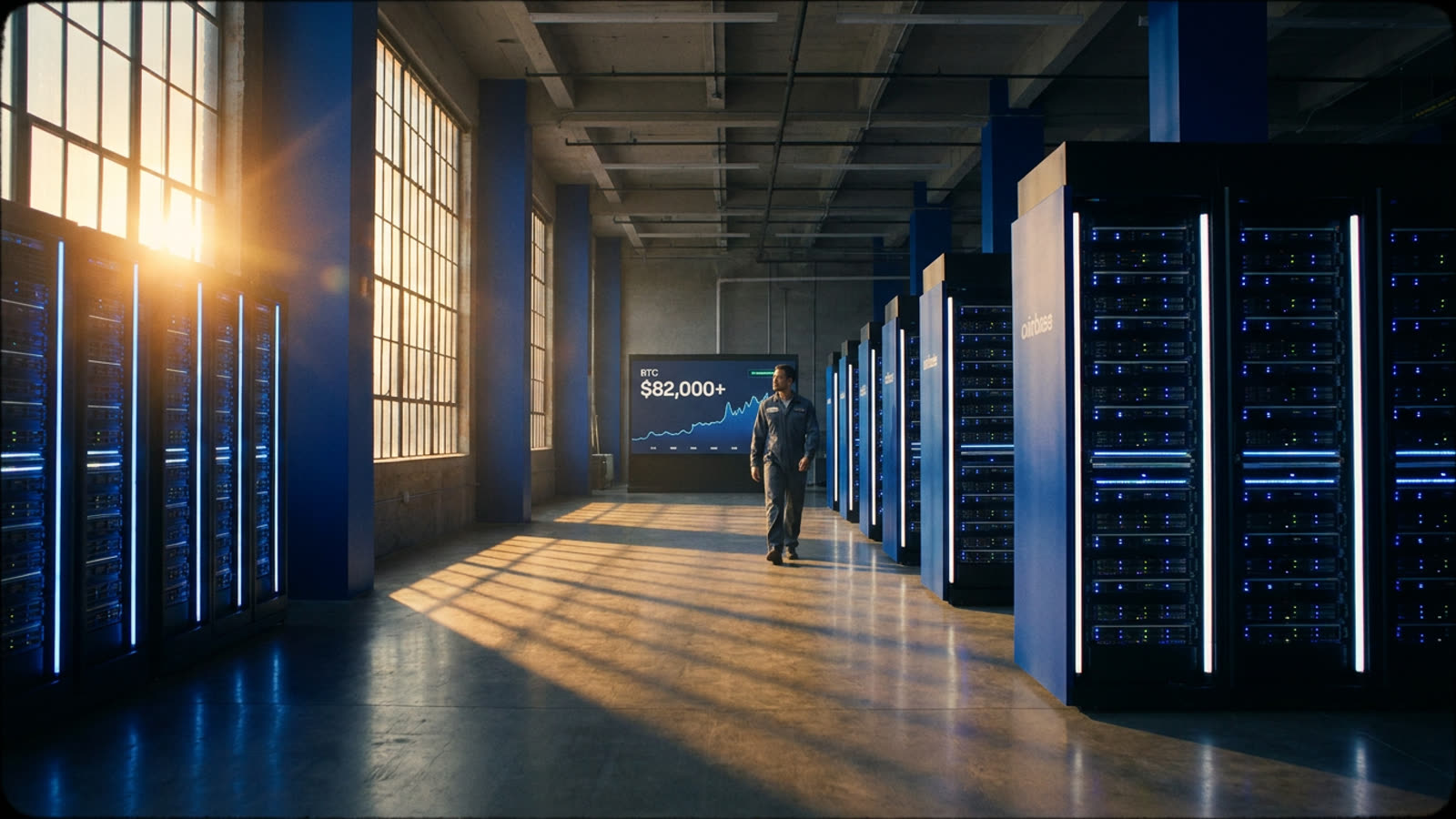
The cryptocurrency market has spent years begging Washington for rules it could actually follow. On Thursday, it got the clearest signal yet that those rules are coming—and it responded by sending Bitcoin past $82,000 for the first time since March.
The catalyst is the Digital Asset Market Clarity Act, a bipartisan bill that finally appears to have enough votes to clear the Senate Banking Committee. The legislation would establish a formal registration pathway for crypto exchanges, create a taxonomy distinguishing securities tokens from commodities, and—crucially—end the regulatory turf war between the SEC and CFTC that has paralyzed the industry for half a decade.
Why Coinbase is leading the charge
Crypto exchange Coinbase surged more than 14% in Thursday trading, outpacing Bitcoin itself. The reason is straightforward: Coinbase has been operating under an SEC enforcement cloud since 2023, when the agency sued the company for allegedly running an unregistered securities exchange. The Clarity Act would retroactively legitimize much of Coinbase's business model by reclassifying most major tokens as commodities subject to CFTC oversight.
Other crypto-adjacent equities followed suit. MicroStrategy, the corporate treasury play that now holds over 400,000 Bitcoin, gained 11%. Mining firms Marathon and Riot Platforms each climbed roughly 9%. Even the AI chipmaker Cerebras, which went public Thursday morning, benefited from the broader risk-on mood—its shares closed 23% above the IPO price.
The Cerebras connection
Cerebras is not a crypto company, but its successful debut matters for the sector. The IPO market has been effectively closed to crypto-native firms since the 2022 collapse of FTX. A strong showing from a high-profile tech IPO suggests that institutional appetite for growth-stage technology bets is returning. Several crypto infrastructure companies—including stablecoin issuer Circle and blockchain analytics firm Chainalysis—have IPO registrations pending.
What the Clarity Act actually does
The bill's core innovation is a "functional test" that would replace the SEC's current reliance on the 1946 Howey test for determining whether a digital asset is a security. Under the new framework, tokens that are "sufficiently decentralized"—meaning no single entity controls more than 20% of supply or governance—would be classified as commodities. Centralized tokens would remain securities, subject to full SEC disclosure requirements.
Critics argue the 20% threshold is arbitrary and gameable. Supporters counter that any bright-line rule beats the current regime, in which enforcement actions are the only way to learn what the law actually is.
Our take
The rally is real, but the celebration may be premature. The Clarity Act still needs a floor vote, a House companion bill, and a presidential signature—none of which are guaranteed. What Thursday demonstrated is not that crypto has won, but that it has finally been given a path to winning. For an industry that has spent three years in regulatory purgatory, that alone is worth $82,000.