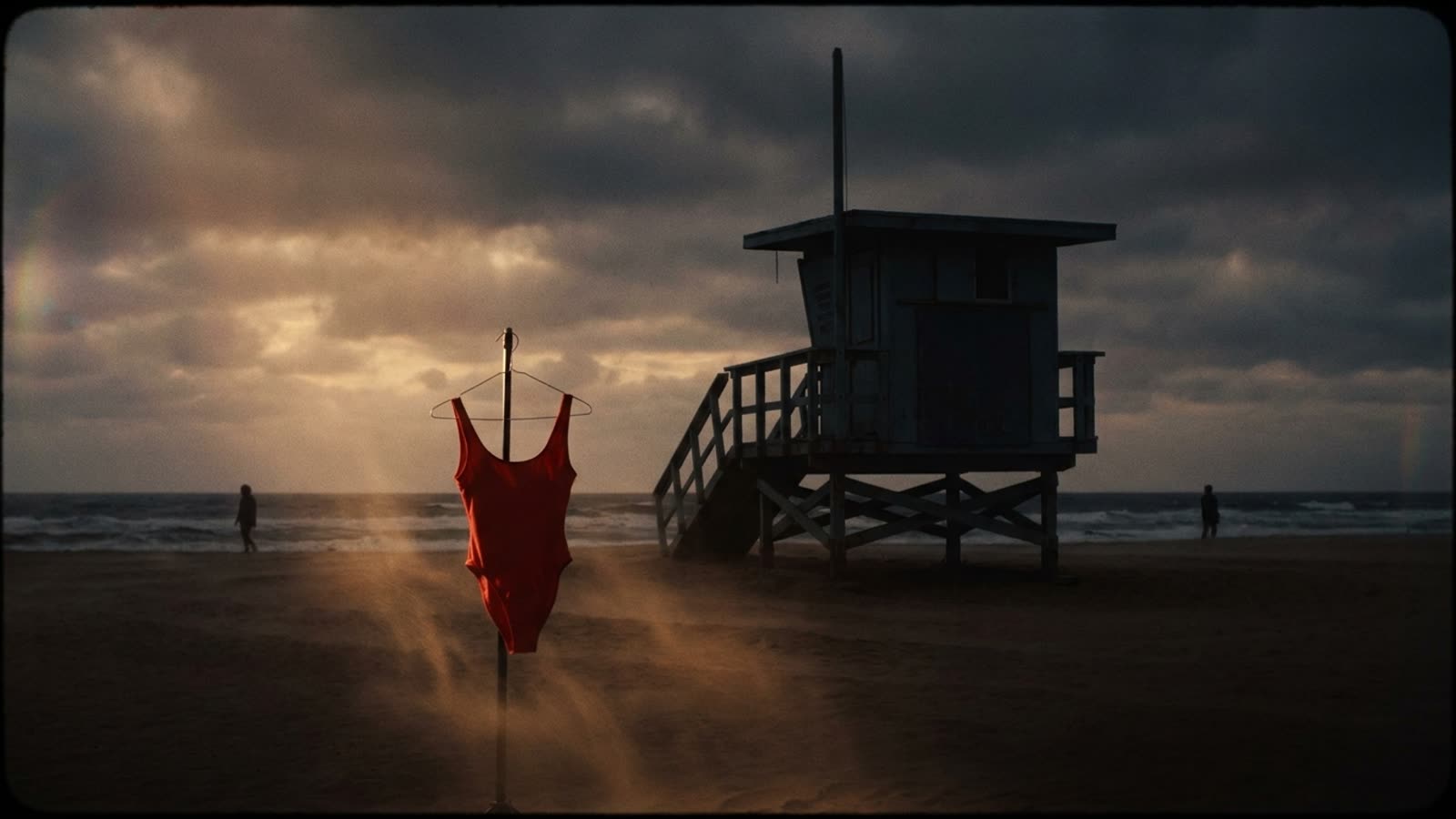
The red one-piece swimsuit that launched a thousand adolescent awakenings is back on the market, and the bidding war tells you everything you need to know about the current state of celebrity.
Brooks Nader, the Sports Illustrated Swimsuit model who recently dominated tabloid cycles with her post-divorce Dancing With the Stars romance, and Livvy Dunne, the LSU gymnast whose TikTok following rivals small nations, are both reportedly in serious contention to inherit Pamela Anderson's iconic C.J. Parker role in the upcoming Baywatch reboot. The casting process has become less audition than algorithm—a calculation of Instagram followers, engagement rates, and the ineffable quality of "moment."
The metrics of modern stardom
Neither candidate would have made sense for this role even five years ago. Nader, 28, has the classic swimsuit-model credentials but built her current cultural relevance through a very public divorce from Billy Haire and a subsequent romance with DWTS partner Gleb Savchenko that played out in real time across social media. Dunne, 22, has never acted professionally but commands an audience of over 12 million across platforms—a number that makes studio executives' pupils dilate.
The original Baywatch, which ran from 1989 to 2001, was appointment television in a pre-streaming world. Anderson became a global sex symbol through the role, though she's spent recent years successfully recontextualizing her image through a Netflix documentary and a quieter life that earned her surprising critical respect. Any reboot faces the challenge of capturing that lightning while acknowledging that the culture has shifted considerably on how it consumes images of women in swimwear.
Why this casting matters
The Nader-versus-Dunne competition represents two distinct theories of contemporary fame. Nader is the traditional pipeline: modeling, reality television, tabloid presence, acting. Dunne is the new model entirely: collegiate athletics as content creation, brand deals that dwarf her NIL earnings, and a fanbase that exists almost entirely on phones. Casting Nader suggests the studio wants someone who can handle the press tour; casting Dunne suggests they want someone who is the press tour.
Hollywood's relationship with influencer-actors remains fraught. For every Addison Rae project that finds an audience, there are a dozen that quietly disappear. But Baywatch isn't exactly prestige television—it's a franchise built on slow-motion running and implausible rescue scenarios. The question isn't whether the lead can deliver Chekhov; it's whether she can sell the fantasy.
Our take
This is a perfect storm of nostalgia economics and attention-economy casting, and honestly, we're fascinated by the outcome. Pamela Anderson's Baywatch worked because she seemed genuinely delighted to be there, running down that beach like she'd invented the concept of summer. Whether Nader's polished professionalism or Dunne's native-digital charisma can replicate that joy remains to be seen. But the real story is that Hollywood has stopped pretending acting ability is the primary qualification for certain roles. The red swimsuit goes to whoever can make the most people look.