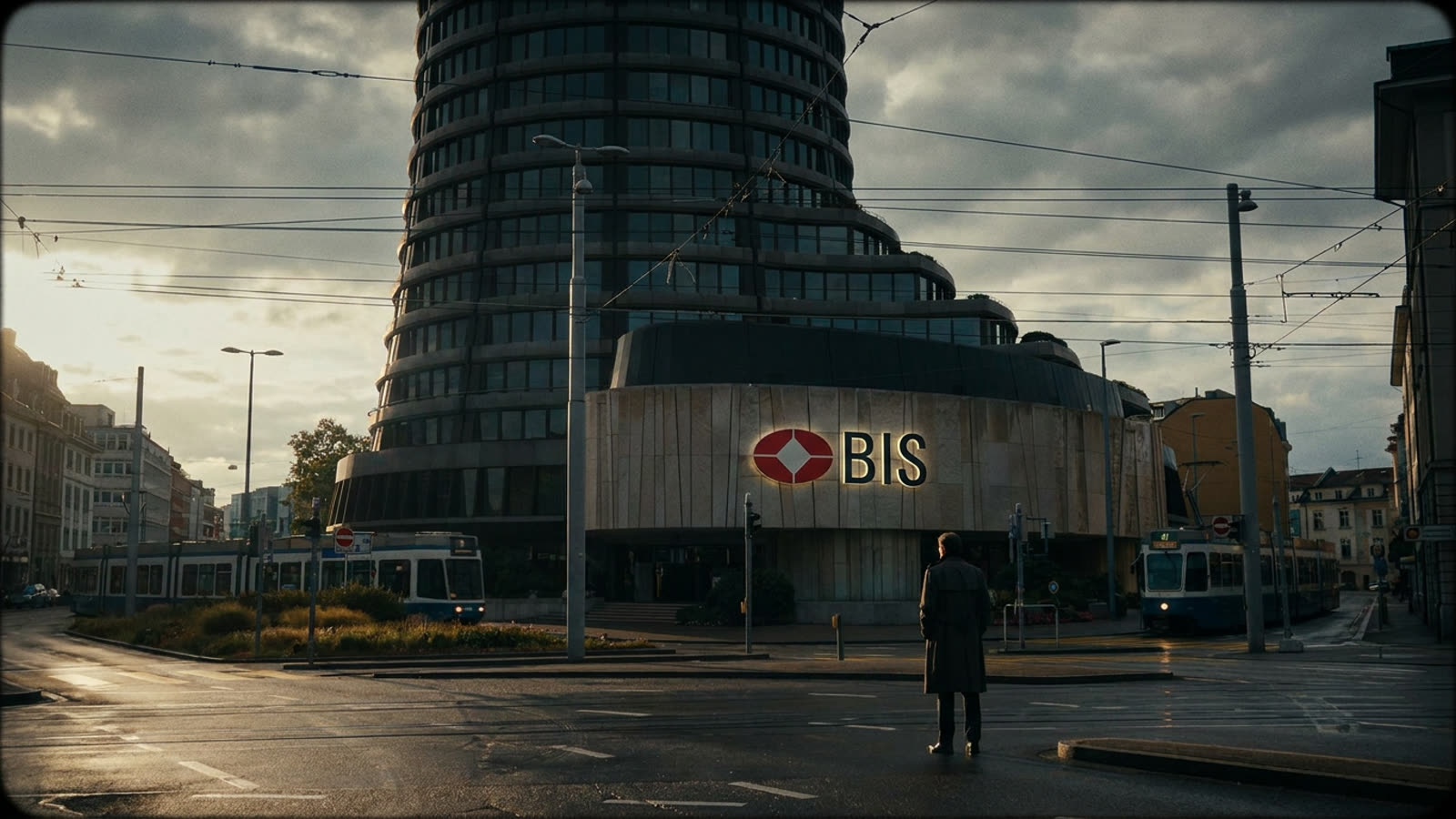
In a nondescript tower overlooking the Rhine in Basel, Switzerland, a small staff of economists wields influence over the financial architecture of every nation without ever appearing on a ballot or a cable news chyron. The Bank for International Settlements is not a bank in any sense a retail customer would recognize, yet it serves as the institutional spine connecting the world's central banks — the place where monetary mandarins gather to compare notes, settle scores, and occasionally avert disaster.
The BIS exists in a curious legal twilight. It enjoys sovereign immunity on Swiss soil, its archives are inviolable, and its officials carry diplomatic passports, yet it is owned by central banks rather than governments. This deliberate ambiguity has allowed it to survive world wars, the collapse of Bretton Woods, and repeated financial crises while remaining almost invisible to the public whose savings ultimately depend on its work.
Origins in reparations and redemption
The institution was born in 1930 to manage Germany's war reparations under the Young Plan, a task that became moot within three years as the Great Depression gutted the payment schedule. Rather than dissolve, the BIS reinvented itself as a forum for central-bank cooperation — a role it has played ever since. During the Second World War it controversially continued operations, accepting Nazi gold and facilitating transactions that later drew calls for its abolition at Bretton Woods. American delegates wanted it shuttered; European central bankers quietly ensured it survived. That pattern of discreet persistence has defined the institution.
The Basel standards factory
Today the BIS is best known as the secretariat for the Basel Committee on Banking Supervision, the body that drafts the capital-adequacy rules governing how much equity banks must hold against their loans. Basel I, II, and III have shaped lending from Tokyo to Toronto, determining how much mortgage credit flows into housing markets and how much risk accumulates on bank balance sheets. When critics complain that post-crisis regulation made banks safer but also slower to lend, they are really complaining about decisions hashed out in Basel meeting rooms.
The BIS also hosts the Financial Stability Board, the Committee on Payments and Market Infrastructures, and a research department whose quarterly reports on credit growth and currency flows are required reading for anyone managing serious money. Its economists were among the first to warn, years before the crash, that American subprime exposure was metastasizing through global balance sheets.
Our take
The BIS embodies a paradox of modern governance: the most consequential financial decisions are often made by technocrats operating far from democratic scrutiny, yet that very distance may be what allows them to think in decades rather than election cycles. Whether one views Basel as a cathedral of prudent expertise or an unaccountable priesthood depends largely on how the next crisis unfolds — and whether the rules written in that Swiss tower prove adequate to contain it.