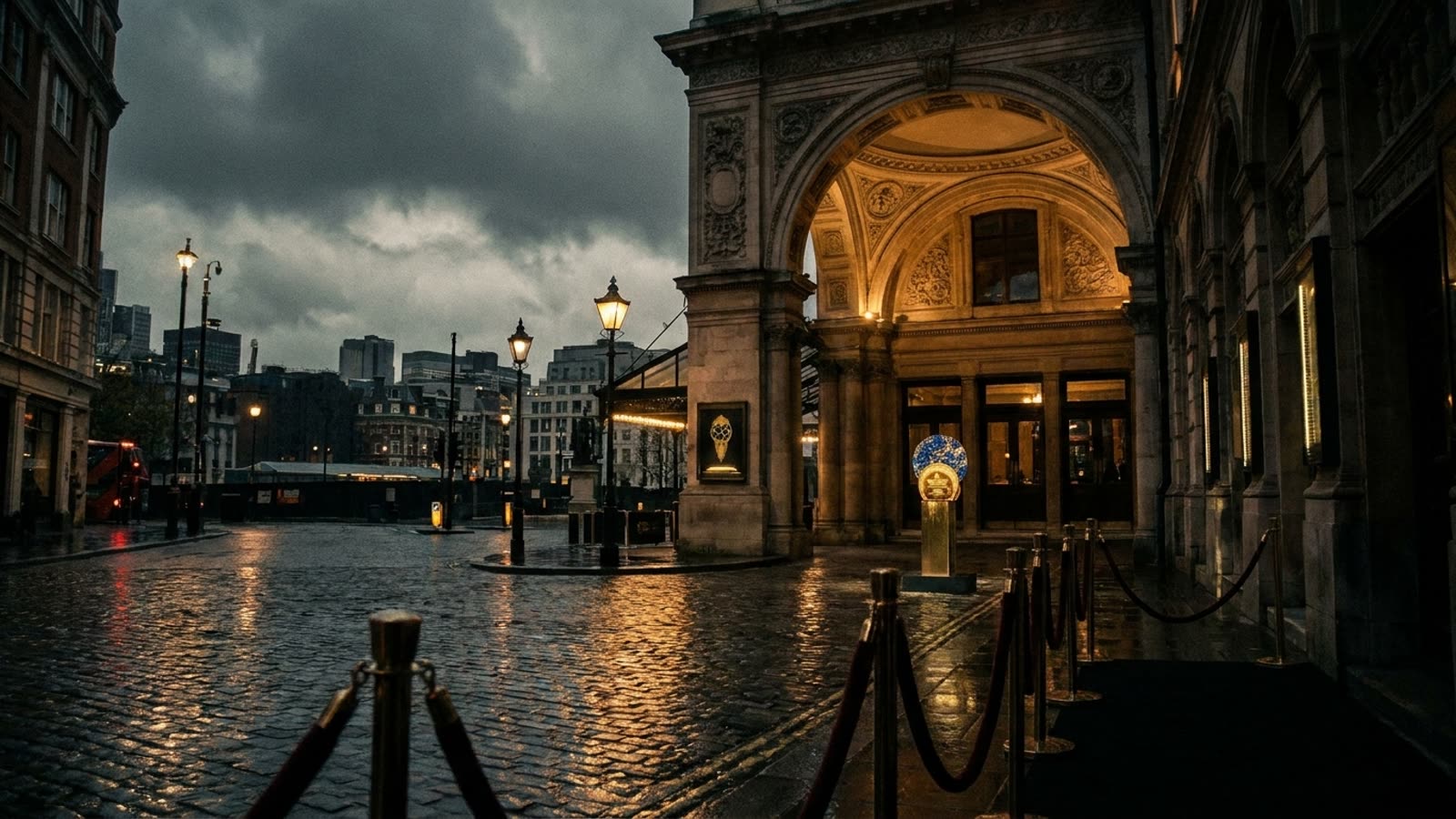
The golden ball has crossed the Channel, and the symbolism is difficult to ignore. For the first time in decades, the Ballon d'Or ceremony is being held in London rather than Paris, a geographical shift that mirrors the broader realignment of power in European football. The Premier League's financial supremacy has long been established; now its clubs are converting pounds into continental silverware with increasing regularity, and France Football's decision to stage the gala in the English capital feels less like a novelty and more like an acknowledgment of where the game's center of gravity has drifted.
The ceremony itself promises the usual theater: the red carpet, the designer suits, the carefully choreographed suspense before the envelope is opened. But the subtext is richer this year. English football has spent the better part of two decades watching its best players finish second or third in this particular race, victims of timing or the gravitational pull of Real Madrid and Barcelona. The Premier League produces goals, drama, and television revenue in industrial quantities, yet the individual crown has remained stubbornly elusive for its homegrown talent.
The contenders and the context
This year's shortlist reflects the usual continental mix, with candidates from Spain, Germany, and France alongside the Premier League contingent. Harry Kane's prolific season at Bayern Munich has kept him in the conversation, his Bundesliga goal tally a testament to the clinical finishing that has defined his career. Whether the voters reward a striker playing outside England's top flight remains to be seen; the Ballon d'Or electorate has historically favored those who win trophies in the competitions that matter most, and Kane's trophy cabinet remains conspicuously bare of major honors.
The women's award carries its own intrigue, with the growth of the women's game now impossible to ignore. The nominees represent leagues from across Europe and beyond, and the ceremony's increased attention to the women's category reflects a sport that is finally, belatedly, treating its female athletes as more than an afterthought.
Why London, why now
The choice of venue is not merely logistical. London in 2026 is a city where football has become indistinguishable from the broader entertainment economy—a place where clubs are global brands, where stadium naming rights fetch nine-figure sums, and where the sport's commercial machinery operates at a scale that would have seemed fantastical a generation ago. Hosting the Ballon d'Or here is a statement about where football's money lives, even if its soul remains a matter of perpetual debate.
There is also the matter of audience. The Premier League's broadcast reach extends to every corner of the globe, and staging the ceremony in London ensures maximum visibility for sponsors and broadcasters alike. France Football may have invented the award, but the economics of modern football dictate that it must occasionally travel to where the eyeballs are.
Our take
The Ballon d'Or has always been as much about narrative as statistics, a prize awarded to the player who best captures the imagination of a global electorate with wildly varying criteria. Moving the ceremony to London will not change that fundamental truth, but it does suggest that football's governing bodies understand something important: the sport's future is being written in English, whether the traditionalists like it or not. The golden ball may have been forged in Paris, but it increasingly orbits the Premier League's financial sun.