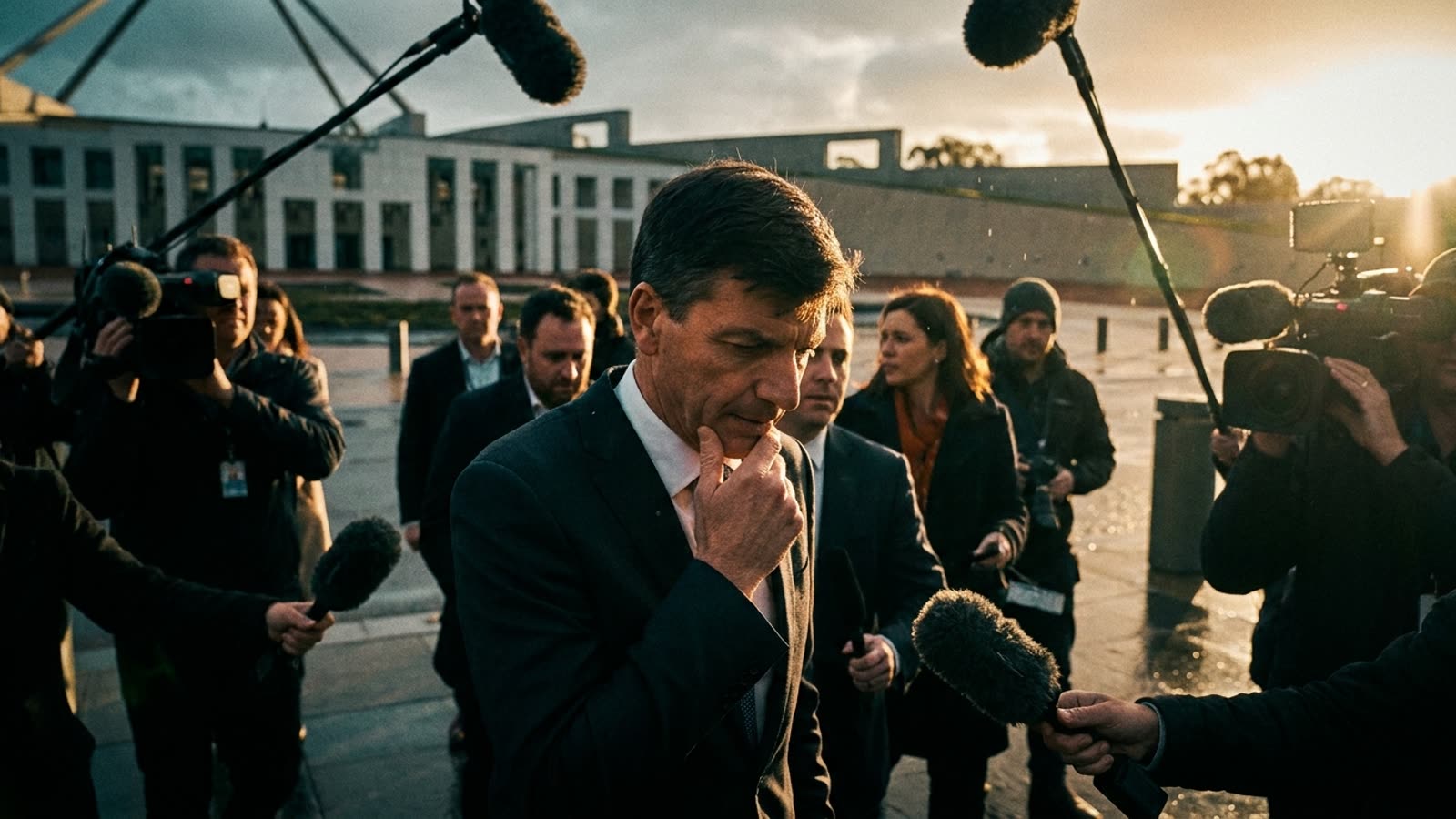
When an independent MP alleges she was physically attacked in her electorate, the textbook response for any opposition leader is straightforward: condemn the violence, express concern for the victim, call for calm. Angus Taylor, nine months into leading Australia's Coalition, instead delivered a masterclass in how not to handle political violence.
The Liberal leader's response to the alleged assault on Helen Haines—the crossbench MP for Indi—drew immediate fire from fellow independents Zali Steggall and Monique Ryan, who accused him of being "tone deaf" and of denying any link between heated parliamentary rhetoric and real-world consequences. Taylor's instinct was to pivot to Labor's failings rather than dwell on an attack against a politician who isn't even in his party. It was, by any measure, a miscalculation.
The incident and the backlash
Haines, a former nurse who has held the rural Victorian seat since 2019, reported an alleged assault during a community event. Details remain limited pending investigation, but the incident has reignited debate about the safety of Australian politicians—particularly women and independents who lack the institutional protection of major parties. Steggall, who represents Warringah, pointedly noted that parliamentary debate has grown more personal and aggressive, creating a climate where fringe actors feel emboldened. Ryan, the member for Kooyong, echoed the sentiment, suggesting Taylor's dismissiveness reflected a broader Coalition reluctance to acknowledge how language in Canberra travels.
Taylor's positioning problem
The opposition leader's response fits a pattern. Since replacing Peter Dutton after the Coalition's 2025 defeat, Taylor has struggled to modulate between attack-dog opposition and the statesmanlike register required when events demand it. His background—Rhodes Scholar, McKinsey alumnus, former energy minister—suggests a facility with calibration. Yet in practice, Taylor defaults to combativeness even when the moment calls for restraint. The Haines incident offered a cost-free opportunity to appear magnanimous; instead, he handed the crossbench a grievance and the government a distraction from its own troubles.
The teal factor
Australia's crossbench independents—the so-called "teals" who swept inner-city Liberal seats in 2022 and consolidated in 2025—remain a Coalition headache. Taylor needs to win back at least some of these electorates to have any hope of forming government. Alienating their MPs with tin-eared responses to alleged political violence is not the strategy. Steggall and Ryan are media-savvy operators who will ensure the clip circulates. Every news cycle spent relitigating Taylor's tone is a cycle not spent prosecuting Labor on cost of living or housing.
Our take
Political violence, alleged or confirmed, is one of the few subjects that genuinely requires leaders to set aside partisanship. Taylor's failure to do so reveals less about his character than about his political reflexes—honed in a harder era of Liberal politics and not yet adapted to an electorate that punished that very style. He has time to learn. But the crossbench will remember, and so will the voters who sent them to Canberra.