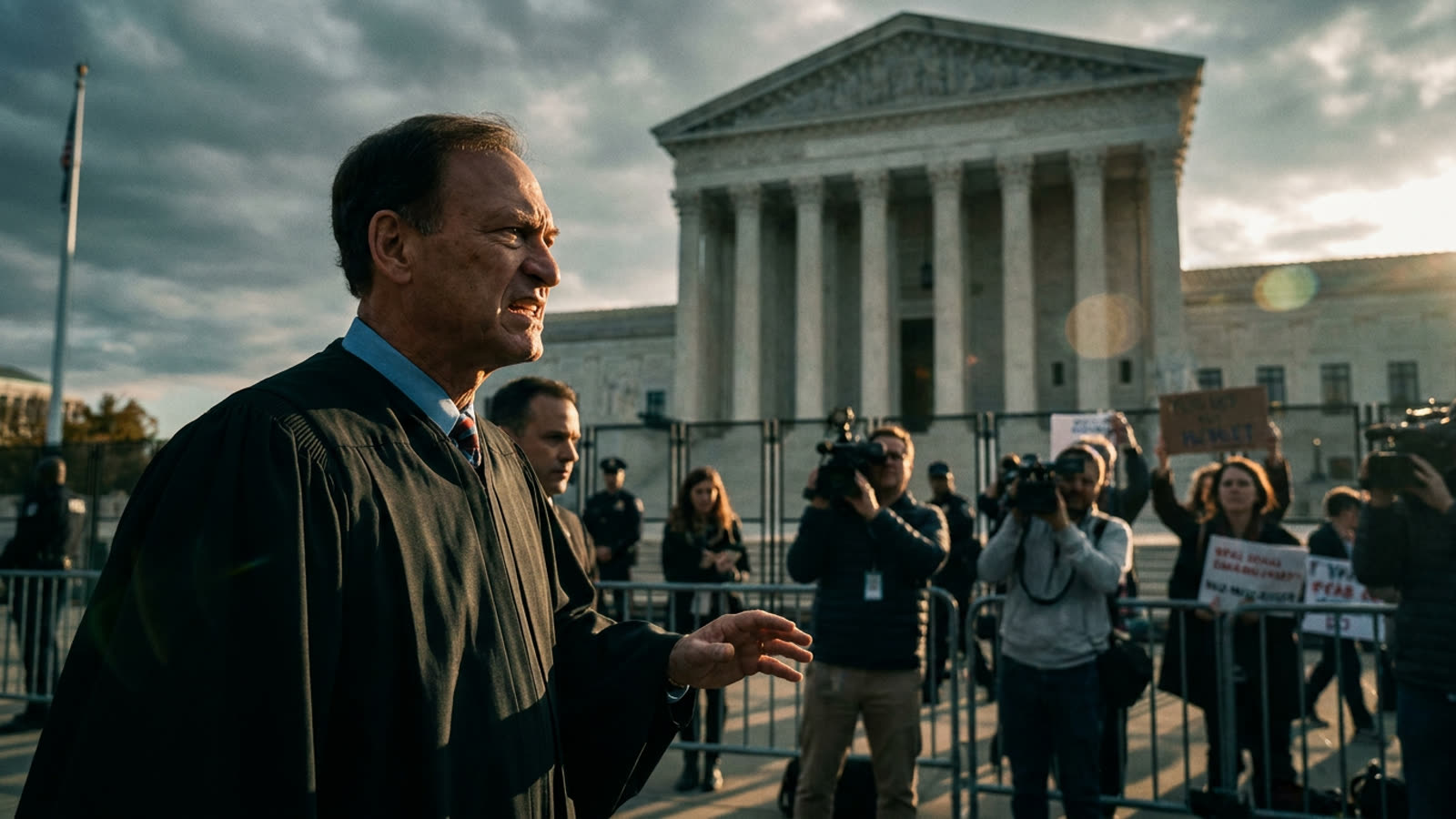
The Supreme Court of the United States does not typically issue statements explaining what its justices said to each other. That it felt compelled to do so this week—characterizing Justice Samuel Alito's verbal reaction to Justice Sonia Sotomayor as a "misunderstanding"—tells us more about the Court's current state than any leaked draft opinion ever could.
The incident, whatever its precise contours, was apparently significant enough that the Court's public information office deemed clarification necessary. In an institution that prizes its opacity, that guards its deliberative processes with near-religious fervor, the very existence of such a statement is extraordinary. The Court does not explain itself. Until, apparently, it must.
The Collegial Fiction
For decades, the Supreme Court has maintained a careful public narrative: that its nine members, however divided on jurisprudence, remain collegial. Justices attend each other's family events. They travel together. Ruth Bader Ginsburg and Antonin Scalia famously shared an opera box. This mythology serves a purpose—it suggests that constitutional interpretation, however contested, remains a genteel intellectual exercise rather than ideological warfare.
That fiction has grown increasingly difficult to sustain. The Dobbs leak in 2022 shattered the Court's culture of confidentiality. Public approval ratings have cratered. And now the Court finds itself in the position of issuing diplomatic communiqués about its own internal dynamics, the kind of damage control typically reserved for feuding heads of state.
What 'Misunderstanding' Means
The word choice is instructive. "Misunderstanding" implies no one was at fault—a diplomatic formulation that assigns blame to circumstance rather than conduct. It is the vocabulary of institutional preservation, not candor. Whatever Alito said, and whatever Sotomayor heard, the Court has decided that the official record will reflect confusion rather than conflict.
This is how institutions protect themselves. The alternative—acknowledging that two sitting justices had an exchange sufficiently heated to require public explanation—would invite questions the Court cannot afford. Questions about whether the conservative supermajority and the liberal minority can function as a deliberative body. Questions about whether lifetime appointments, designed to insulate justices from political pressure, instead insulate dysfunction from accountability.
Our take
The Supreme Court's legitimacy rests on the belief that it operates differently from the other branches—that it reasons rather than brawls, that it deliberates rather than schemes. Every statement like this one erodes that belief a little further. The Court did not have to acknowledge the incident at all; that it chose to suggests the alternative was worse. When an institution famed for its silence feels compelled to speak, the silence that preceded it was already deafening.