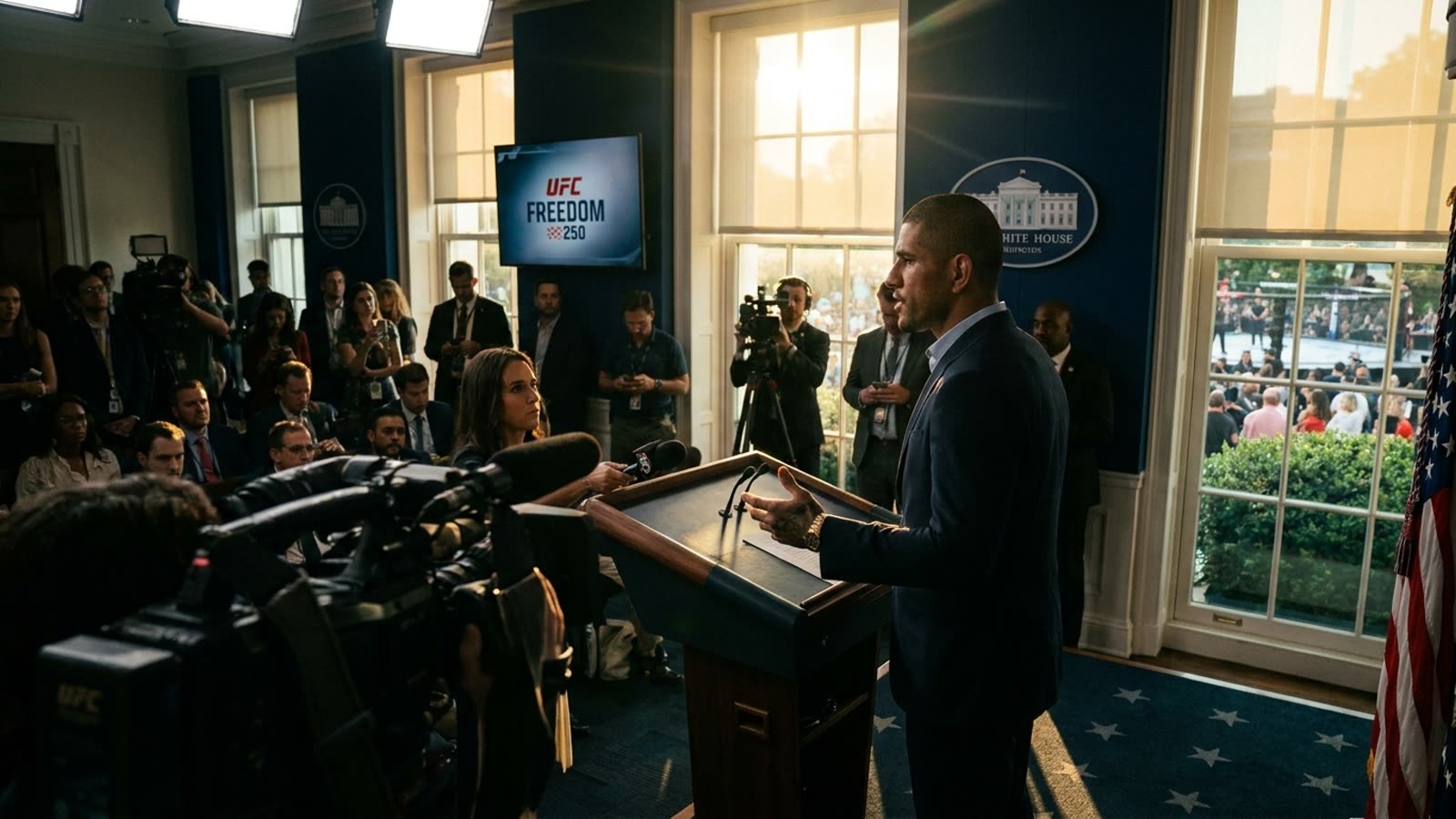
A Brazilian light heavyweight champion stepping on a scale at 1600 Pennsylvania Avenue is not a fever dream but a scheduling reality. Alex Pereira's official weigh-in at 251 pounds for UFC Freedom 250 confirms that the event—a mixed martial arts card hosted on the grounds of the executive mansion—is proceeding as planned, and that the sport's decades-long journey from banned spectacle to bipartisan entertainment has reached its logical, if surreal, terminus.
The number itself is unremarkable; Pereira, who has campaigned at both middleweight and light heavyweight, often enters the cage north of 220 pounds after rehydration. What matters is where he stood when the figure was recorded. The White House has hosted state dinners, treaty signings, and the occasional controversial pardon. It has not, until now, hosted a cage.
From pariah to photo op
UFC's rehabilitation arc is well-documented but worth recalling. In the late 1990s, Senator John McCain called the sport "human cockfighting" and successfully pressured cable providers to drop pay-per-view broadcasts. The promotion nearly died. What saved it was a combination of regulatory capitulation—unified rules, athletic commissions, weight classes—and relentless lobbying by the Fertitta brothers and Dana White, who purchased the company in 2001 for a reported $2 million. By the time Disney-owned ESPN signed a broadcast deal in 2019, the pariah had become programming.
Still, a White House card was unthinkable even five years ago. The venue signals something beyond mere acceptance: it suggests that combat sports have become a cultural signifier worth courting, a demographic shortcut. The guest list, the sponsorships, the inevitable social-media content—all of it serves political ends that have nothing to do with who wins or loses inside the octagon.
Pereira's peculiar position
For Pereira himself, the setting is incidental. The 36-year-old knockout artist has built a career on finishing opponents with devastating precision, not on navigating political optics. His path from kickboxing world champion to UFC double-champ is a story of late-blooming dominance, not media savvy. He speaks limited English, relies on translators, and lets his left hook do most of his communicating.
That he is the headliner for this particular spectacle is almost accidental—a function of the UFC's event calendar aligning with whatever political calculus produced the invitation. Pereira will fight, collect his purse, and return to training. The symbolism is not his concern.
Our take
There is nothing inherently wrong with a president hosting a sporting event, nor with a combat sport achieving mainstream legitimacy. But the image of a weigh-in on the South Lawn should prompt at least mild discomfort. The UFC's appeal to a certain political coalition is not coincidental; the sport has been explicitly courted by figures who see its audience as a voter bloc. When the octagon becomes a backdrop for governance, the question is no longer whether MMA has arrived but whether its arrival has been co-opted. Pereira will throw leather regardless. The rest of us might ask what we're actually watching.