The velvet rope has always been a lie, but nowhere is the deception more elaborate than in the airport lounge. These climate-controlled purgatoriums, with their complimentary hummus and performative calm, represent perhaps the most successful mass-market luxury con of the twenty-first century. Millions of travelers pay annual fees for credit cards whose primary benefit is access to rooms that would be unremarkable in any other context—a mediocre hotel lobby, a corporate cafeteria with better lighting.
The genius is that it works anyway. The lounge succeeds not because of what it offers but because of what it excludes: the terminal's fluorescent chaos, the gate-area scrum, the $18 airport sandwich. Luxury, in the age of democratized travel, is simply the absence of indignity.
The accidental empire
Airport lounges began as genuine exclusivity. American Airlines opened the first Admirals Club in 1939, and for decades these spaces served a narrow clientele of corporate executives and genuine frequent flyers. The business model was simple: airlines offered comfort to their most valuable customers as a retention tool.
The transformation came through credit cards. When issuers realized that lounge access could justify premium annual fees, the economics inverted. Priority Pass, founded in 1992, pioneered the aggregator model—pay once, access hundreds of lounges regardless of airline. Today, cards ranging from a few hundred dollars annually to well over a thousand offer some form of lounge access, and the spaces have swelled accordingly. What was once a quiet room for road warriors is now a crowded buffet line of families, couples on vacation, and business travelers who fly twice a year.
The performance of belonging
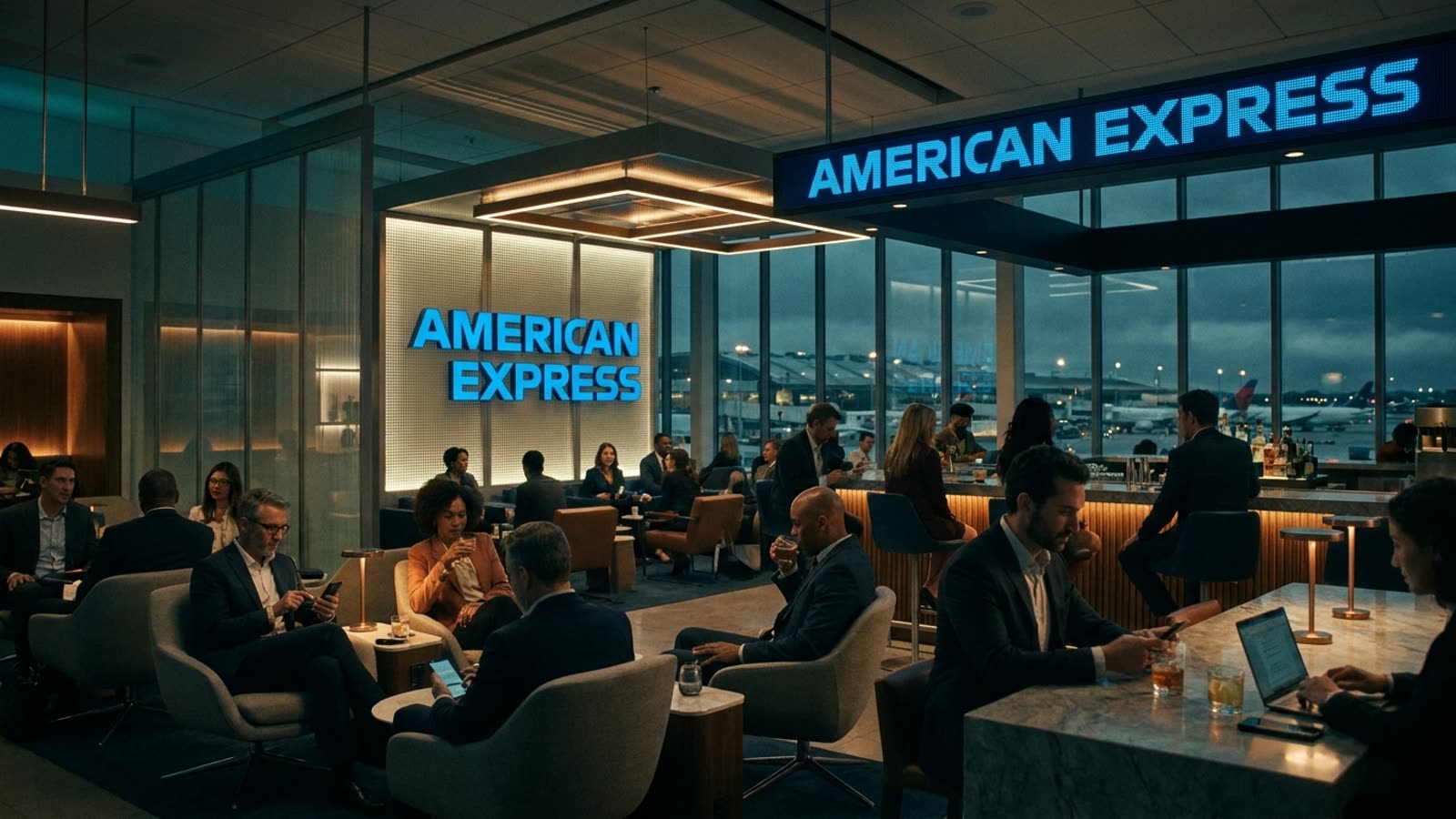
Watch any lounge carefully and you'll observe a peculiar social choreography. Travelers arrange themselves with studied casualness—laptop open, noise-canceling headphones on, perhaps a glass of wine at eleven in the morning because the rules are different here. The posture communicates: I belong. I am not a tourist gawking at the free snacks. I do this all the time.
The reality is that most don't. The proliferation of access has created spaces where nearly everyone is performing membership in a club that no longer has meaningful criteria for admission. The result is a room full of people pretending not to notice each other while acutely aware of being seen. It is a theater of sophistication where the audience is also the cast.
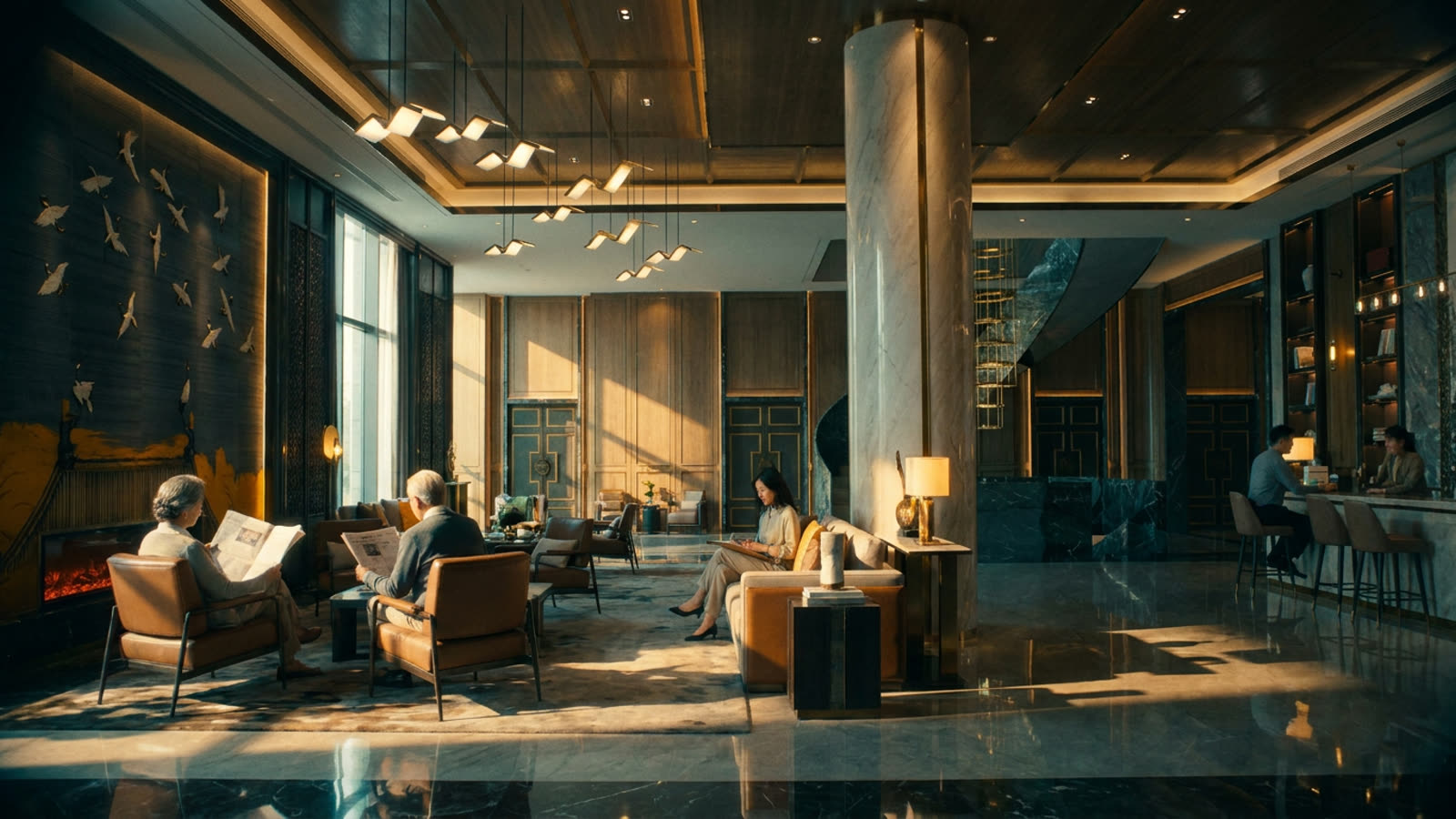
Lounge operators understand this psychology intimately. The design language—warm wood, ambient lighting, the suggestion of a boutique hotel—exists to make visitors feel they have stepped outside the airport's transactional reality into something more refined. The food is rarely exceptional, but it is presented with care. The drinks are free, which transforms a mediocre chardonnay into a small luxury.
The overcrowding problem
Success has created crisis. Premium lounges now routinely hit capacity, turning away the very cardholders who pay for access. American Express has responded by building larger, more elaborate Centurion Lounges while simultaneously restricting guest policies. Airlines have raised the threshold for complimentary access, pushing casual travelers toward paid entry.
The industry's solution is predictable: more tiers. Above the standard lounge sits the premium lounge; above that, the first-class lounge; above that, the invitation-only suite. Each layer promises the exclusivity that the layer below has lost. It is an endless regression, a Zeno's paradox of velvet ropes.
Our take
The airport lounge is a monument to a very modern confusion about what luxury means. True exclusivity—the kind that existed when these spaces served only the genuine elite—is incompatible with a business model that requires mass enrollment. What remains is the feeling of exclusivity, carefully manufactured and widely distributed. There is nothing wrong with wanting a quiet place to wait for a flight, decent coffee, and a clean bathroom. But we should be honest about what we're buying: not membership in a privileged class, but a brief, pleasant delusion that the ordinary rules of air travel don't apply to us. The lounge works because everyone agrees to pretend together. It is, in its way, a very human arrangement.