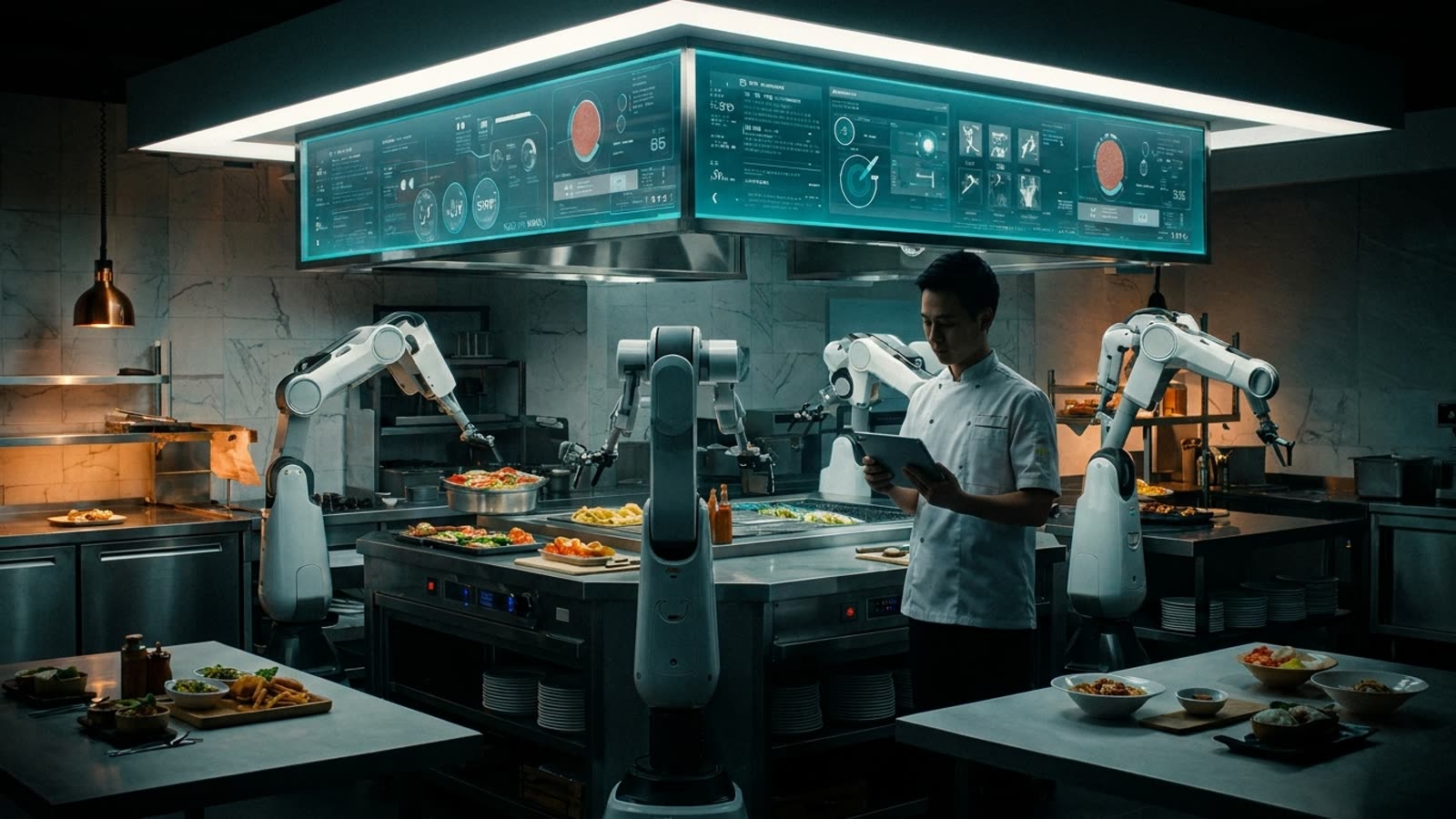
Walk into a mid-range restaurant today and there is a reasonable chance that the specials board was not dreamed up by a chef staring pensively at seasonal produce. It was suggested by software that analyzed three years of sales data, cross-referenced weather forecasts, checked local event calendars, and determined that a butternut squash risotto would move seventeen percent better than the mushroom ravioli on a Tuesday evening in early autumn.
This is not the future. This is the present state of restaurant operations in thousands of establishments worldwide, and it represents one of the most consequential — and least discussed — applications of artificial intelligence in daily life.
The inventory revolution
Restaurant margins have always been brutal, hovering between three and nine percent for most establishments. Food waste alone can consume a third of potential profit. The traditional solution was a head chef with decades of intuition about how much salmon to order before a holiday weekend. That intuition was valuable but inconsistent, and it retired when the chef did.
AI systems now ingest point-of-sale data, reservation patterns, historical weather correlations, and even social media sentiment to generate procurement recommendations. A system might notice that a particular neighborhood orders more vegetarian dishes when a yoga studio nearby hosts weekend workshops, or that dessert sales spike when temperatures drop below a certain threshold. These are patterns no human would have the bandwidth to track across hundreds of variables simultaneously.
The result is measurably less waste and more consistent margins. But it also means that the romantic notion of a chef wandering through a morning market, inspiration striking as they spot perfect heirloom tomatoes, is increasingly relegated to fine dining establishments where the performance of artisanship is part of what customers pay for.
The death of the unpopular dish
Menu engineering has existed for decades — the practice of positioning high-margin items where eyes naturally land, using pricing psychology to nudge choices. AI takes this further by making the feedback loop nearly instantaneous. A new dish can be evaluated within weeks rather than seasons. If it underperforms, it vanishes.
This creates a subtle homogenization pressure. Dishes that appeal to broad middle tastes survive; adventurous items that might build a cult following over years get killed before they can find their audience. The algorithm optimizes for what sells now, not what might define a restaurant's identity over time. Some operators have begun deliberately protecting certain menu items from algorithmic review, treating them as loss leaders for culinary credibility.
The staff scheduling question
Perhaps nowhere is AI's impact more keenly felt than in labor scheduling. Systems now predict customer flow with enough accuracy to schedule staff in fifteen-minute increments, ensuring coverage matches demand almost perfectly. For restaurant owners, this is a godsend. For workers, it often means unpredictable hours, split shifts, and the erosion of the steady schedules that allow for second jobs or childcare arrangements.
The technology is neutral; its deployment is not. Some operators use AI scheduling to improve both efficiency and worker satisfaction, building in preferences and constraints. Others use it purely to minimize labor costs, treating staff as infinitely flexible resources. The same tool produces radically different workplaces depending on who wields it.
Our take
The AI transformation of restaurant operations is neither the soulless dystopia that food romantics fear nor the frictionless utopia that technology vendors promise. It is something more mundane and more interesting: a genuine shift in how decisions get made, with real tradeoffs that most diners never see. The butternut squash risotto might be delicious. It might also exist because an algorithm determined it would be. Whether that matters is a question each diner — and each chef — must answer for themselves.