For centuries, the court interpreter occupied a peculiar position in legal proceedings: utterly essential yet professionally invisible. They rendered testimony, objections, and judicial instructions across linguistic divides, their skill measured by how little anyone noticed them. Now that centuries-old role is undergoing its most profound transformation since the profession formalized in the mid-twentieth century.
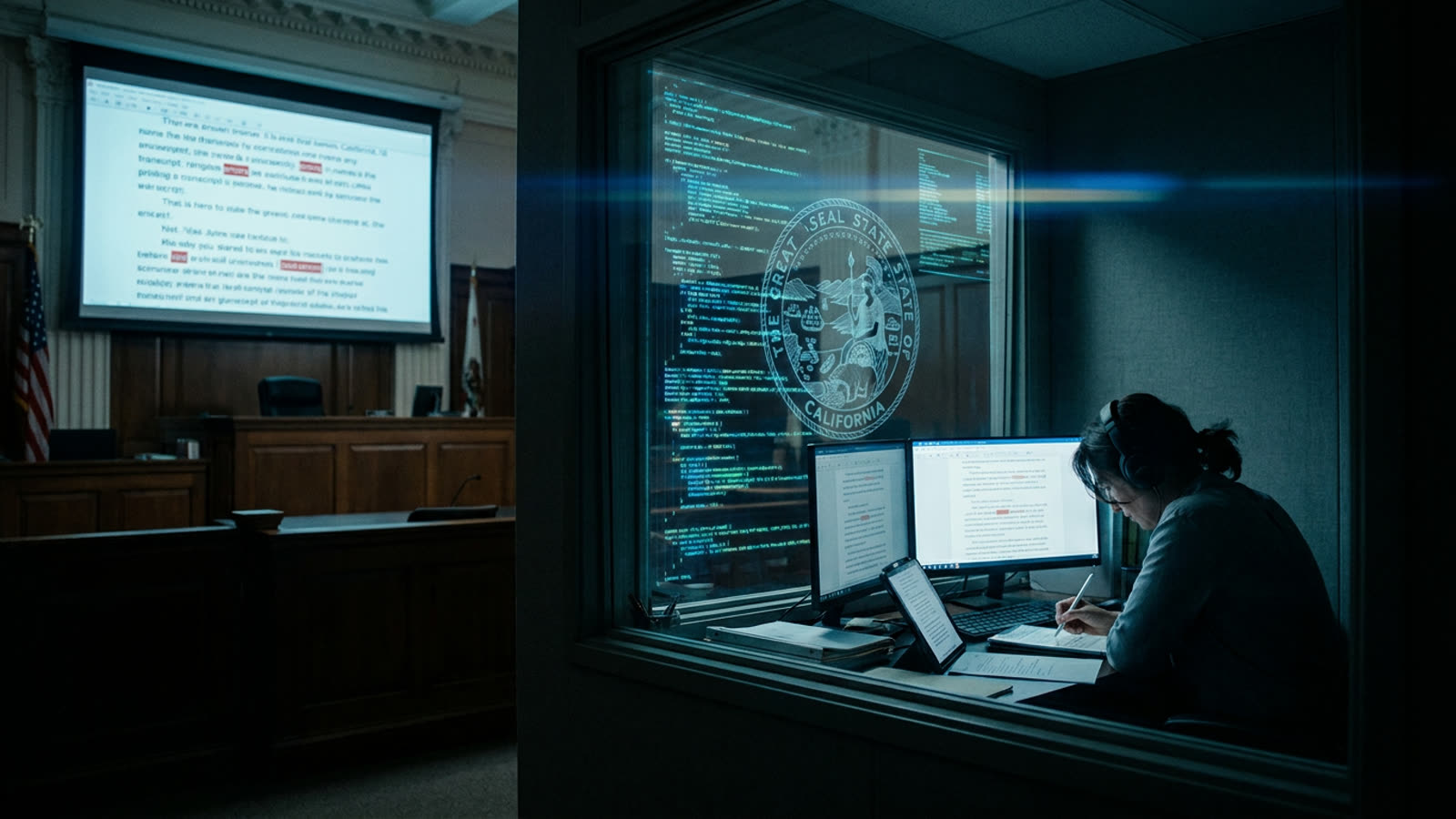
Neural machine translation has reached a level of fluency that would have seemed fantastical even a decade ago. Immigration hearings, depositions, and preliminary proceedings increasingly feature real-time AI transcription and translation, with human interpreters relegated to a supervisory function. The shift is not theoretical — courts from the Netherlands to California have piloted hybrid systems where algorithms handle the bulk of linguistic conversion while certified professionals monitor for errors, cultural nuance, and the countless ways that legal language resists literal translation.
The error that changes everything
The case for human interpreters was never about raw vocabulary. It was about stakes. A misrendered word in a medical appointment might cause confusion; a misrendered word in a criminal trial can determine whether someone goes to prison. AI translation systems, for all their fluency, remain fundamentally probabilistic. They predict the most likely next word based on training data, which means they occasionally produce confident-sounding nonsense — and they have no mechanism for flagging their own uncertainty.
Consider the Spanish word "compromiso," which can mean commitment, engagement, or obligation depending on context. A witness describing a verbal agreement might use the term in a way that carries specific legal weight, and the difference between "he made a commitment" and "he was under an obligation" could matter enormously to a jury. Human interpreters navigate these distinctions through contextual reasoning and, when necessary, by asking for clarification. Current AI systems simply pick the statistically dominant translation and move on.
A profession redefined, not eliminated
The interpreters who remain in courtrooms are finding their work transformed rather than replaced. Instead of rendering every utterance in real time — an exhausting cognitive task that traditionally limited interpreters to thirty-minute shifts — they now monitor AI output, intervening when the machine misses register, mangles idiom, or fails to convey the emotional tenor of testimony. It is a different skill set: less performance, more editorial judgment.
Training programs have begun adapting. Where interpreters once drilled simultaneous translation until it became automatic, newer curricula emphasize error detection, cultural mediation, and the specific failure modes of neural systems. The profession is becoming, in essence, a quality-assurance function — less visible than before, but arguably more intellectually demanding.
The access question
Proponents of AI-assisted interpretation point to a genuine crisis: courts worldwide face severe shortages of qualified interpreters, particularly for less common languages. A Somali speaker in a rural American courtroom or a Tigrinya speaker in a Swedish asylum hearing may wait months for a certified interpreter. Machine translation, whatever its limitations, offers something immediately. The question is whether "something" is good enough when liberty hangs in the balance.
The answer, for now, appears to be a negotiated hybrid. High-stakes criminal proceedings still demand certified human interpreters in most jurisdictions. Administrative hearings, civil matters, and preliminary stages increasingly tolerate AI assistance with human oversight. The boundary is shifting, and it will continue to shift as the technology improves.
Our take
The court interpreter's evolution mirrors a broader pattern in knowledge work: AI does not eliminate expertise so much as redistribute it. The new interpreter is less a translator and more a guardian of meaning, catching the errors that machines cannot recognize as errors. It is a harder job to define, a harder job to train for, and — if courts are wise — a job that should command higher respect than the old one. The algorithm can handle the words. Someone still has to handle the truth.