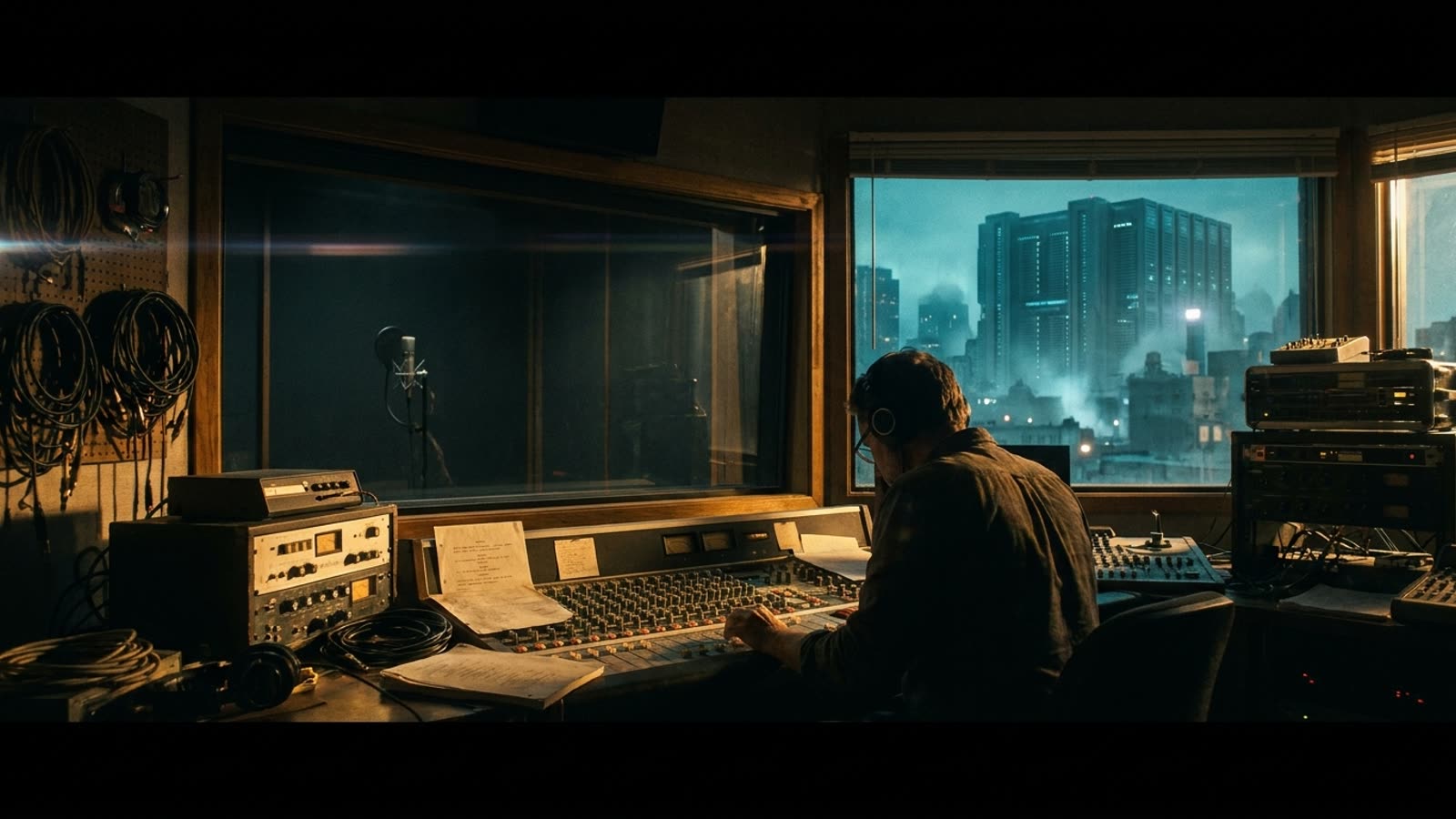
The recording booth has always been a place of peculiar intimacy. A voice actor steps into a padded room no larger than a closet, positions themselves before a microphone, and conjures characters that will inhabit video games, audiobooks, commercials, and the navigation systems of automobiles. For decades, this work required something irreducibly human: the micro-hesitations, the breath control, the emotional texture that distinguishes a living performance from a text-to-speech engine. That distinction is collapsing faster than most people realize.
Voice synthesis technology has crossed a threshold that matters. What once required hours of studio recordings to produce a passable artificial voice can now be accomplished with remarkably brief samples. The implications ripple through an industry that employs tens of thousands of performers worldwide, many of whom built careers on the assumption that their instrument—their actual voice—was something only they could provide.
The economics of infinite reproduction
The fundamental problem is not that AI voices sound perfect. They often do not, at least not to trained ears. The problem is that they sound good enough for an expanding range of applications, and they cost almost nothing to scale. A human voice actor charges per session, per hour, per word. A synthetic voice, once trained, can produce unlimited content at marginal cost approaching zero. For corporate e-learning modules, automated phone systems, and low-budget mobile games, the calculus has shifted decisively.
This creates a bifurcation in the market. Premium work—major animated features, prestige video games, flagship audiobook narrations—still demands human performers and likely will for years. But the vast middle tier of voice work, the bread-and-butter jobs that allowed performers to pay rent between marquee projects, is eroding. One veteran voice actor described it as watching the floor disappear while the ceiling remains tantalizingly visible.
The consent problem
Beyond economics lies a thornier question: who owns a voice? Several high-profile disputes have emerged in which performers discovered their vocal likeness being used in ways they never authorized. The legal frameworks remain unsettled. A voice is not quite a trademark, not quite a copyright, not quite a right of publicity. It exists in a gray zone that courts and legislatures are only beginning to map.
Some performers have responded by refusing any contract that grants AI training rights. Others have negotiated premiums for synthetic licensing, essentially selling their voice as a product rather than a service. A smaller cohort has embraced the technology, reasoning that if their voice will be cloned regardless, they might as well control and profit from the process. None of these strategies offers certainty.
Our take
The voice acting profession is experiencing what many creative fields will eventually face: the moment when the unique human contribution becomes technically optional for large swaths of the market. This does not mean voice actors will vanish. It means the profession will stratify more sharply, with elite performers commanding premiums while journeyman work migrates to algorithms. The performers who survive will be those whose humanity is not just present but unmistakably necessary—whose breath and hesitation and emotional grain cannot be faked, or at least cannot be faked cheaply enough to matter. That is a narrower path than the one that existed before, and walking it will require not just talent but a kind of existential stubbornness that no machine can replicate.