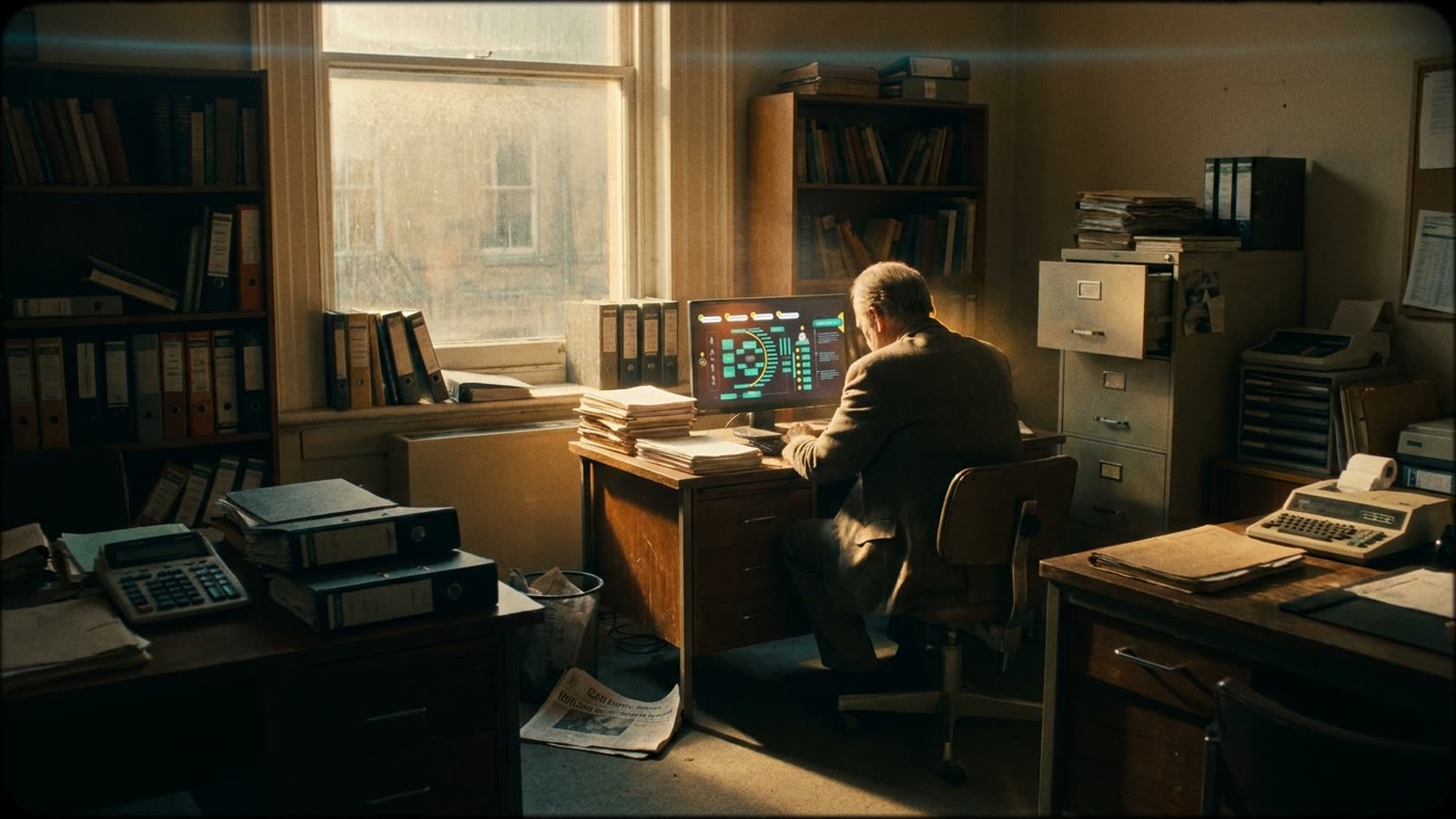
For centuries, the insurance underwriter occupied a peculiar position in the economy: part mathematician, part fortune-teller, wholly indispensable. These were the people who decided whether your house, your health, or your life was worth betting on, and at what price. They built empires on mortality tables and gut instinct. Now they are training their replacements.
The transformation is not hypothetical or distant. At major insurers across North America and Europe, underwriting decisions that once required days of human review are now made in seconds by machine learning systems. A life insurance application that might have sat on an underwriter's desk for a week—while they requested medical records, consulted actuarial tables, and weighed imponderables—can now be approved or declined before the applicant closes their browser tab.
The logic of the machine
What makes insurance underwriting particularly susceptible to automation is that it was always, in essence, a pattern-matching exercise dressed up in professional mystique. An experienced underwriter learns, over decades, which combinations of factors predict claims. A forty-five-year-old smoker with a family history of heart disease and a motorcycle hobby presents a different risk profile than a thirty-year-old vegetarian marathon runner. The underwriter's skill lay in weighting these factors, often unconsciously, and arriving at a price.
Machine learning systems do the same thing, but they do it across millions of data points simultaneously, and they never tire, never have bad days, never let personal bias creep into their assessments—or so the pitch goes. The reality is more complicated. These systems are trained on historical data, which means they inherit whatever biases existed in past underwriting decisions. If human underwriters historically charged higher premiums in certain postal codes for reasons that had more to do with demographics than actuarial science, the algorithm learns to do the same, but faster and at scale.
The humans who remain
The profession has not vanished, but it has bifurcated. At one end, a shrinking cohort of senior underwriters now spend their days reviewing edge cases—the applications too unusual for the algorithm to handle confidently. A professional trapeze artist seeking disability coverage. A tech executive with an unusual medical history and a net worth that makes standard policies inadequate. These cases still require human judgment, but they represent a fraction of the volume that once sustained the profession.
At the other end, a new class of worker has emerged: the algorithm trainer. These are often former underwriters who now spend their days labeling data, flagging errors in automated decisions, and fine-tuning the systems that replaced their colleagues. It is a strange kind of professional afterlife, teaching the machine to do what you once did yourself.
The efficiency bargain
Insurers argue, with some justification, that automation has made coverage more accessible. When underwriting costs drop, premiums can follow. When decisions happen instantly, customers who need coverage urgently—a small business owner seeking liability insurance before a contract deadline, a homebuyer racing to close—no longer wait in limbo. The friction that once defined insurance is dissolving.
But efficiency has its costs. The underwriter's judgment call, however imperfect, was at least legible. You could ask why your application was declined and receive an explanation from a person who had actually read your file. Algorithmic decisions are often opaque even to the companies that deploy them. The model says no; the model's reasons are a black box of weighted variables that no human fully understands.
Our take
Insurance underwriting is a canary for white-collar work more broadly. It was analytical, required expertise, and seemed safely insulated from automation—until it wasn't. The lesson is not that AI will replace all professional judgment, but that it will replace the judgment we can quantify. The underwriters who remain are those who handle what the machine cannot yet see: the genuinely novel, the deeply contextual, the human. That is a smaller niche than most professionals would like to believe their work occupies.