For more than a century, the court reporter has occupied a peculiar position in the machinery of justice: essential yet invisible, highly skilled yet rarely acknowledged, present at the most consequential moments of civic life while being expected to function as a kind of human recording device. Now artificial intelligence threatens to render her obsolete — or so the headlines suggest. The reality unfolding in courtrooms across the English-speaking world is considerably more interesting.
The stenographer was never merely a typist. She was a specialist in capturing speech at speeds exceeding 225 words per minute using a phonetic shorthand system that takes years to master. She was trained to distinguish between homonyms from context, to request clarification when testimony became garbled, to note non-verbal cues that might prove legally significant. Most importantly, she was an officer of the court, sworn to accuracy, whose transcript could determine whether a conviction stood or fell on appeal.
The machine's promise and its limits
Automatic speech recognition has improved dramatically. Modern systems can transcribe clear, single-speaker audio with accuracy rates approaching 95 percent under ideal conditions. Courtroom conditions are rarely ideal. Witnesses mumble, lawyers interrupt, defendants speak through interpreters, expert witnesses deploy technical jargon, and multiple people talk over each other during heated cross-examination. Background noise from ventilation systems, shuffling papers, and gallery murmurs degrades audio quality further.
More problematic still is the question of accountability. When a transcript error leads to a wrongful conviction or a mistrial, who bears responsibility — the software vendor, the court administrator who purchased it, or the judge who admitted it into the record? The legal system has not yet developed satisfactory answers.
A new hybrid role emerges
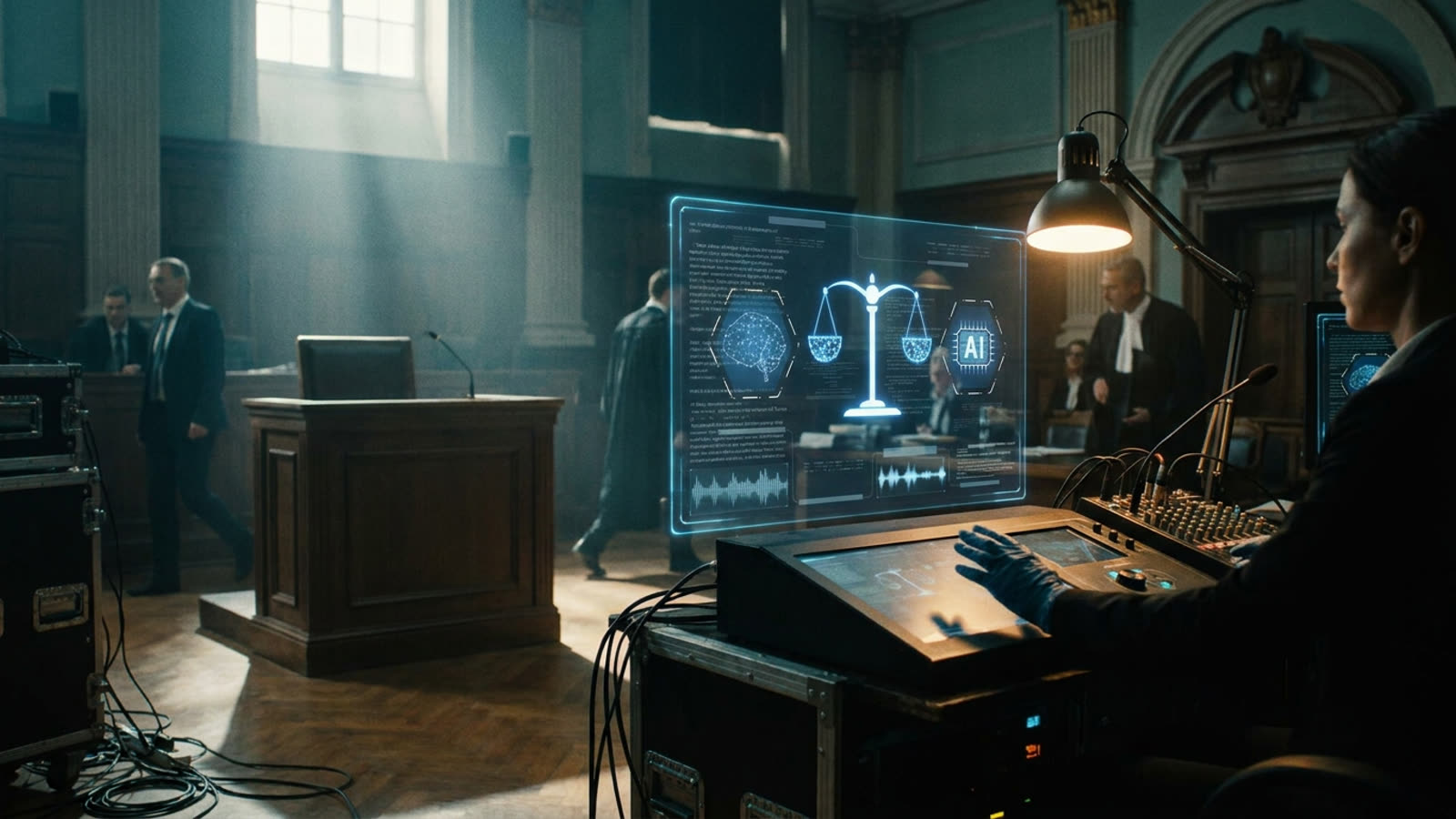
Rather than replacement, what is emerging in many jurisdictions is a hybrid model. The AI generates a rough draft in real time; the human court reporter monitors, corrects, and certifies it. This shifts the stenographer's role from primary transcriber to quality controller and legal guarantor. Some reporters describe the change as liberating — they can focus on accuracy and context rather than the physical strain of continuous high-speed typing. Others find it alienating, their craft reduced to supervising a machine.
The economics are complex. AI transcription services cost a fraction of human reporters per hour, but the savings diminish once you factor in the human oversight still required for legal proceedings. Meanwhile, the profession faces a severe shortage: court reporting schools have seen enrollment decline for decades, and retirements are outpacing new certifications. AI may be less a job killer than a stopgap keeping courts functional while the profession reinvents itself.
Our take
The court reporter's evolution mirrors a pattern we will see repeated across many professions: AI does not simply automate tasks, it redistributes expertise. The stenographer of 2030 will likely spend less time typing and more time doing what machines cannot — exercising judgment, bearing witness, and taking legal responsibility for the record. That is not obsolescence. It is specialization, and it may ultimately make the profession more valuable, not less. The machine handles volume; the human handles stakes.