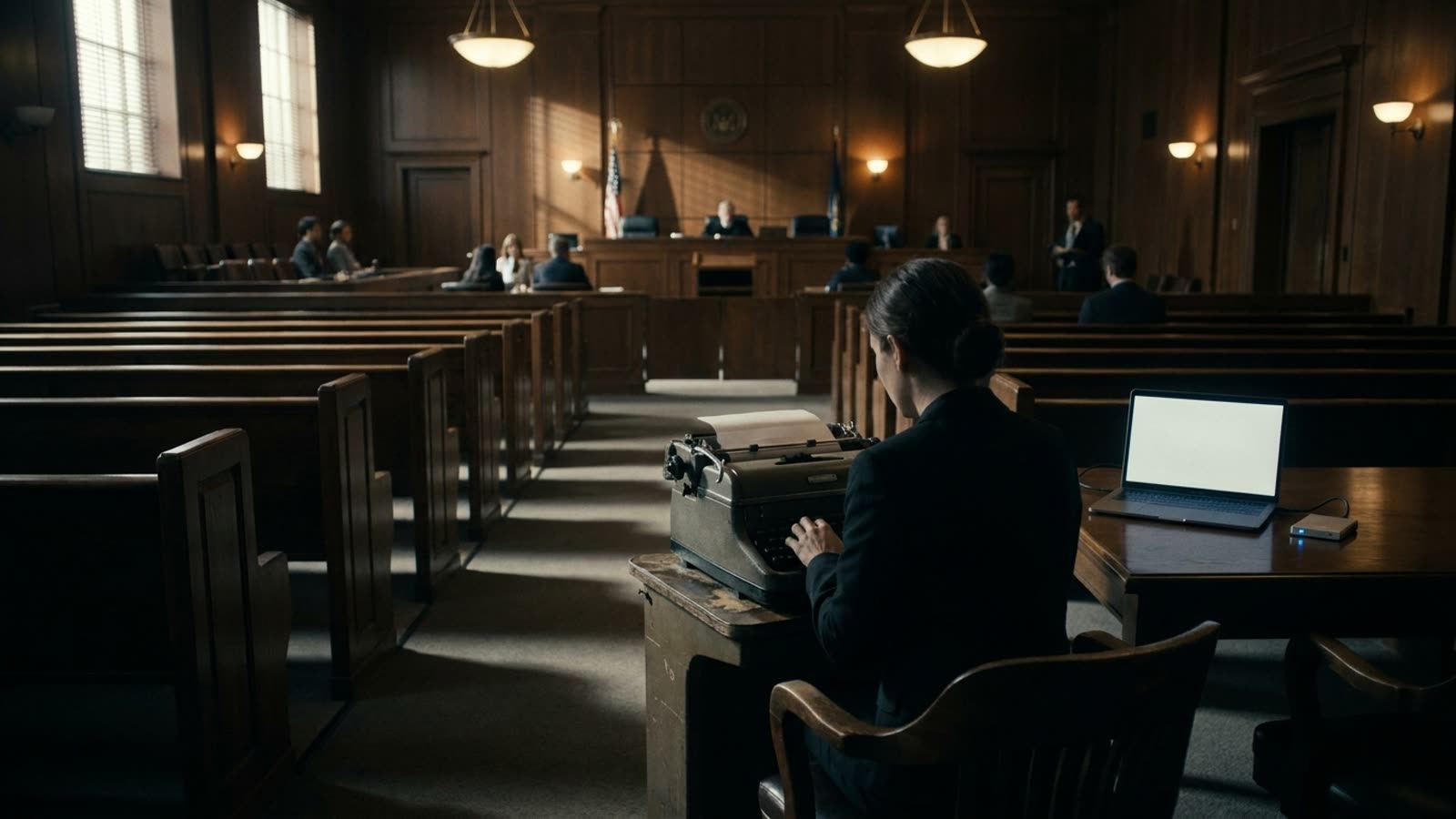
For more than a century, the court reporter has been the silent guardian of legal truth, fingers dancing across a stenotype machine at speeds exceeding two hundred words per minute, capturing every objection, every murmured sidebar, every tearful testimony. The profession seemed impervious to technological displacement—after all, courtrooms demand perfection, and machines make mistakes. That assumption is now collapsing.
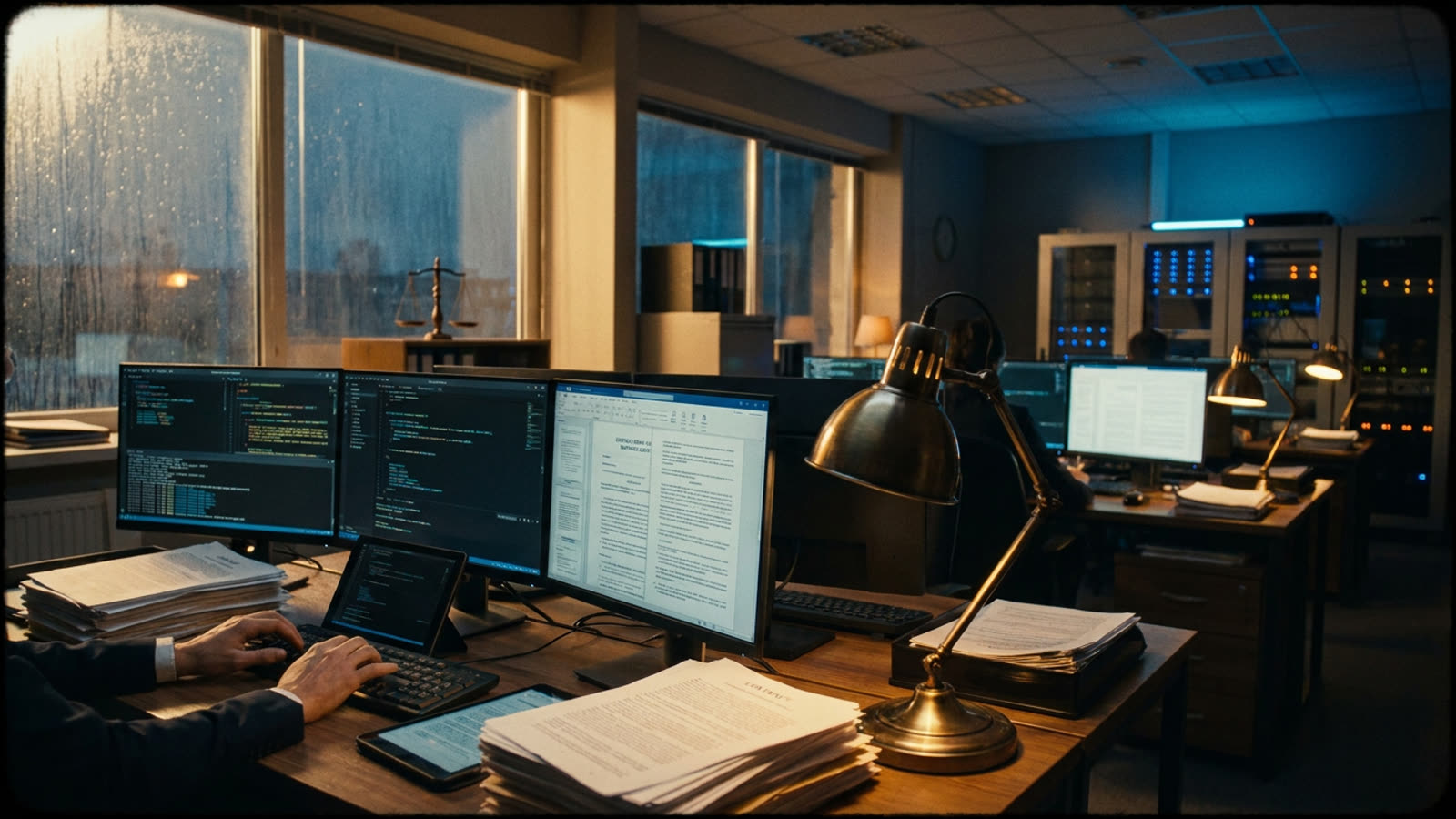
Automatic speech recognition has improved so dramatically that several American jurisdictions have begun experimenting with AI transcription in lower courts, arbitration hearings, and depositions. The technology does not tire, does not request bathroom breaks, and costs a fraction of what a certified court reporter charges. More troublingly for the profession, it is getting better at the very thing humans were supposed to do uniquely well: understanding context.
The accuracy threshold
The critical benchmark in legal transcription is ninety-five percent accuracy, the minimum standard for certified court reporters. Modern AI systems routinely exceed this in controlled conditions, and the gap narrows in adversarial ones—multiple speakers, heavy accents, technical jargon. Where AI still struggles is with crosstalk, the rapid-fire exchanges between attorneys and witnesses that can reduce even experienced stenographers to requesting clarification. But neural networks trained on thousands of hours of courtroom audio are learning the rhythms of legal combat, and their error rates on overlapping speech have dropped substantially in recent years.
The economics are stark. A full-day deposition with a human reporter can cost several hundred dollars; AI transcription services offer comparable output for a small fraction of that sum. Law firms operating on contingency, municipal courts facing budget constraints, and corporate legal departments under pressure to reduce costs are all noticing.
The human irreducibles
Court reporters argue, with considerable justification, that transcription is only part of their value. They serve as officers of the court, administering oaths, marking exhibits, and providing real-time feeds to judges who need instant access to testimony. They catch moments when a witness gestures instead of speaking, when sarcasm drips from a response, when a pause carries meaning that no transcript can convey. A machine captures words; a reporter captures proceedings.
There is also the question of accountability. When a transcript error leads to a mistrial or a wrongful conviction, a human reporter can be deposed, cross-examined, held responsible. An algorithm cannot take the stand. The legal system's deep commitment to human judgment in matters of consequence creates a structural resistance to full automation that may slow adoption even as the technology matures.
A profession in demographic crisis
Even without AI, court reporting faced an existential challenge: its practitioners are aging out. The average American court reporter is well into middle age, and court reporting programs have seen enrollment decline for years. The pipeline of new stenographers cannot meet current demand, let alone future growth in litigation. AI may not so much displace court reporters as fill a vacuum they are leaving behind.
This creates a peculiar dynamic. The same technology that threatens the profession may also preserve its essential functions by making transcription accessible in courtrooms that would otherwise go without. Rural jurisdictions that cannot attract reporters, night courts that cannot afford them, immigration hearings conducted at industrial scale—all of these may be better served by imperfect AI than by no record at all.
Our take
Court reporting will not vanish overnight, but its transformation is already underway. The profession's survivors will likely be those who embrace hybrid roles—supervising AI systems, editing machine transcripts, providing the human judgment that algorithms cannot replicate. The stenotype machine, that beautiful anachronism, may become ceremonial, brought out for high-stakes trials the way a fountain pen is used to sign treaties. What disappears is not the function but the livelihood, and that distinction matters enormously to the tens of thousands of people who built careers on the assumption that precision and speed would always require human hands.