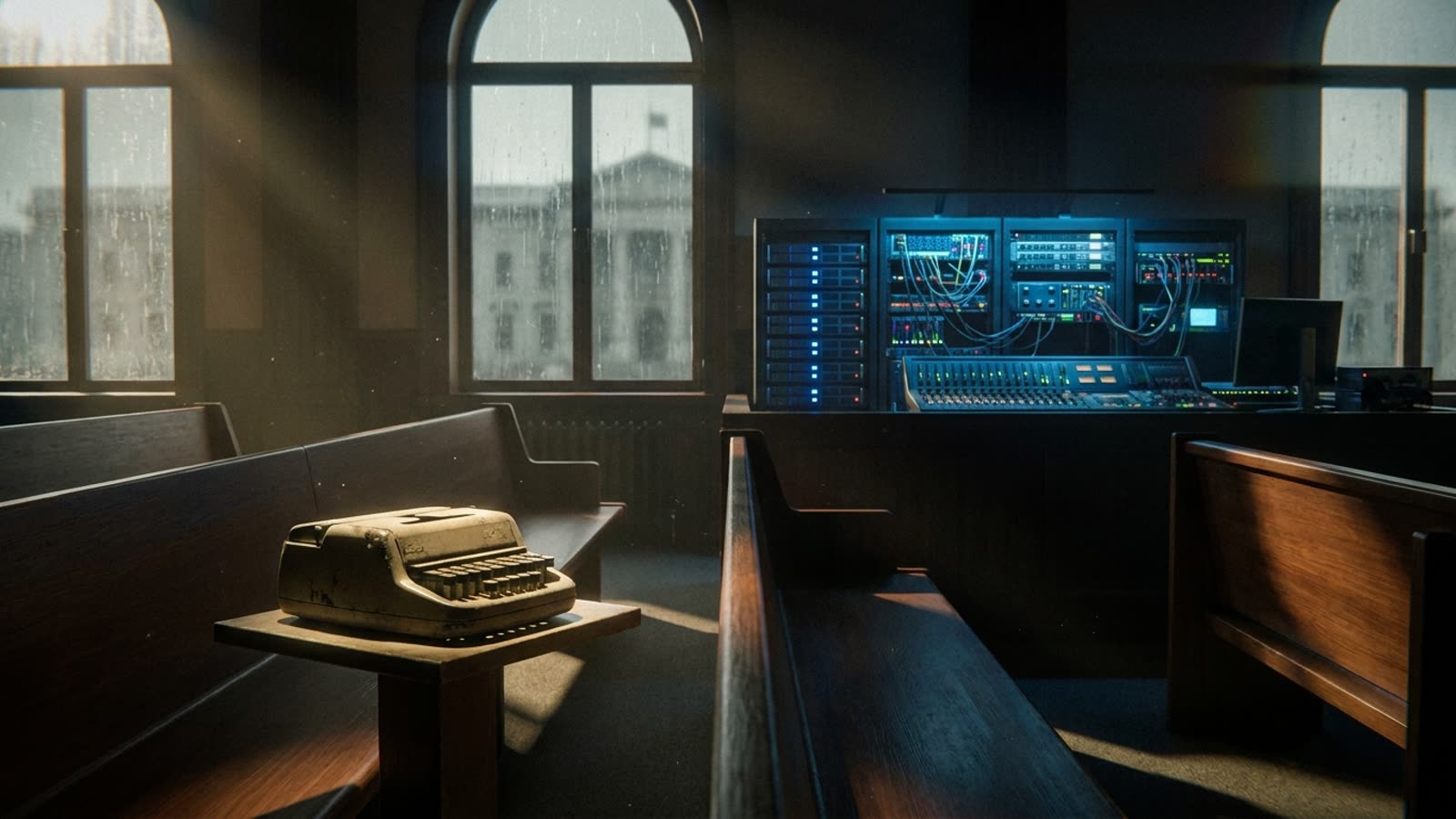
Every word spoken in an American courtroom becomes part of the official record, and for more than a century, the people who captured those words have wielded a quiet power. Court reporters—stenographers who type on specialized machines at speeds exceeding 225 words per minute—have long been the sole gatekeepers of legal transcription. That monopoly is fracturing, and the way it is happening offers a more nuanced template for understanding AI's impact on skilled professions than the usual narrative of wholesale replacement.
The shift began not with some dramatic technological leap but with a staffing crisis. Courts across the United States have faced chronic shortages of certified stenographers for years. Training takes two to four years, attrition is high, and the median age of working court reporters has crept steadily upward. Into this gap have stepped digital recording systems augmented by AI transcription—not as a replacement for human reporters but as an alternative pathway that courts increasingly accept out of necessity.
The accuracy question
Modern automatic speech recognition has reached accuracy rates that would have seemed implausible a decade ago. In controlled conditions with clear audio and standard accents, commercial systems routinely achieve word error rates below five percent. But courtrooms are not controlled conditions. Overlapping speech, heavy accents, technical jargon, mumbled sidebar conferences, and acoustically hostile rooms all degrade performance. A trained stenographer still outperforms AI in these edge cases, and in legal proceedings, edge cases are where disputes live.
This creates a bifurcation. Routine proceedings—uncontested hearings, depositions with cooperative witnesses, administrative matters—can be handled adequately by AI transcription reviewed by a human editor. High-stakes trials, complex litigation, and anything likely to be appealed still demand the precision only a skilled stenographer provides. The profession is not disappearing; it is stratifying.
The economics of stratification
For court reporters, this bifurcation has economic consequences that cut both ways. Those who handle premium work—major civil litigation, high-profile criminal trials, real-time captioning for deaf jurors—find their services more valuable than ever, precisely because the supply of stenographers continues to shrink while demand for elite accuracy persists. Rates for top-tier reporters have increased even as overall employment in the field has declined.
Meanwhile, a new category of worker has emerged: the scopist-editor hybrid who reviews AI-generated transcripts, correcting errors and formatting the record. This work pays less than traditional stenography and requires less training, but it also has a lower barrier to entry. The profession is not being automated so much as it is being unbundled—split into a high-skill, high-compensation tier and a lower-skill, lower-compensation tier that did not previously exist.
Our take
The court reporter's story is a useful corrective to both AI triumphalism and AI doom. The technology is neither eliminating the profession nor leaving it untouched. It is reshaping the labor market in ways that benefit some practitioners while creating new, less remunerative roles for others. This pattern—stratification rather than replacement—is likely to repeat across many skilled professions as AI matures. The question for workers is not whether their job will exist in ten years but which tier of that job they will occupy.