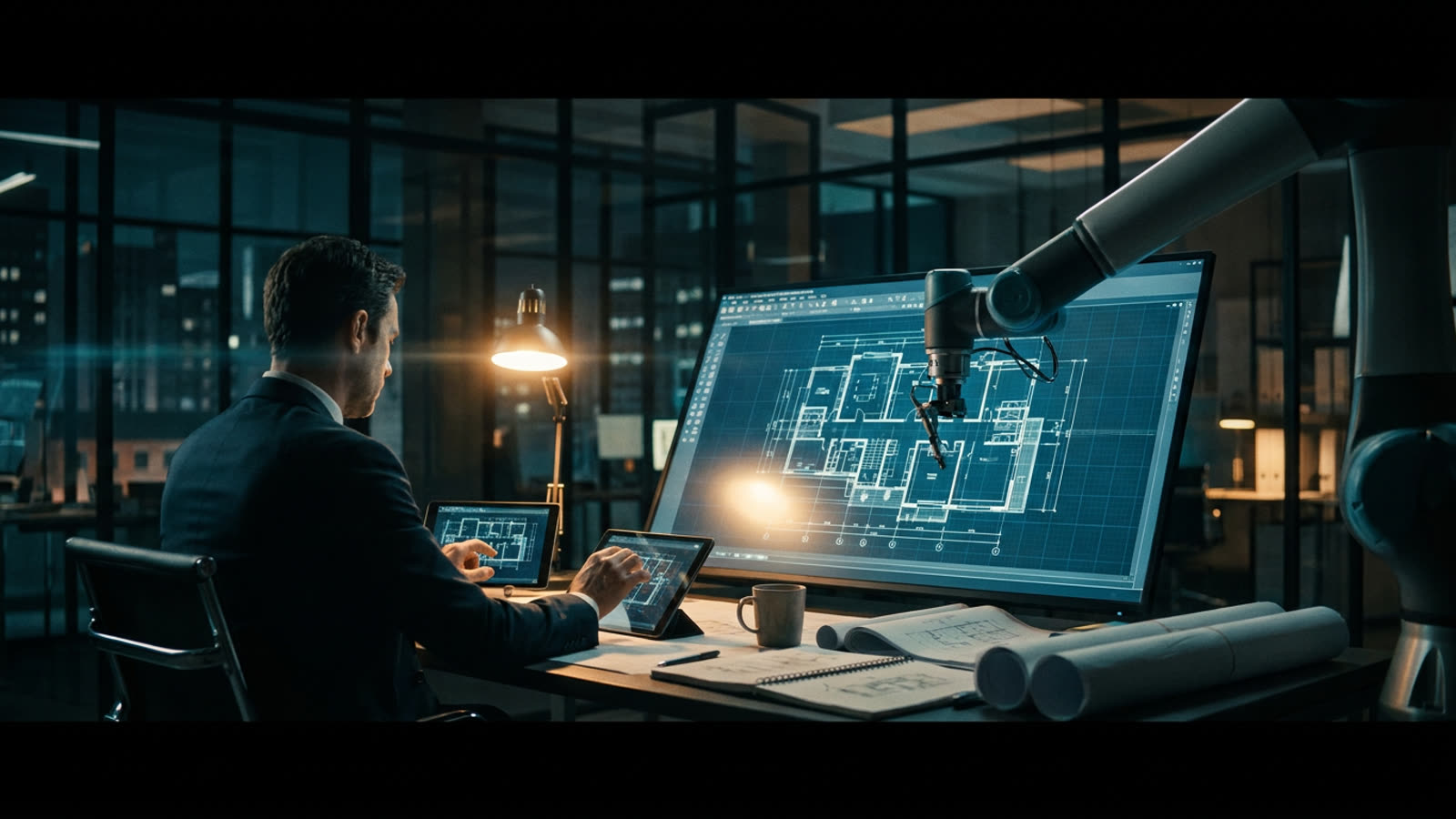
Architecture has always been a profession suspended between art and engineering, between the vision of a single mind and the constraints of physics, budgets, and municipal code. Now a third force has entered the studio: generative AI systems that can produce hundreds of floor plan variations in minutes, optimize structural loads, and even draft the tedious permit applications that consume so much of a young architect's time.
The transformation is not hypothetical. Firms from small residential practices to global giants have begun integrating machine learning into their workflows, though most prefer not to advertise the fact. The romantic image of the architect—hand sketching at a drafting table, conjuring form from imagination—remains too commercially valuable to disrupt with talk of algorithms.
The grunt work goes first
Like most professions touched by AI, architecture is experiencing automation from the bottom up. The tasks being delegated to machines are not the glamorous ones. They are the space-planning exercises that junior designers once spent weeks refining: how to fit maximum leasable square footage into an irregular lot while satisfying fire egress requirements, parking ratios, and setback rules. AI tools can now generate and evaluate thousands of such configurations overnight, surfacing options that human designers might never have considered—or might have dismissed too quickly.
Zoning compliance, long a source of billable tedium, is another early casualty. Parsing municipal codes and cross-referencing them against proposed designs once required painstaking human attention. Machine learning models trained on regulatory databases can now flag violations before a single drawing reaches the planning department, saving months of revision cycles.
The creativity question
More contested is AI's role in the conceptual phases of design. Some architects embrace generative tools as collaborators, feeding them references—a Brutalist library here, a Scandinavian cabin there—and iterating on the outputs. Others view the results as derivative at best, a kind of high-resolution averaging of existing buildings that can never produce genuine innovation.
The truth likely lies somewhere uncomfortable. AI excels at recombination, at finding unexpected intersections between established forms. What it cannot do, at least not yet, is argue for a building's meaning, defend an unconventional choice to a skeptical client, or understand why a particular curve evokes joy rather than unease. Architecture is not merely problem-solving; it is persuasion, culture, and politics rendered in concrete and glass. The machines can draw, but they cannot yet advocate.
Liability in the loop
A less philosophical but more immediate concern is legal responsibility. When an AI-assisted design fails—a structural deficiency, an accessibility violation, a material that degrades unexpectedly—who bears the blame? Professional licensing boards have been slow to address the question, and most jurisdictions still require a licensed architect to stamp drawings regardless of how they were produced. But as AI tools grow more autonomous, the fiction that a human reviewed every decision becomes harder to maintain.
Insurance underwriters are watching closely. Some have begun requiring disclosure of AI tool usage in professional liability applications, though industry-wide standards remain elusive.
Our take
Architecture will not be automated out of existence, but it will be hollowed out in familiar ways. The profession's middle ranks—those who once spent years mastering the craft of translating vision into buildable reality—face the greatest disruption. Senior partners will still lunch with clients and win competitions; AI will handle the drudgery that once trained the next generation. The question is whether that generation will ever learn what the machines now do for them, or whether architecture will become another field where expertise quietly atrophies beneath a veneer of efficiency.