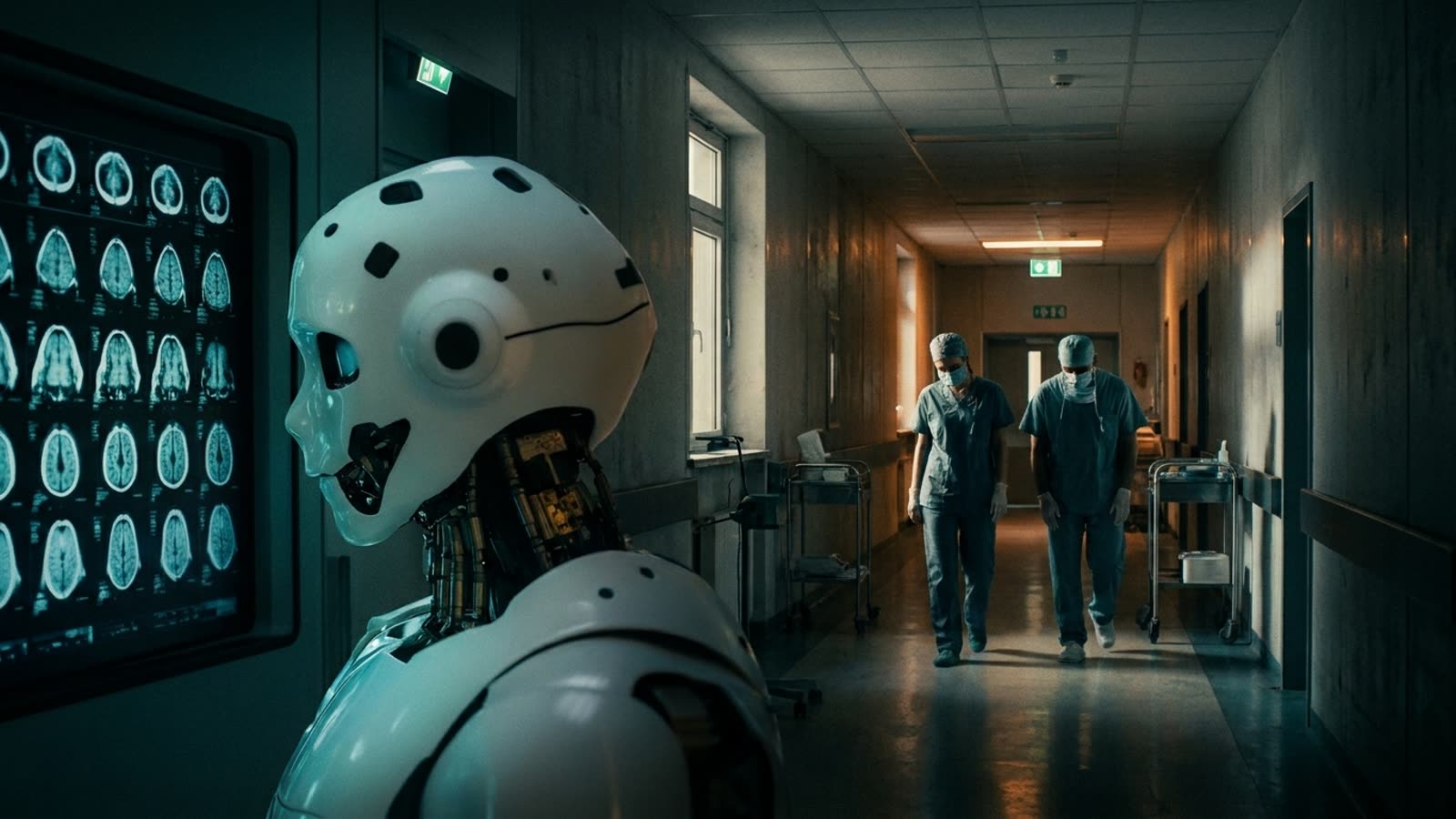
Walk into a radiology department at any major teaching hospital today and you will find something that would have seemed like science fiction a decade ago: software that scans chest X-rays and flags potential nodules before a human physician has finished their morning coffee. The radiologist still makes the call. But the machine got there first.
This quiet transformation has made radiology the profession where AI's real-world capabilities—and limitations—are most visible. Unlike chatbots or autonomous vehicles, diagnostic imaging AI operates in a domain with clear ground truth. Either there is a tumour or there is not. Either the algorithm catches it or it does not. The results so far are instructive for anyone trying to understand what artificial intelligence can actually do.
The pattern-matching triumph
AI excels at radiology's core task because that task is, at bottom, pattern recognition at scale. A convolutional neural network trained on millions of labelled mammograms can detect subtle calcifications that escape tired human eyes. Studies have repeatedly shown that well-designed algorithms match or exceed average radiologist performance on specific, narrow tasks: diabetic retinopathy screening, lung nodule detection, bone age assessment.
The key word is narrow. These systems do one thing. They do it well. They do it consistently at 3 a.m. on a Sunday when no human wants to be on call. For high-volume screening—the repetitive, exhausting work of sifting through thousands of images to find the handful that matter—AI is genuinely useful.
What the machine cannot see
But radiology is not merely pattern-matching. A skilled radiologist integrates the image with the patient's history, the referring physician's suspicions, the subtle clinical context that never appears in the pixel data. When the algorithm flags an abnormality, it cannot explain why it matters for this particular patient. It cannot recognise that the "nodule" is actually a surgical clip from a procedure documented in a note it has never read.
More troubling, AI systems trained on data from one hospital often perform poorly when deployed at another. They learn not just medicine but the idiosyncrasies of specific scanners, patient populations, and imaging protocols. A model that excels on data from a Boston teaching hospital may falter in rural Texas. This brittleness is radiology AI's dirty secret, and it explains why adoption has been slower and messier than early enthusiasts predicted.
The new division of labour
The radiologists who have adapted most successfully treat AI as a colleague with a very specific skill set. The machine handles the drudgery: pre-screening, measurement, flagging obvious cases. The human handles the judgment: integrating context, managing uncertainty, communicating with patients and referring doctors. Rather than replacement, what has emerged is augmentation—though the economic implications remain contested.
Some worry that AI will deskill the profession, creating radiologists who cannot function without algorithmic assistance. Others argue it will free physicians to focus on the genuinely difficult cases where expertise matters most. Both outcomes are probably true, depending on how institutions choose to deploy the technology.
Our take
Radiology's AI experiment offers the clearest lens we have into artificial intelligence's genuine capabilities. The technology is neither the job-killing revolution nor the overhyped disappointment that partisans claim. It is a powerful but brittle tool that excels at narrow tasks and fails at contextual judgment. That description applies to nearly every AI system currently deployed in the real world. The radiologists who have learned to work with these limitations, rather than around them or in denial of them, are showing the rest of us what the human-AI workplace will actually look like.