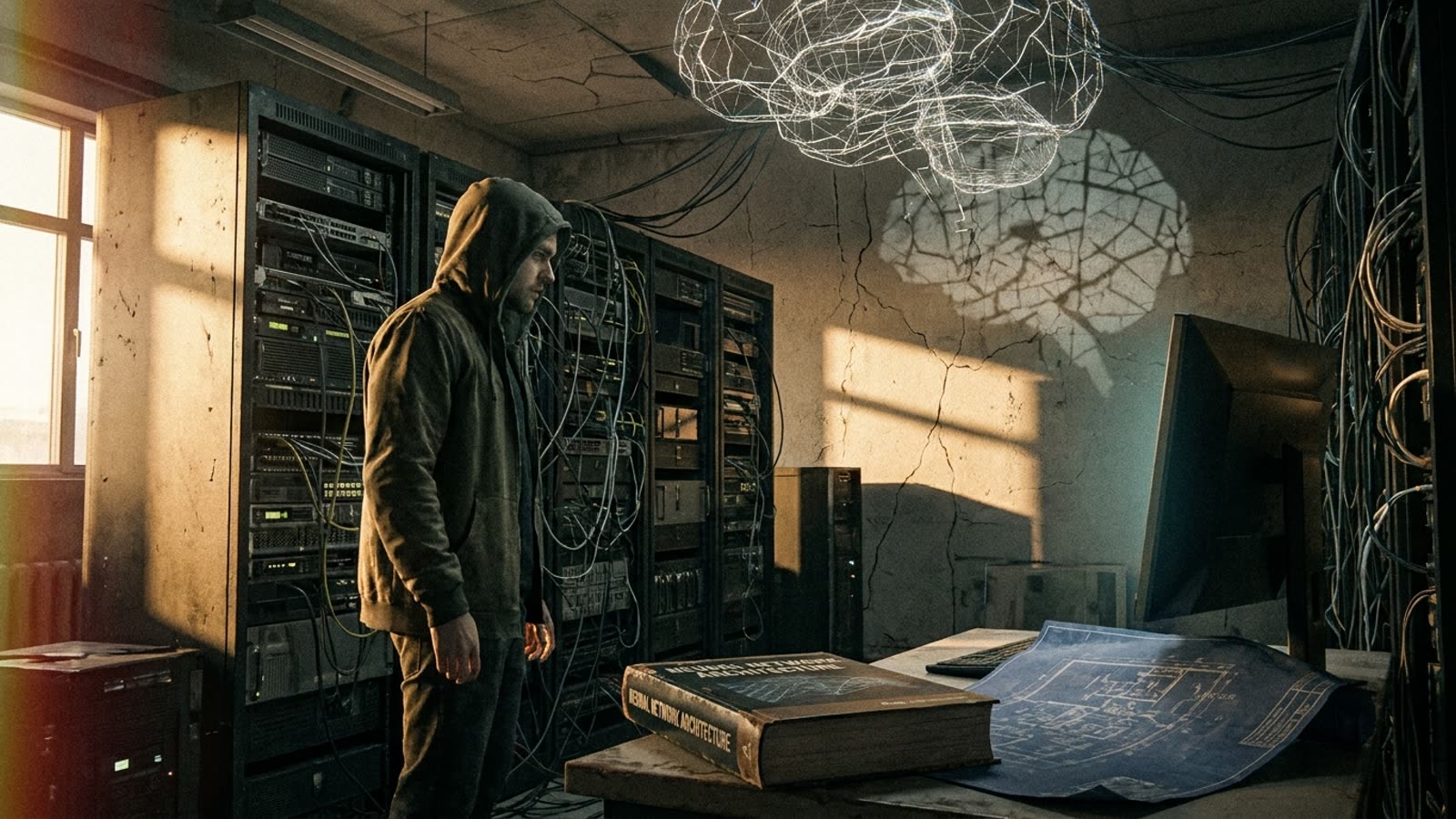
Human memory is famously unreliable, prone to distortion, and mercifully capable of letting go. Machine memory is none of these things. A large language model trained on a dataset retains, in some distributed statistical form, essentially everything it ingested — the useful and the useless, the accurate and the defamatory, the public and the accidentally scraped private. This permanence, which sounds like a feature, is increasingly revealing itself as a fundamental design flaw.
The problem is not merely philosophical. It is showing up in courtrooms, regulatory filings, and frantic engineering sprints at every major AI laboratory.
The right to be forgotten meets the model that cannot
Europe's General Data Protection Regulation grants individuals the right to have their personal data erased. This works reasonably well for databases: delete the row, purge the backup, confirm compliance. But neural networks do not store information in discrete, addressable locations. A person's name, face, or medical history exists as subtle weight adjustments across billions of parameters. You cannot surgically remove someone from a trained model any more than you could remove a single ingredient from a baked cake.
Researchers have proposed "machine unlearning" techniques — methods to approximate the effect of retraining without the offending data — but these remain imprecise, computationally expensive, and unproven at scale. The gap between what privacy law demands and what the technology can deliver is widening, not closing.
Hallucination's quieter cousin: persistence
Much attention has been paid to AI's tendency to fabricate information. Less discussed is its tendency to preserve information that has since been corrected, retracted, or rendered obsolete. A model trained on news articles from a particular period may confidently assert facts that were later disproven, repeat accusations that were withdrawn, or cite statistics that have been revised. Unlike a newspaper, which can publish a correction, a deployed model has no native mechanism for updating its beliefs without expensive retraining or elaborate retrieval augmentation.
This creates a peculiar temporal problem: the model exists in a kind of eternal present tense, unable to distinguish between what it learned and what remains true.
The copyright dimension
Pending litigation in multiple jurisdictions hinges on whether training constitutes infringement and, if so, what remedy is appropriate. Some plaintiffs have demanded that models be destroyed entirely — a request that implicitly acknowledges the impossibility of selective removal. The legal system is being asked to adjudicate a technical reality it does not fully understand, and the outcomes will shape whether AI development remains viable under current intellectual property frameworks.
Our take
The inability to forget is not a bug that better engineering will eventually fix; it is a consequence of how these systems encode knowledge. Until someone invents a fundamentally different architecture — or until regulators accept probabilistic compliance as good enough — the industry is building monuments that cannot be edited, only replaced. That is a strange foundation for technology we expect to govern our information landscape for decades.