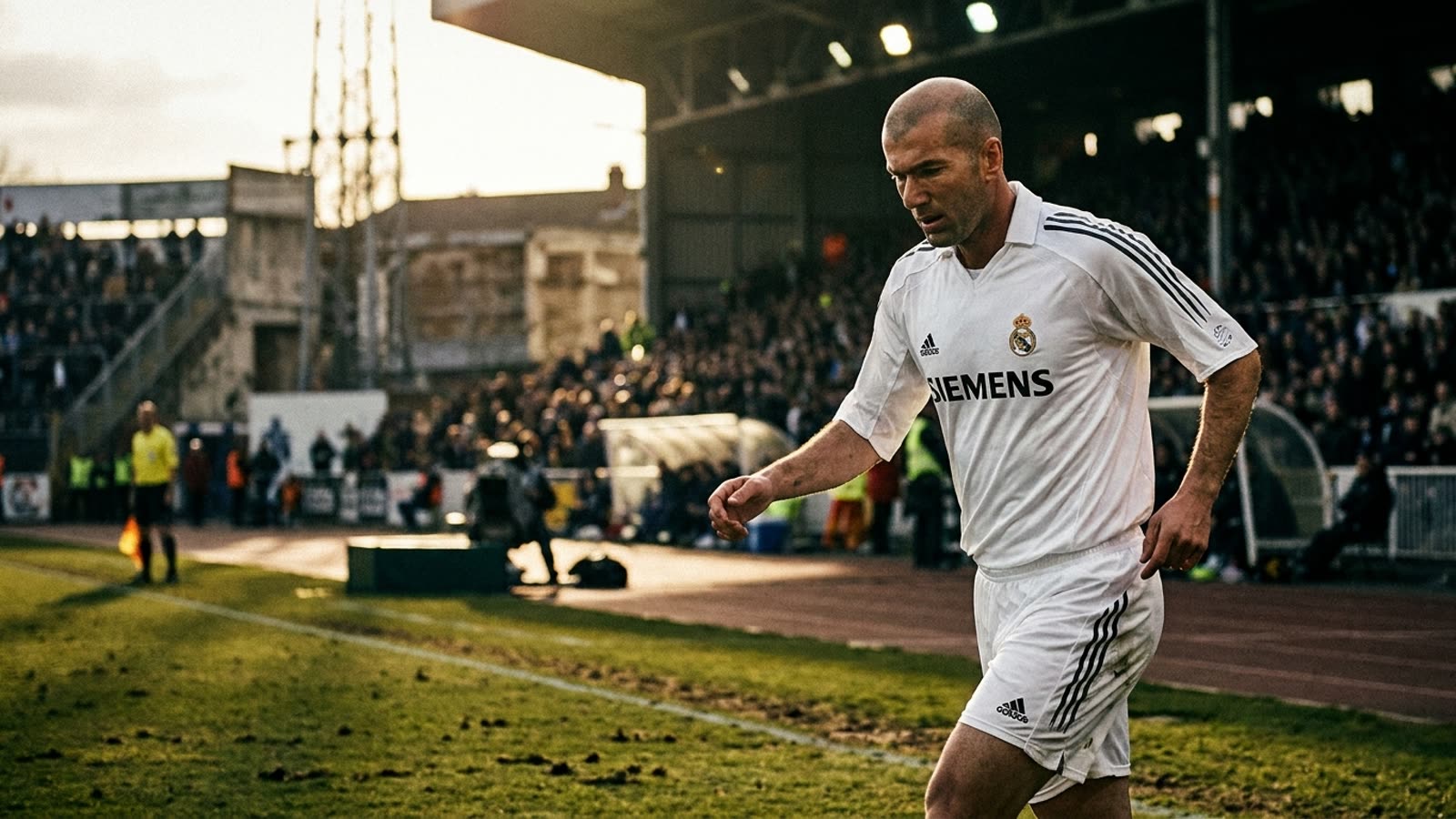
The greatest player of his generation walked off the pitch in Berlin with a red card and without a trophy, past the World Cup he would never touch, and into a kind of immortality that no winner's medal could have provided. Zinedine Zidane's headbutt on Marco Materazzi in the 2006 final was sport's most spectacular act of self-destruction, and also its most human.
The facts are simple. The interpretation never will be.
The anatomy of a moment
It happened in the 110th minute of extra time, with the score level at 1-1 and penalties looming. Zidane, who had already scored a nerveless Panenka from the spot, was walking away from goal when Materazzi grabbed his shirt. Words were exchanged. Zidane turned, walked several paces back toward the Italian defender, and drove his forehead into Materazzi's chest with the deliberate calm of a man posting a letter.
The fourth official saw it. The referee did not, initially, but was informed. Zidane received his red card without protest, walked past the trophy on its plinth, and descended into the tunnel. France lost the shootout. Italy became world champions. Zidane became something else entirely.
What Materazzi said has been the subject of endless speculation and eventual confirmation—insults about Zidane's sister, delivered in the heat of a match Materazzi was losing on merit. The provocation was real, crude, and calculated. None of which explains why Zidane, the most elegant footballer of his era, chose violence with the world watching.
The paradox of the artist
Zidane's career was built on control—the ball adhering to his foot as if magnetized, his body moving through defenders like water finding its level. He was the midfield conductor, the man who made football look like choreography. And yet violence was always there, just beneath the surface. Red cards in World Cups past. Stamps on opponents. A temper that his grace could not quite conceal.
This is what makes the headbutt so endlessly fascinating: it was not out of character. It was the character, finally revealed. Zidane was never the serene artist the highlight reels suggested. He was a man of fierce pride and barely contained fury who happened to possess supernatural technical gifts. The headbutt did not contradict his genius. It completed the portrait.
Why it outlasts the trophies
Italy's victory in Berlin has faded into the general blur of World Cup history. Ask a casual fan who won in 2006 and you might get a pause. Ask them about the headbutt and the answer is instant. Zidane's final act achieved what winning could not: it became indelible.
This is partly because sport craves narrative, and the headbutt provided one so rich it borders on myth—the flawed hero undone by his own nature at the moment of his greatest triumph. But it is also because the moment resists easy moralization. Was Zidane wrong? Obviously. Was he also, in some primal way, right to refuse humiliation? The question lingers.
Our take
Sport loves its clean endings, the champion with arms raised, the narrative sealed. Zidane denied us that comfort, and in doing so gave us something more valuable: a moment that stays alive because it cannot be resolved. The headbutt was a failure of discipline, a surrender to rage, and also an assertion of dignity so absolute it bordered on the sacred. It was, in short, completely human. That is why we are still talking about it, and why we always will be.