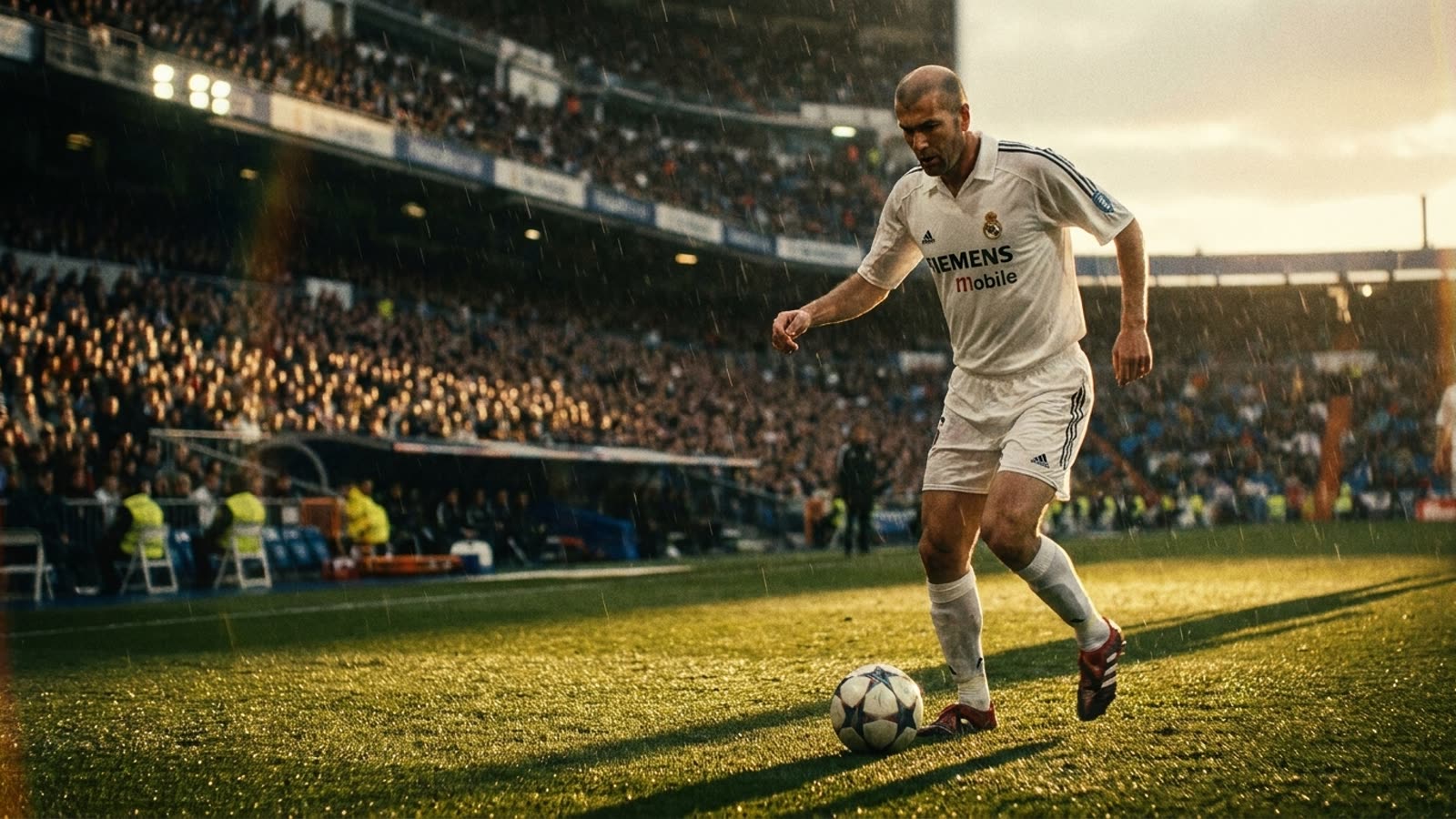
There are two ways to leave a football pitch for the last time. You can walk off in triumph, hoisted on shoulders, confetti catching the floodlights. Or you can walk off in disgrace, past the trophy you will never touch, while a billion people watch in silence. Zinedine Zidane chose a third way: he walked off as both.
The 2006 World Cup final in Berlin's Olympiastadion was supposed to be a coronation. France's greatest player, at thirty-four, had dragged his nation to the final through sheer force of will, scoring crucial goals against Spain, Brazil, and Portugal. Italy stood between him and the perfect ending. Then, in the 110th minute, with the score level and penalties looming, Zidane lowered his head and drove it into Marco Materazzi's chest. The Italian crumpled. The referee reached for his pocket. And football's most elegant artist exited through the tunnel, his final image a slow walk past the golden trophy gleaming on its plinth.
The moment that defied narrative
What makes the headbutt so persistently fascinating is its refusal to fit any comfortable story. It was not the hot-headed mistake of a young player—Zidane had spent two decades mastering the art of controlled aggression. It was not a moment of passion that could be explained away by the heat of competition—it came in extra time, when Zidane's experience should have been his greatest asset. And it was not private—it happened in the most watched sporting event on Earth, in what everyone knew would be his final match.
Materazzi later confirmed he had insulted Zidane's sister, though the exact words remain disputed. Zidane himself has never fully explained his reaction, offering only that he would rather have been punched than hear what was said. This incompleteness is part of the mythology. We know the provocation was real, but we cannot quite measure it against the response. The equation refuses to balance.
The strange afterlife of infamy
In the years since Berlin, something peculiar happened to Zidane's reputation: the headbutt enhanced it. Where another player might have been defined by such a failure, Zidane emerged as somehow more human, more compelling. The incident revealed that beneath the balletic control and the preternatural calm was something volatile, something that could not be entirely domesticated by fame or professionalism. It made his genius seem more dangerous, and therefore more real.
French culture absorbed the moment with characteristic ambivalence. A statue of the headbutt was erected in Paris, then removed, then discussed endlessly. Philosophers wrote essays. Comedians made jokes. The image became shorthand for a certain kind of Gallic defiance—the refusal to accept insult even at catastrophic personal cost. Whether this is admirable or absurd depends entirely on your tolerance for self-destruction in the name of honor.
Our take
The headbutt endures because it is genuinely unresolvable. It was stupid and it was understandable. It was a failure of self-control and an assertion of dignity. It robbed France of a World Cup and it gave Zidane an exit that no one will ever forget. Football prefers its legends uncomplicated—the humble champion, the tragic hero, the villain redeemed. Zidane gave us something rarer: a great man doing something indefensible for reasons we almost understand, then walking away without apology. Twenty years on, we are still watching him disappear down that tunnel, still unsure whether to mourn or marvel.