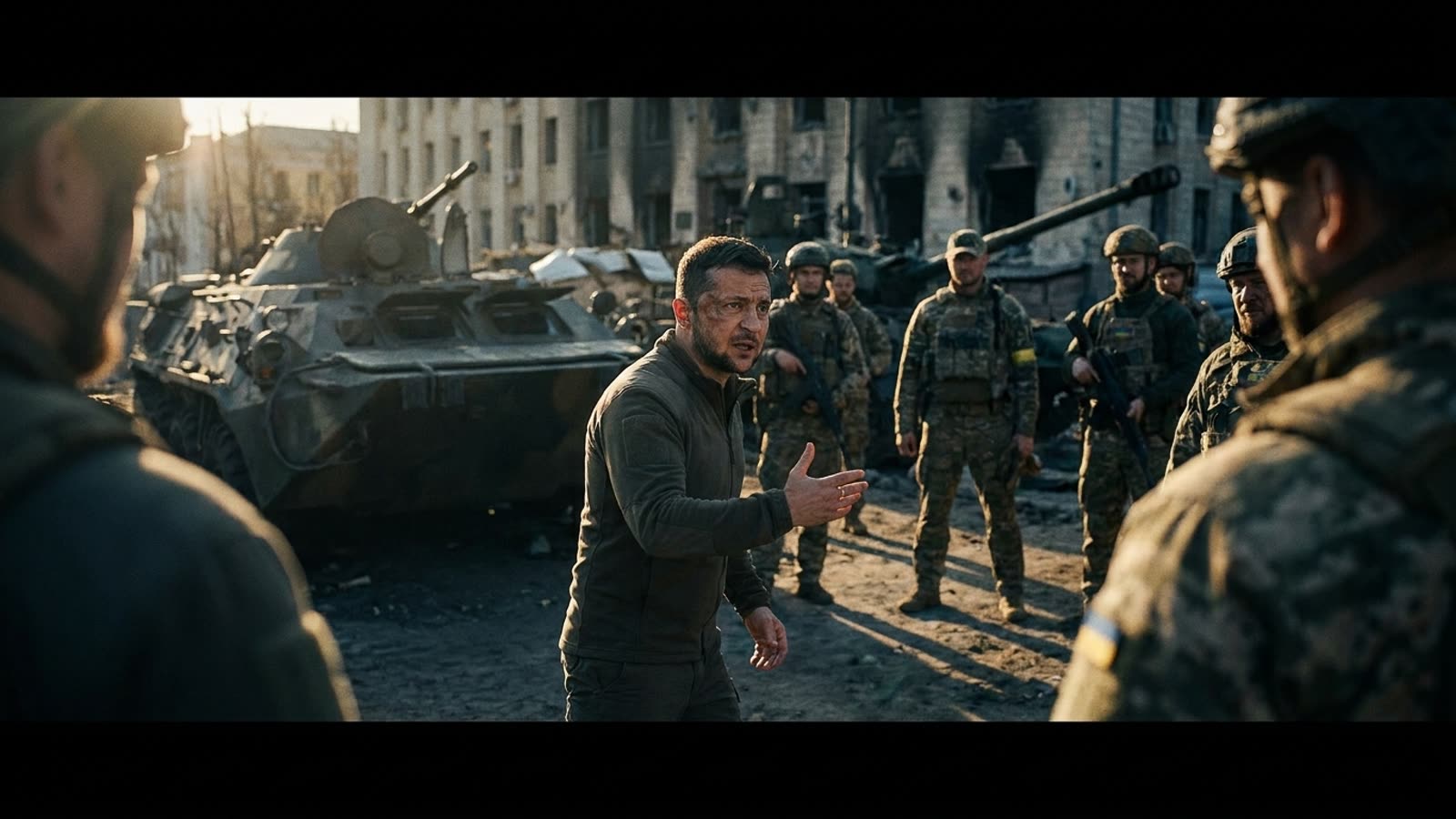
For weeks, Ukrainian forces braced for Russian missile barrages with degraded situational awareness, the result of Washington quietly throttling real-time intelligence sharing after President Zelenskyy's pointed remarks about the Trump administration's ceasefire framework. Now that access has been restored, following what Zelenskyy described as productive talks with Secretary of State Marco Rubio—but the episode reveals a harder truth about Kyiv's diminishing leverage as American patience wears thin.
The resumption, confirmed by Zelenskyy in a late-night address, means Ukrainian air-defence operators will again receive advance warning of incoming cruise missiles and drones, data that has proven critical in protecting civilian infrastructure. "Intelligence sharing works now," Zelenskyy said, choosing his words with conspicuous care. He offered no criticism of Washington, no complaints about the weeks of reduced cooperation. The contrast with his rhetoric in September—when he accused the White House of "negotiating over our heads"—was impossible to miss.
The quiet coercion
American officials have not publicly acknowledged any link between the intelligence pause and Zelenskyy's public posture, but the timeline speaks for itself. The throttling began days after Zelenskyy questioned Trump's proposed territorial framework at the United Nations General Assembly. It ended after Kyiv went conspicuously quiet on the peace process, even as Steve Witkoff arrived in St Petersburg for another round of talks with Russian officials. The message to Zelenskyy was unmistakable: criticise the deal-making and lose the tools you need to survive it.
This is not unprecedented. American administrations have long used intelligence access as both carrot and stick with allies. But doing so in the middle of an active war, with Ukrainian civilians dying in missile strikes, crosses a threshold that will trouble even hawkish Republicans in Congress. Senator Lindsey Graham, typically a Trump ally on foreign policy, has privately expressed concern about conditioning life-saving intelligence on diplomatic messaging.
Witkoff's parallel track
Meanwhile, Trump's special envoy continues his shuttle diplomacy, arriving in St Petersburg ahead of meetings that the Kremlin has framed as substantive rather than exploratory. The administration insists it is not negotiating over Ukraine's head, but Zelenskyy's enforced silence makes that claim harder to credit. Kyiv is now in the position of watching its fate discussed in a Russian city while being unable to publicly object without risking another intelligence blackout.
The strategic logic from Washington's perspective is straightforward: Trump wants a deal before the midterms, and Zelenskyy's public scepticism was complicating the narrative. With MAGA Inc. flooding social media with ads aimed at turning out Republican voters, the last thing the White House needs is a Ukrainian president poking holes in the president's peace credentials.
Our take
Zelenskyy's predicament is genuinely tragic. He leads a nation that has fought with extraordinary courage, only to find that his most important ally now treats candour as a form of insubordination. The restoration of intelligence sharing is welcome, but the terms on which it was restored—silence in exchange for survival—represent a new low in the transactional diplomacy that has come to define this administration's foreign policy. Ukraine is learning what smaller American partners have long understood: Washington's support is never unconditional, and the conditions can change without warning.