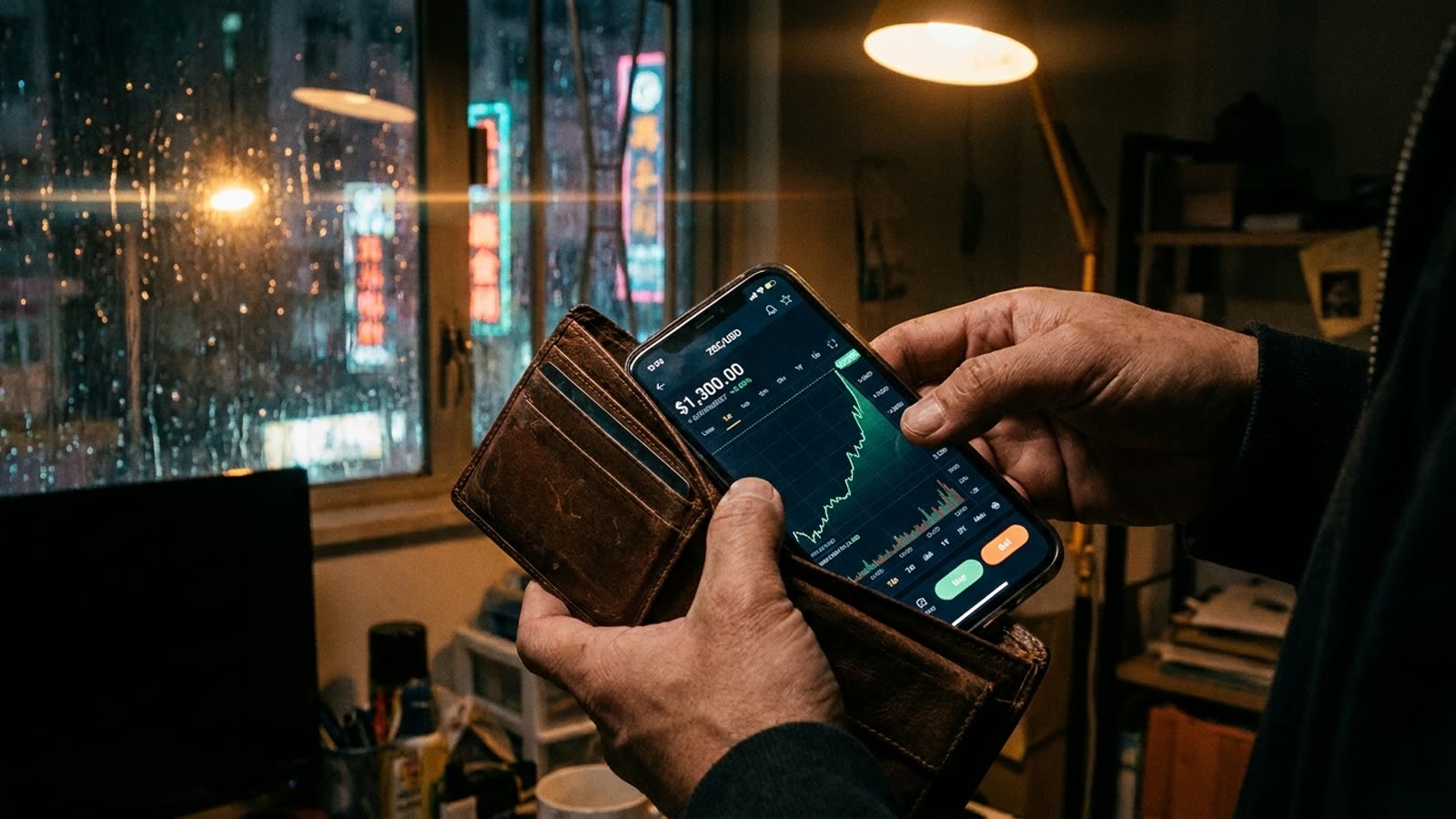
Privacy has become the scarcest commodity in crypto. Zcash, the granddaddy of shielded transactions, now trades above $1,300—a more-than-fourfold increase over the past year—while most of the altcoin market languishes in the doldrums of a prolonged risk-off cycle. The rally is not about memes or momentum; it is about a fundamental bet that some portion of the world's capital will always seek refuge from surveillance, and that the tools providing that refuge will command an ever-higher premium as regulators tighten the noose on transparent chains.
The privacy trade thesis
Zcash's value proposition is simple: it lets users send money without broadcasting their balances and transaction histories to the entire internet. That feature was a curiosity in 2016; in 2026, after years of chain-analysis firms selling dossiers to tax authorities and sanctions enforcers, it has become existential for certain use cases. The cohort of buyers is not primarily criminals—though critics will always lead with that framing—but rather dissidents, journalists, privacy-conscious high-net-worth individuals, and institutions in jurisdictions where capital controls make transparent crypto a liability. The year-over-year gain of more than 300 percent suggests this cohort has grown faster than the supply of credible privacy solutions.
Regulatory headwinds are the feature, not the bug
The paradox of privacy coins is that regulatory hostility tends to reinforce their value. Every delisting from a compliant exchange removes marginal sellers and concentrates holdings among true believers. The European Union's expanded anti-money-laundering rules, which took effect earlier this year, effectively ban privacy coins from licensed platforms across the bloc. Japan and South Korea implemented similar bans years ago. Yet Zcash's price has only accelerated. The asset is becoming a kind of bearer instrument for the digital age: harder to acquire through official channels, but precisely because of that, more valuable to those who manage to hold it.
The sustainability question
Nothing in crypto is guaranteed, and Zcash faces real risks. Its developer funding model—a portion of block rewards flows to the Electric Coin Company and the Zcash Foundation—remains controversial and subject to periodic governance battles. Competing privacy technologies, from Monero's ring signatures to newer zero-knowledge rollups on Ethereum, could erode its moat. And a sufficiently aggressive regulatory crackdown—say, a coordinated G7 effort to criminalize privacy-coin custody—could push the asset into a gray market where liquidity evaporates. The current premium prices in some of that risk, but not all of it.
Our take
Zcash at $1,300 is a referendum on whether privacy is a right or a privilege. The market, for now, is voting for the former. That bet may prove correct—or it may prove that a small, defiant asset class can thrive in the shadows even as the mainstream financial system slams every door. Either way, the rally is a reminder that crypto's original promise was not "number go up" but "permissionless value transfer." Zcash is one of the few projects still honoring that promise, and the price reflects the scarcity of conviction.