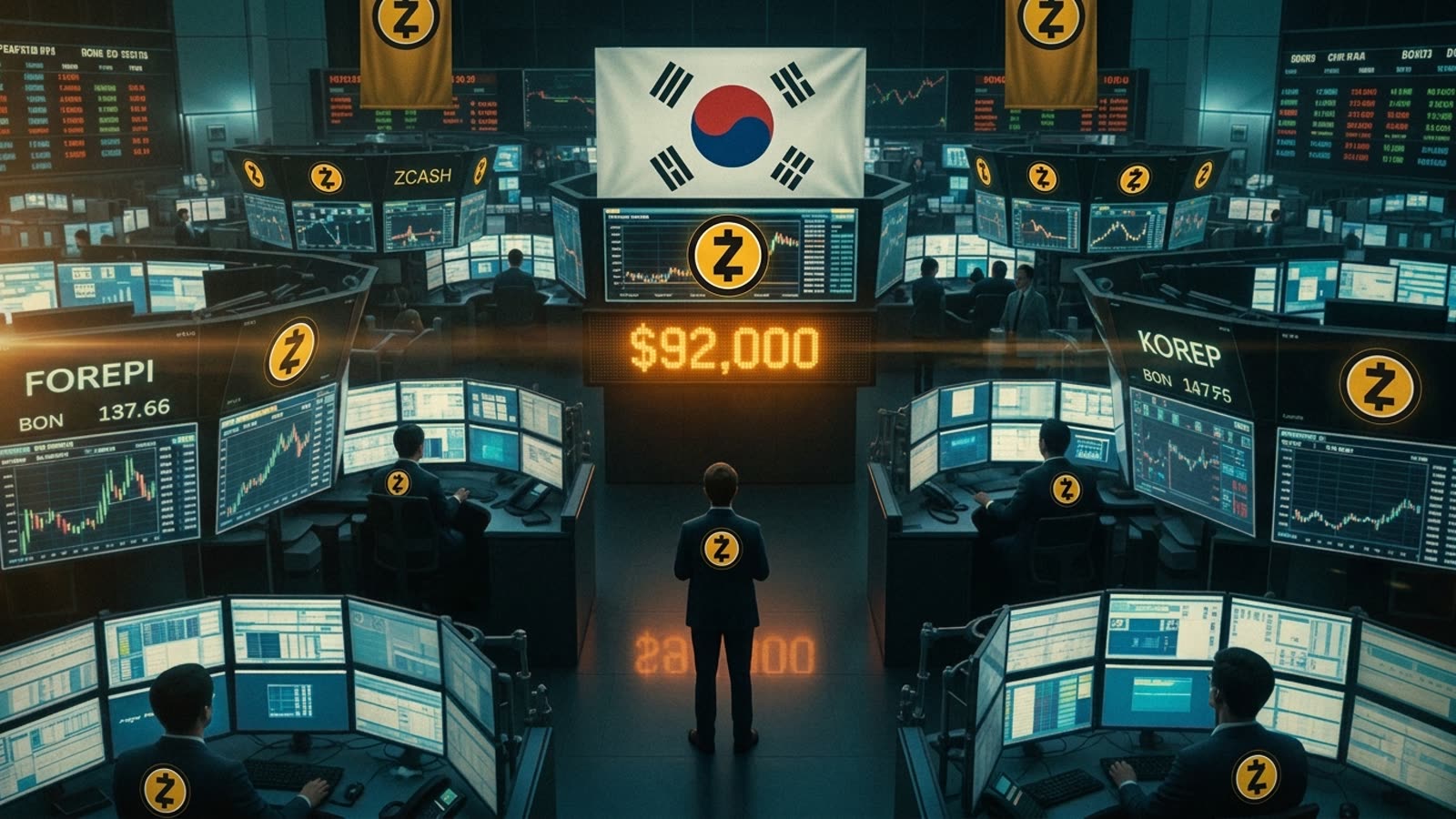
In a market where billion-dollar protocols are losing three-quarters of their value and retail darlings are bleeding out, Zcash has done something almost perverse: it has rallied more than 600 percent over the past year, touching $354 this week while the broader crypto complex melts down around it.
The divergence is striking enough to demand explanation. While Cardano has shed 76 percent of its value, Polkadot 76 percent, and Sui 78 percent, the privacy-focused coin that most institutional investors wrote off years ago has staged one of the most improbable comebacks in digital-asset history. The timing is not coincidental.
The privacy premium returns
Zcash's resurrection tracks almost perfectly with the regulatory crackdown that has consumed crypto since late 2024. As the SEC has expanded its enforcement dragnet and the Treasury Department has tightened surveillance requirements on exchanges, the market has rediscovered an old truth: privacy has value, and that value increases when it becomes scarce.
The coin's shielded transactions—which use zero-knowledge proofs to hide sender, receiver, and amount—were once considered a niche feature for cypherpunks. Now they look like a moat. Coinbase and Kraken delisted Zcash years ago under regulatory pressure, which paradoxically concentrated trading among true believers and reduced sell pressure. The remaining holders are not the kind who panic.
Halving mechanics meet macro fear
Zcash's fourth halving in late 2024 cut block rewards in half, creating supply dynamics that would be familiar to any Bitcoin observer. But where Bitcoin's halvings are priced in years in advance, Zcash flew under the radar—its market cap too small, its narrative too unfashionable for the institutional crowd to notice.
The result has been a slow-motion squeeze. Daily issuance dropped while demand from privacy-conscious users—whether legitimate or otherwise—held steady. Add a macro environment where the Fed is hiking rates, risk assets are cratering, and investors are seeking uncorrelated returns, and you have the conditions for exactly the kind of violent repricing Zcash has experienced.
The uncomfortable question
None of this resolves the central tension in Zcash's story. The same properties that make it attractive to dissidents, journalists, and anyone living under an authoritarian regime also make it attractive to sanctions evaders, tax cheats, and worse. The Zcash community has long argued that privacy is a human right, not a criminal tool. Regulators have responded by treating it as both.
This tension will only intensify. If Zcash's rally continues, it will attract exactly the kind of attention its holders have been trying to avoid. The Treasury's FinCEN has been quietly expanding its monitoring of privacy-coin flows, and a bipartisan coalition in Congress has floated legislation that would require exchanges to report any interaction with shielded addresses.
Our take
Zcash's performance is a market verdict on the value of privacy in an age of surveillance—and a reminder that regulatory hostility can backfire spectacularly. By pushing privacy coins off mainstream exchanges, regulators created a self-selecting community of committed holders and eliminated the casual traders who would have sold into this rally. Whether that community can survive the next wave of enforcement is another question. But for now, Zcash is proving that in crypto, being unfashionable can be the best trade of all.