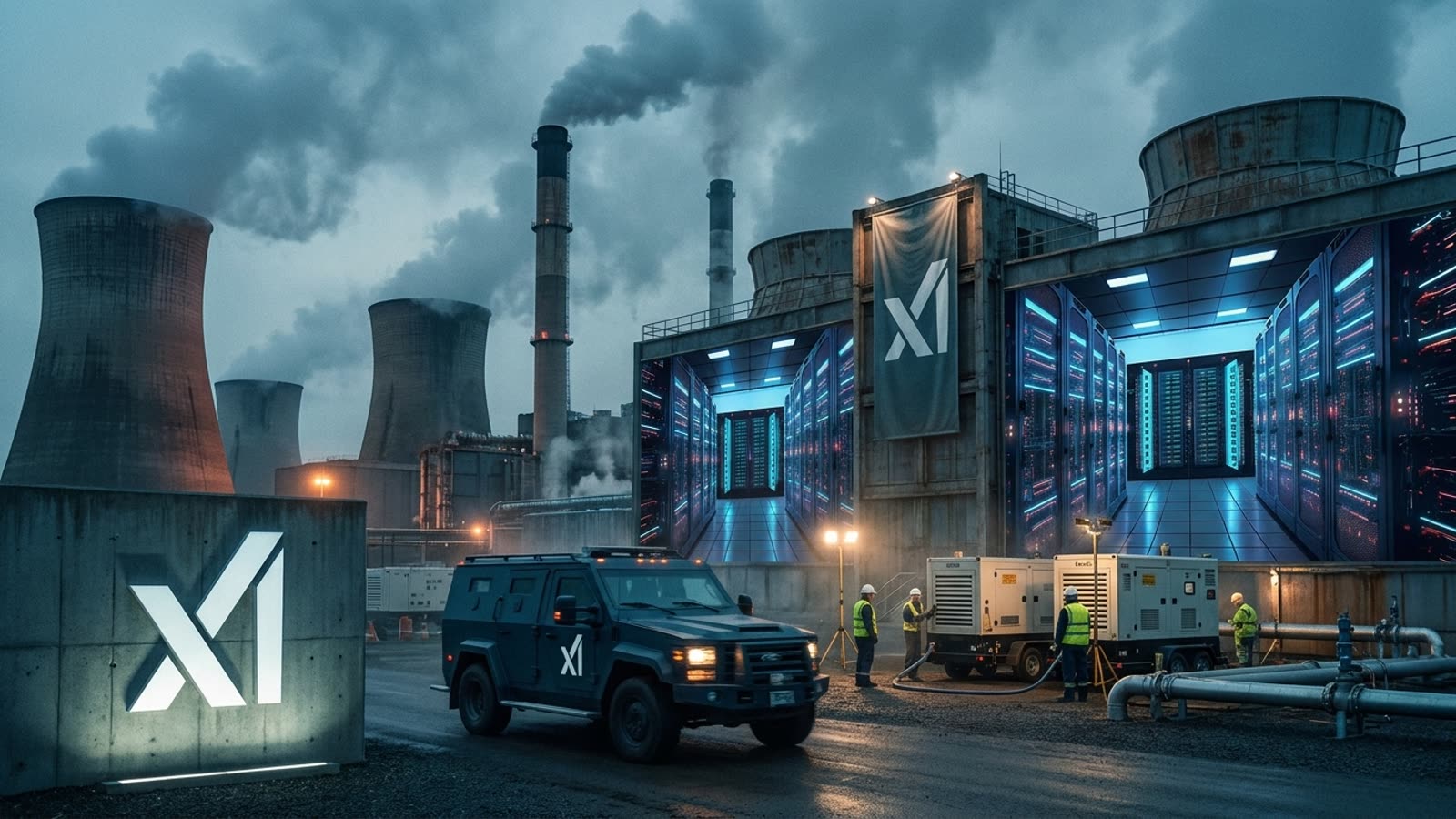
The Department of Justice has intervened in what would normally be a routine environmental enforcement matter, arguing that xAI's unpermitted natural gas turbines at its Memphis data center complex constitute a matter of "national, economic, and energy security." The filing, submitted in federal court last week, asks the judge to consider the broader implications of shutting down power generation that feeds one of America's largest AI training facilities.
This is not how environmental law is supposed to work. Typically, a company operating industrial equipment without proper permits faces fines, remediation orders, and occasionally injunctions. The DOJ does not typically appear to argue that the violator is too strategically important to face normal consequences. Yet here we are.
The Memphis situation
xAI's Colossus data center in Memphis has been running natural gas turbines to supplement grid power since late 2025, when the facility's electricity demands began exceeding what the local utility could reliably provide. The turbines were installed under what xAI characterized as emergency provisions, though Tennessee environmental regulators disputed that classification and issued violation notices in February.
Rather than comply with state orders to shut down or properly permit the equipment, xAI escalated the dispute to federal court, arguing that the turbines were essential to maintaining AI training runs that could not be interrupted without significant economic harm. The DOJ's intervention came after xAI's legal team reportedly made direct appeals to the White House, citing the company's contracts with defense and intelligence agencies.
The turbines in question generate roughly 150 megawatts—enough to power a small city, or to keep several hundred thousand GPUs running through their training cycles.
What national security means now
The DOJ's filing does not dispute that xAI is operating without proper permits. Instead, it argues that the court should weigh the "strategic importance of domestic AI capability" against the environmental violations. The brief cites xAI's work on classified government projects, though the specifics remain redacted.
This framing transforms an environmental compliance case into a referendum on American AI competitiveness. If the court accepts the DOJ's logic, it establishes a precedent that sufficiently important AI companies can operate outside normal regulatory frameworks—at least until their permits catch up with their ambitions.
Environmental groups have filed amicus briefs arguing that the DOJ's position would effectively create a two-tiered regulatory system, where companies with national security contracts enjoy privileges unavailable to ordinary businesses. Tennessee's attorney general, notably, has remained silent on the federal intervention.
The power problem underneath
xAI's permit troubles are a symptom of a larger crisis. AI data centers are consuming electricity faster than utilities can build generation capacity, and faster than regulators can update permitting processes designed for a slower era. The company's decision to install unpermitted turbines was not reckless disregard for the law so much as a calculated bet that the AI race would not wait for paperwork.
Other major AI labs face similar constraints. Microsoft has signed deals for nuclear power. Amazon is buying data centers near hydroelectric dams. Google is experimenting with geothermal. Everyone is scrambling because the alternative—slowing down training runs—means falling behind competitors who found ways to keep the lights on.
Our take
The DOJ's intervention is clarifying, if not reassuring. It confirms what many suspected: that AI companies have achieved a status in Washington that insulates them from ordinary accountability. Whether you find this appropriate depends on how seriously you take the national security framing, and how much you trust that "too important to regulate" will not become "too important to govern." Musk has spent years cultivating relationships with the current administration. This filing suggests those investments are paying dividends that extend well beyond favorable tweets.