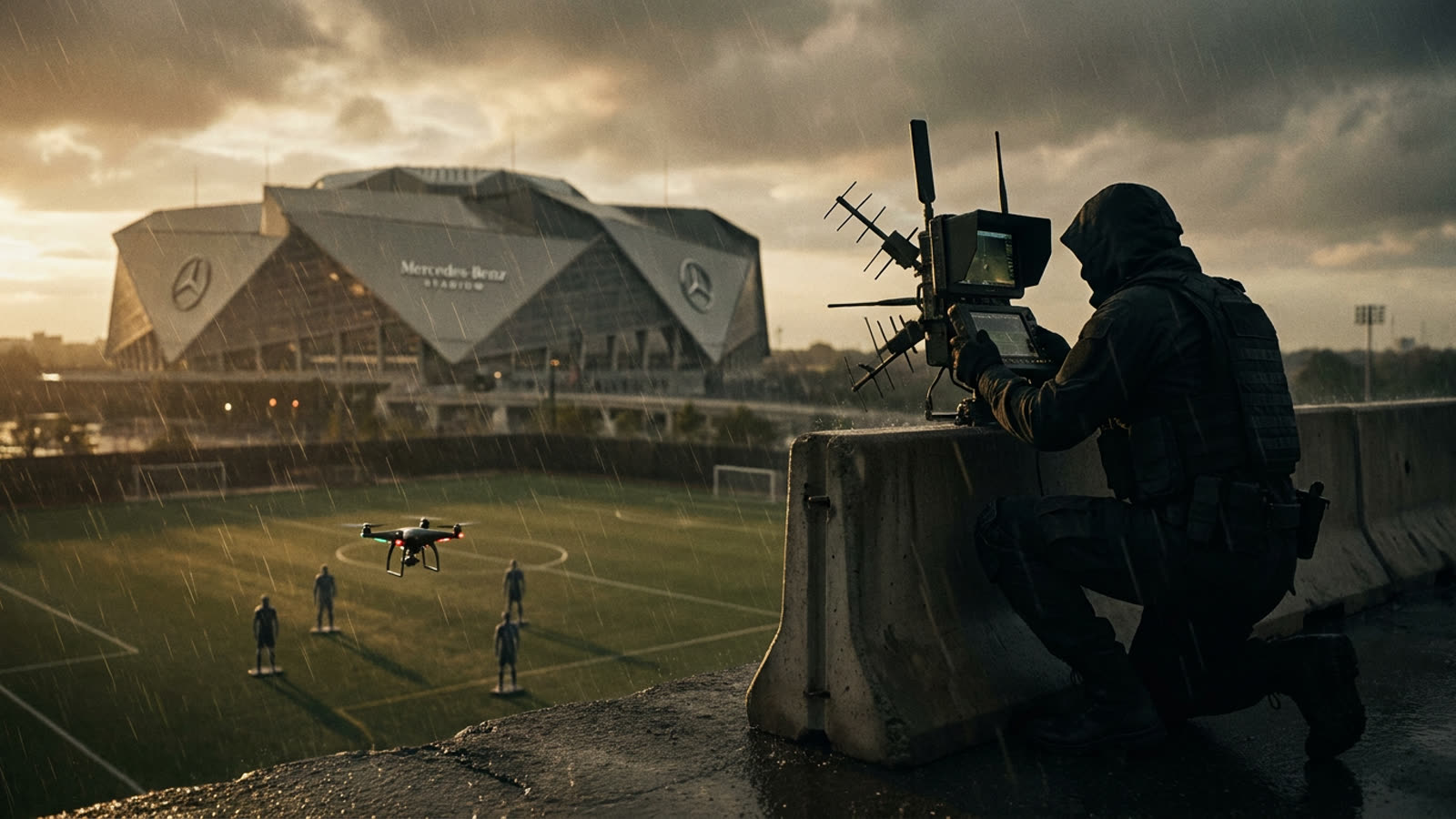
The beautiful game has an ugly little secret: everyone is watching everyone else, and the watching has become industrial.
At the 2026 World Cup, the scouting apparatus surrounding elite national teams has evolved from a coach with binoculars into a full-spectrum intelligence operation. Teams employ drone-detection systems, rotate training venues on hours' notice, and station security personnel along perimeter fences specifically to intercept unauthorized cameras. The Germans reportedly use signal-jamming equipment. The Brazilians have switched to indoor facilities for set-piece rehearsals. England's staff conducts counter-surveillance sweeps before tactical sessions.
The information economy
Modern football analytics demand granular data: how a goalkeeper shifts his weight before a penalty, which defender loses concentration in the 80th minute, what patterns a midfield uses to break a press. A single training session can yield hundreds of data points that, properly analyzed, translate into marginal advantages worth millions in prize money and national prestige. The incentive structure makes espionage rational, even inevitable.
FIFA's regulations prohibit filming opponents' closed training sessions, but enforcement is effectively impossible. The governing body relies on honor codes and post-hoc complaints—mechanisms designed for a gentler era. Teams that get caught face embarrassment more than sanction. Those that succeed gain edges their opponents may never detect.
The countermeasures industry
A cottage industry has emerged to serve paranoid technical directors. Private security firms now offer "sports intelligence protection" packages that include RF scanning, aerial surveillance detection, and personnel vetting. Some national federations have hired former military intelligence officers to oversee operational security. The cost is substantial—six figures per tournament for comprehensive coverage—but trivial compared to the financial stakes of advancing a single round.
The irony is that much of this secrecy may be theater. Video analysis of actual matches provides the bulk of useful intelligence; training-ground footage offers diminishing returns once a team's basic system is understood. But in a tournament where margins are razor-thin and national pride is boundless, no federation wants to be the one that lost because it failed to close the blinds.
Our take
The spy-versus-spy absurdity is football's version of the security-industrial complex: a self-reinforcing cycle where countermeasures justify the threats they're designed to prevent. It's also oddly charming, a reminder that beneath the corporate veneer, the World Cup remains a tribal affair where grown men will stake their reputations on whether an opponent knows their corner-kick routine. The drones and jammers are just the modern equivalent of peeking over the fence—human nature dressed in expensive technology.