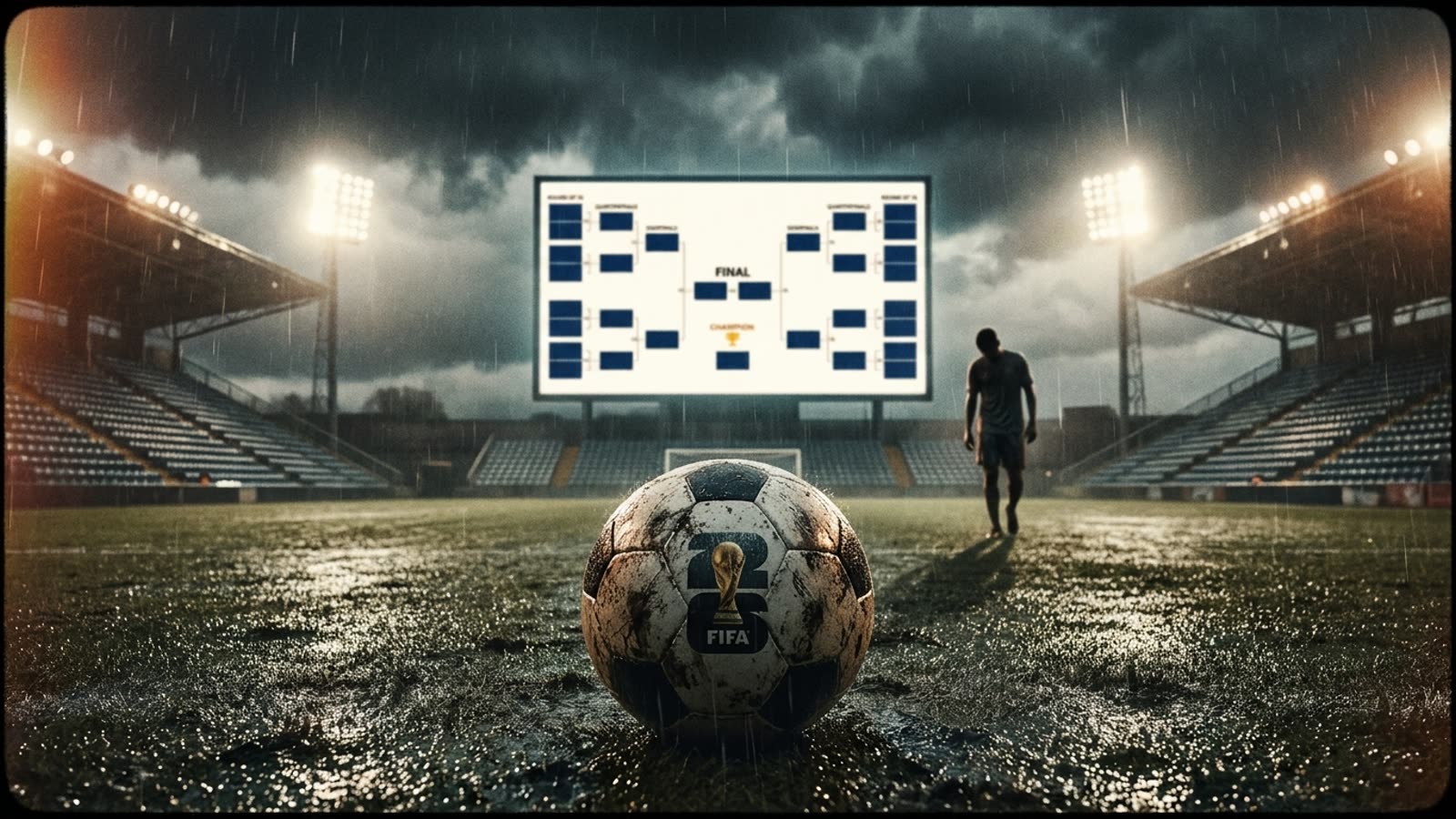
The group stage is over, and the bracket is set. Thirty-two nations will enter the knockout rounds believing, with varying degrees of self-delusion, that they can lift the trophy on July 19. History suggests roughly four of them are correct to believe this, and perhaps only two have genuine paths to glory.
This is not cynicism. It is pattern recognition. Since 1998, when the World Cup expanded to thirty-two teams, every single winner has shared a specific profile: a top-five ranked nation entering the tournament, with a squad featuring at least three players from clubs that reached the Champions League quarterfinals that season, and a manager with prior World Cup knockout experience. Argentina in 2022 fit the mold. So did France in 2018, Germany in 2014, and Spain in 2010. The outliers — Croatia's 2018 run to the final, Morocco's 2022 semifinal — prove the rule by falling short.
The real contenders
Brazil enters the knockout stage as the betting favorite, and the metrics support the market. Their squad depth is obscene, their group-stage performances were controlled rather than spectacular, and Vinícius Júnior has looked like a player capable of single-handedly deciding matches. France, despite rotation and minor injuries, has the tournament's most complete squad. Argentina, even with Messi rested in the final group match, has the reigning champions' institutional memory of how to win seven consecutive knockout games.
Germany and Spain round out the genuine contenders. England, despite Harry Kane's record-breaking group stage, lacks the midfield control that has defined every champion this century. The Netherlands and Portugal have the talent but not the tactical coherence.
Why the bracket matters less than you think
The draw will dominate analysis this week: which side of the bracket is softer, which path avoids Brazil until the final. This is largely noise. Since 2002, the eventual champion has faced at least two top-ten ranked opponents in the knockout rounds. The path to glory runs through other contenders, not around them. Teams that benefit from favorable draws tend to meet their match eventually — or arrive at the final having learned nothing from close games.
What matters more is squad management. The compressed schedule means that teams playing their strongest eleven in every group match will pay a physical price by the quarterfinals. Argentina's decision to rest Messi was not caution; it was championship-level thinking.
The dark horses that won't win
Every tournament produces a romantic narrative: a smaller nation that captures hearts with attacking football and an unlikely run. This year's candidates include Japan, whose technical quality has improved dramatically, and the United States, riding home-soil energy. Neither will win. Japan has never beaten a European power in knockout play. The U.S. has not reached a World Cup semifinal since 1930. These are not arbitrary barriers; they reflect developmental gaps in youth systems and competitive experience that cannot be overcome in a single tournament.
Our take
The World Cup's beauty lies in its cruelty. Thirty-two teams, seven games to glory, zero margin for error. The knockout rounds will produce drama, heartbreak, and at least one result that seems to defy logic. But the logic is there, buried in squad construction and managerial experience and the accumulated wisdom of how to win when everything is on the line. Brazil, France, and Argentina know something the other twenty-nine do not. We will spend the next three weeks watching them prove it.